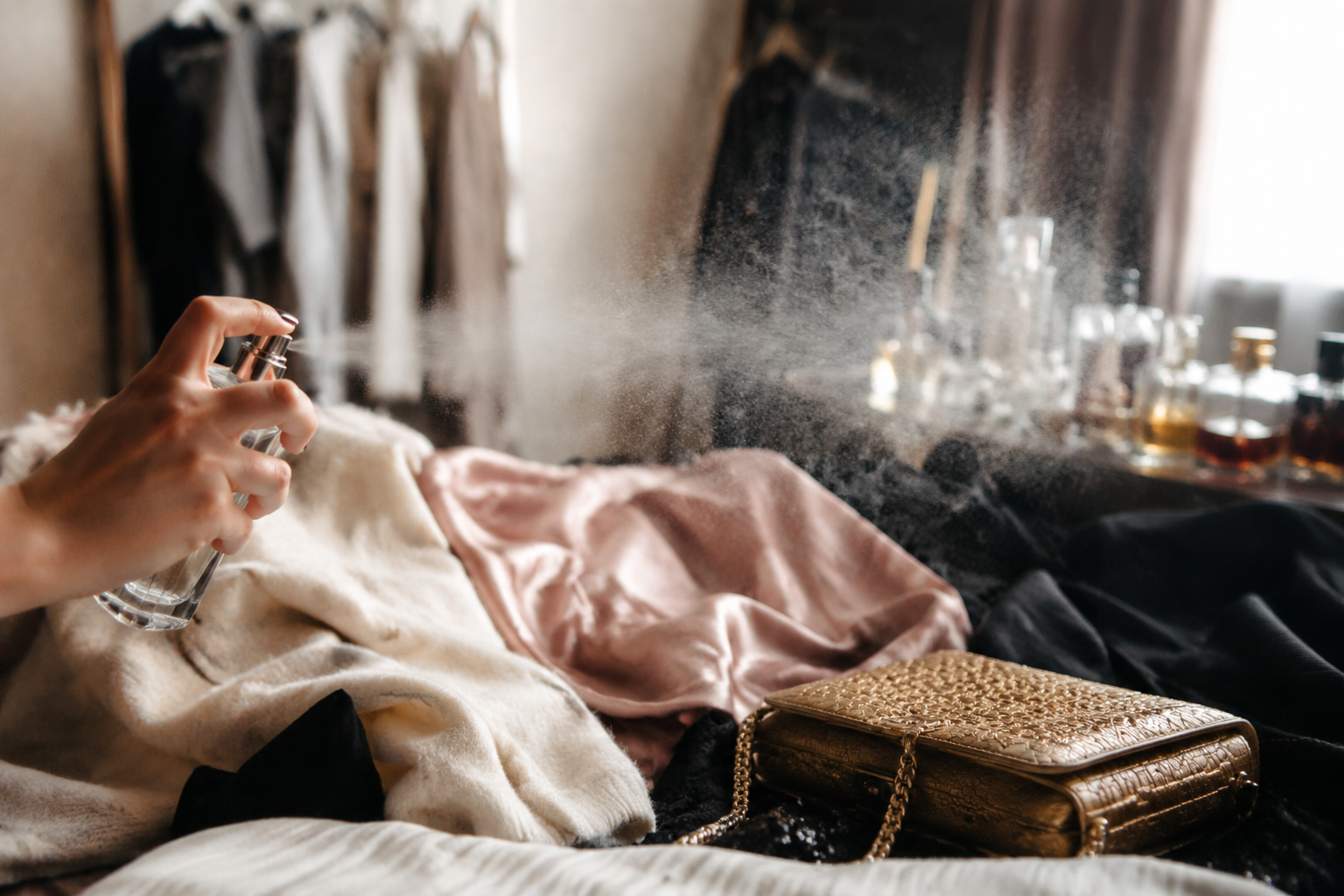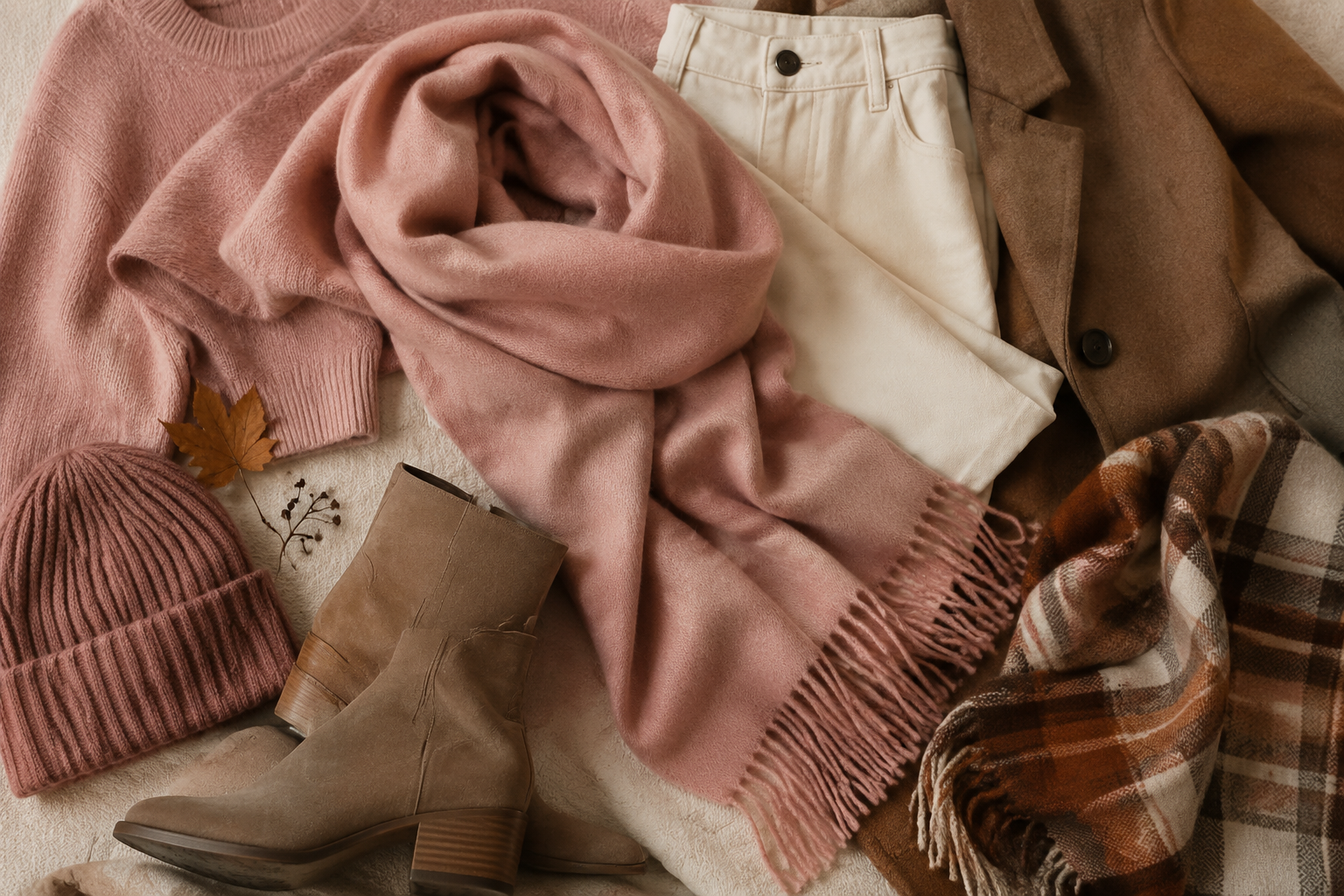
Heavy winter fabrics are a sensory argument for wearing perfume. Wool absorbs scent into its fibers and releases it slowly across an entire day. Cashmere does the same with more intimacy. Tweed holds a fragrance close to the body and lets it escape in bursts when a person moves. A light citrus cologne that performs beautifully against a cotton T-shirt in July turns into a ghost against a thick knit sweater in January. The wearer reapplies, the scent disappears, and the whole exercise starts to feel pointless. The fix is not to spray more. The fix is to choose a fragrance built for the specific demands of dense fabric: enough weight to push through the layers, enough persistence to survive contact with wool, and enough nuance to hold interest over a long winter day.
Fabric-heavy winter looks are not just warm. They are physically thick. A person wearing a turtleneck, a chunky cardigan, and a wool coat is moving through the world wrapped in several centimeters of insulation. That stack changes how scent behaves. Fragrance molecules get trapped between layers, absorbed into fibers, and diluted by the sheer volume of material they have to saturate. A perfume that projects well in open air gets swallowed. The practical response is to reach for compositions with density and tenacity, the kinds of fragrances that feel almost too assertive in summer but come into their own when the temperature drops and the wardrobe thickens.
What follows are five fragrance types that match the physical reality of winter layering. Each one earns its place through a specific mechanism, not just a vague association with cold weather.
Leather: The Only Note That Matches Wool's Weight
Leather is the single most reliable partner for heavy winter fabric because it has comparable physical presence. A leather fragrance sits on wool the way leather itself sits on a body: with weight, with friction, with a sense of material against material. The note is built from compounds like isobutyl quinoline, which carries a dark, smoky, almost metallic edge that cuts through the muffling effect of knitwear. It does not get absorbed and disappear. It pushes back.
The best leathers for this purpose are not the polite, suede-soft ones. A smooth suede accord, the kind used in many designer masculines, is too delicate for a thick fisherman's sweater. The leather that works is the tarry, saddle-soap version, the one that smells like a worn jacket that has been through rain and heat. Tom Ford's Tuscan Leather is the obvious reference, but there are cheaper and more interesting places to look. Rasasi's La Yuqawam does a similar raspberry-leather combination at a fraction of the price. Or the wearer can go older and rougher with Knize Ten, a 1920s composition that still smells like a leather workshop floor. These fragrances do not sit on top of wool. They become part of the same dense material system.
The practical advantage is longevity. Leather accords are built from heavy molecules that evaporate slowly, which means they survive the repeated compression of a coat collar and the friction of a scarf. A person wearing a leather fragrance under a wool overcoat can still catch traces of it at the end of a workday. That is not true of most other categories.
Spiced Amber: The Heat Source Hidden in the Knit
Spiced amber works differently. Instead of matching the weight of the fabric, it generates an internal heat that makes the layers feel alive. The combination of cinnamon, clove, nutmeg, and cardamom over a sweet amber base creates a scent that reads as warmth itself. On bare skin, these fragrances can be overwhelming, almost syrupy. Against a wool turtleneck, the fabric metabolizes them: the spices get softened, the amber gets stretched out, and what emerges is a cozy, enveloping presence that matches the visual warmth of the outfit.
The mechanism here is about diffusion. Spicy molecules are small and volatile, which means they evaporate quickly and travel far. But in dense fabric, that volatility works in the wearer's favor. The knit traps the molecules and releases them gradually, turning a fragrance that would normally project aggressively into a slow, steady ember. This is the category where a person can wear something sweet without feeling like a dessert. The fabric does the balancing work.
Serge Lutens Ambre Sultan is the benchmark, a dense amber with a herbal, almost medicinal spice edge that keeps it from tipping into gourmand territory. For a more accessible option, L'Occitane's Eau des Baux layers vanilla, pepper, and cypress into a warm, resinous blend that performs beautifully against knitwear. The key is to look for ambers with visible spice, not the flat, sugary amber used in most modern designers. The spice is what gives the fragrance something to do inside a thick sweater.
Dark Woods: The Quiet Anchor for Tweed and Herringbone
Tweed and herringbone are the most fabric-heavy fabrics in the winter wardrobe. They are rough, textured, and visually busy, woven with multiple colors and a pronounced handfeel. A fragrance that competes with that visual noise fails. What works is a dark, dry wood composition that anchors the outfit without shouting over it. Sandalwood, cedar, vetiver, and oud in their least sweet forms. The kind of fragrance that smells like a workshop floor or a forest after rain, not like a candle.
These scents share a structural similarity with tweed itself: they are composed of many small elements that combine into a unified whole. A good dark wood fragrance has the same interplay of rough and smooth that a good herringbone jacket has. The roughness comes from vetiver's rooty earthiness or cedar's pencil-shaving dryness. The smoothness comes from sandalwood's creamy, milky core. Together they create a texture that matches the fabric's own.
For this category, the wearer should look to houses that treat wood seriously. Chanel's Sycomore is a vetiver masterpiece, dry and smoky, with a mineral edge that feels like cold stone. Lalique's Encre Noire offers a darker, wetter take on the same root at a bargain price. For something with more presence, Diptyque's Tam Dao layers sandalwood and cedar into a meditation on wood that gets richer and more tactile as the day goes on. These are fragrances that do not announce themselves. They wait to be discovered, which suits the reserved character of tweed.
Resinous Incense: For the Heavy Coat That Needs Mystery
There is a specific pleasure in wearing a fragrance that does not reveal itself immediately, and resinous incense delivers that better than any other category. These are the churchy, smoky, balsamic compositions built around frankincense, myrrh, and labdanum. They smell ancient, which is appropriate, since these are among the oldest perfume materials in continuous use. On skin, they can feel austere. Under a heavy coat, against a wool scarf, they transform into something intimate and almost secretive, a hidden layer that surfaces only in specific moments: when the coat opens, when the scarf shifts, when the wearer leans in to speak.
The mechanism is about sillage control. Resinous materials are heavy and tenacious, but they project in a narrow radius. This makes them ideal for bulky winter clothing, which already creates a physical barrier between the wearer and the world. The fragrance does not need to fill a room. It needs to create a private atmosphere inside the coat's envelope. Incense does this better than almost anything else, wrapping the body in a smoky, meditative cloud that never feels aggressive.
Commes des Garçons has made a career out of this material. Their Avignon is a literal church incense, dark, peppery, and unapologetically somber. Norma Kamali's Incense is a more opulent version, adding amber and spice to create something warmer and more wearable. For a cheaper entry point, the fragrance community has spent years recommending a bottle of the body oil from a brand called Kuumba Made, which offers a concentrated frankincense at a fraction of the price. The key is to find an incense that leans dry and smoky rather than sweet. The sweetness is what kills the effect under heavy wool.
Animalic Musk: The Skin Scent That Survives the Layers
The last category is the most counterintuitive. Musk, especially the animalic, unwashed kind, is usually associated with bare skin and warm weather. But against heavy winter fabric, a good animalic musk becomes something else entirely: a base note that keeps the whole composition grounded, a reminder of the body underneath all that insulation. It is the difference between smelling like a well-dressed person and smelling like a person who happens to be well-dressed.
The problem with most modern musk is that it has been scrubbed clean. The musk in contemporary designer fragrances is a fluffy, white, laundry-like material that disappears against wool within an hour. The musk that works is the dirty, sweaty, skin-adjacent kind, built from materials like civet, castoreum, or the synthetic equivalents that capture their animalic character. These have the weight and tenacity to survive contact with heavy fabric, and they do something subtle and valuable: they make the other notes in a fragrance feel more real.
Kiehl's Original Musk is the classic reference, a composition that smells like warm skin, clean sweat, and a hint of floral sweetness. It is surprisingly tenacious for something that reads as so natural. For a more aggressive take, Etat Libre d'Orange's Secretions Magnifiques is unwearable and should be avoided, but the same house's Vierges et Toreros layers leather, incense, and a dirty musk into something genuinely compelling. The point is to find a musk that has friction, a slight roughness that prevents it from sliding off the fabric and disappearing.
There is also a layering strategy worth mentioning. A person can take a lightweight, volatile fragrance, something citrus or floral, and spray it under a wool sweater, then wear a heavier animalic musk on exposed skin like the neck and wrists. The heavy layer anchors the light one, and the wool acts as a diffuser, releasing the top notes slowly while the musk carries the base. This is the rare layering technique that works better in winter than summer, precisely because the fabric stack provides the structure.
How to Test a Fragrance Against the Actual Outfit
The single biggest mistake people make with winter fragrances is testing them on bare skin or on a paper strip and expecting that to predict performance against wool. It does not. Fabric changes everything. The solution is to test the way the scent will actually be worn. Spray a small amount on the inside of a wool scarf or the cuff of a heavy sweater, then wear it for a day. Check how the scent develops after an hour, after four hours, after eight. The top notes will fade faster against fabric than skin. The base notes will last longer. The projection will be muffled. These are the numbers that matter.
It is also worth testing in the cold, not just in a heated store. Fragrance behaves differently at low temperatures. The chemical reactions that release scent slow down, which means a fragrance that projects confidently at 20 degrees Celsius might sit almost silent at minus five. The heavy categories listed here are the ones designed to survive that slowdown. A person who chooses a light citrus or an aquatic for winter is fighting physics. The person who chooses leather, spice, wood, incense, or animalic musk is working with it.
An entire winter wardrobe can be worn with a single signature scent, but the better approach is to rotate based on the specific outfit. A rough tweed jacket calls for something dry and woody. A plush cashmere turtleneck can handle the sweetness of spiced amber. A long wool overcoat in a dark color wants the mystery of incense. The fabric stack is not just a background. It is part of the delivery system. The right fragrance turns heavy winter clothing from a barrier into an instrument.