Summer travel is a study in bad decision-making, and most of it happens before the plane ever moves. By the time a person is standing in a security line holding their shoes, their laptop has already been shoved into a bin, their belt has already been confiscated, and their outfit has already betrayed them. The formula for a decent airport outfit is not about fashion. It is about eliminating every single point of friction between the front door and the hotel room, and doing it without looking like a person who gave up on themselves.
The friction points are real and they are specific. The person who wears a jumpsuit to the airport is a person who has never tried to use an airplane bathroom in a jumpsuit. The person who wears a white linen shirt is a person who has never spilled coffee on a white linen shirt during a 6:00 a.m. dash through a connecting terminal. The failures are predictable. The fix is a system.
The Bottom Layer Comes Off
The single best rule for airport dressing is that the outermost layer must be the one that gets removed. A plane cabin oscillates between freezing and stuffy, and the body does the same. The person who boards wearing a heavy sweater and a puffer vest is a person who will spend the first hour of the flight trying to peel two layers off while their seatbelt is digging into their thigh. The person who boards wearing a light tee and a structured overshirt has a clear path: unbutton, shrug, stuff into the overhead bin, done.
This layer should be a shirt with buttons, not a knit, not a hoodie. A button-up in a heavy cotton or a twill weave reads as intentional without reading as formal. It covers the arms when the plane is cold, it disappears into a bag when the plane is warm, and it drapes over the back of a seat without looking like a crumpled napkin. The buttons make it easy. No wrestling. No pulling a sweater over the head while a stranger watches.
The fabric matters more than the cut. A crisp poplin is the wrong choice because it wrinkles the moment a person sits down. A linen-cotton blend is the wrong choice because linen is a liar. The good option is a washed oxford cloth, something with a little weight and a little give, a shirt that has been through a wash cycle enough times to feel soft but not so many times that it has lost its shape.
Pants That Do Not Fight Back
Airport pants have one job: they must be comfortable in a seated position for three hours, and they must not make the wearer look like they are wearing pajamas in public. This is a narrow band, and most people miss it. The person in stiff denim is uncomfortable. The person in sweatpants is slightly embarrassing. The person in tailored chinos has solved the problem.
A chino in a slightly relaxed cut, with a little stretch, passes every test. It has a waistband that can be let out an inch without looking odd. It does not bunch behind the knees. It survives a nap on a red-eye without looking like it was slept in, and it pairs with both a sneaker and a leather loafer. The color matters: a washed olive or a stone shade hides the inevitable coffee drip and the security-bin dust far better than black, which shows every piece of lint and every seat crease.
The elastic-waistband argument comes up every time, and it deserves a straight answer. A person can absolutely travel in joggers with a drawstring, and they will be comfortable. The problem is not the waistband. The problem is that joggers read as athletic, and athletic gear signals to the world that the person has surrendered to the travel experience. A decent pair of chinos gives the same comfort with a completely different message. The wearer is in control. The wearer could walk into a nice restaurant upon landing without a pit stop.
Pockets Carry the Load
A carry-on bag is a great invention until it becomes a rummaging problem. The person digging through a backpack for a boarding pass while holding up a line of twenty people is a person who made a system error. The fix is to offload the essential items to the body, not the bag.
A good airport outfit includes pants with real pockets, or a jacket with real pockets, or ideally both. A phone in the left front pocket, a passport in the right front pocket, a boarding pass in the chest pocket of the overshirt. That is the whole system. When security asks for the phone, it is reachable without a search. When the gate agent asks for a passport, it is out and back in under five seconds. The pocket distribution should be intentional: nothing that requires a zip, nothing that requires sitting on a wallet, nothing that bulges badly enough to ruin the line of the pants.
This is also the argument for a crossbody bag over a backpack, at least for the in-terminal phase. A backpack creates a bending and twisting motion every time the wearer needs something. A small crossbody sling, worn high and tight, keeps every item within a hand's reach, and it does not need to be removed in the security line if it is small enough to pass through the scanner.
The Shoe Is the Whole Game
Nobody talks about shoes when they talk about airport outfits, and shoes are the only item that will make or break the entire experience. A person can wear a wrinkled shirt and mismatched socks and still have a fine trip. A person with blistered feet will have a miserable trip, no matter how good their shirt is.
The classic mistake is the brand-new pair of sneakers worn for the first time on travel day. The leather is stiff, the sole has no flex, and by the time the plane lands the heel is raw. The classic mistake is also the dress shoe, because a dress shoe has no give and no breathability, and feet swell at altitude. The right choice is a pair of low-profile sneakers that have already been broken in, something with a sole thick enough to absorb the endless walking of a large terminal but slim enough to avoid looking like a running shoe.
A leather sneaker in a neutral color, white or tan or grey, works for the airport and works for the destination. It does not scream "tourist" and it does not scream "athlete." It is simply a clean shoe that a person can walk five miles in and then wear to dinner. The alternative is a minimalist slip-on loafer, but only if the person has already tested it on a long walk. Loafers can be brutal on the arch if they lack support.
One more shoe rule: no laces that need a double knot. The security line requires removing shoes, and the person who has to sit down, untie a stubborn knot, remove the shoe, then re-tie it on the other side is a person who has added two minutes to an already tedious process. Elastic laces, or slip-ons with a sturdy heel, or a sneaker with a simple lace system, all beat the traditional setup.
Fabric Choices That Survive a Queue
Polyester gets a bad reputation, and most of that reputation is earned by the cheap, shiny versions used in fast fashion. But a technical fabric in the right place is a godsend. A merino wool tee is the single best base layer for air travel because it regulates temperature, resists odor, and dries fast if a water bottle explodes. It costs more than a cotton tee, and it is worth every dollar.
Cotton is fine for the outer layer and fine for the pants, but it fails as a base layer because it absorbs sweat and stays wet. A person who boards a plane in a damp cotton tee will be cold for the entire flight. A person who boards in merino will be comfortable in twenty minutes. The texture is the thing people get wrong: merino has a softness that feels like a high-end cotton, not the scratchy wool of a winter sweater.
The outer layer should be a breathable weave, something that blocks a chill without trapping heat. A light canvas, a heavy chambray, even a technical overshirt with a slight water resistance. The goal is a layer that performs like a light jacket without looking like a hiking shell. A hiking shell, with its crinkly fabric and its high collar, is the visual equivalent of wearing a fanny pack. It works, but the person wearing it has communicated something about their priorities.
The Scarf Is Not Optional
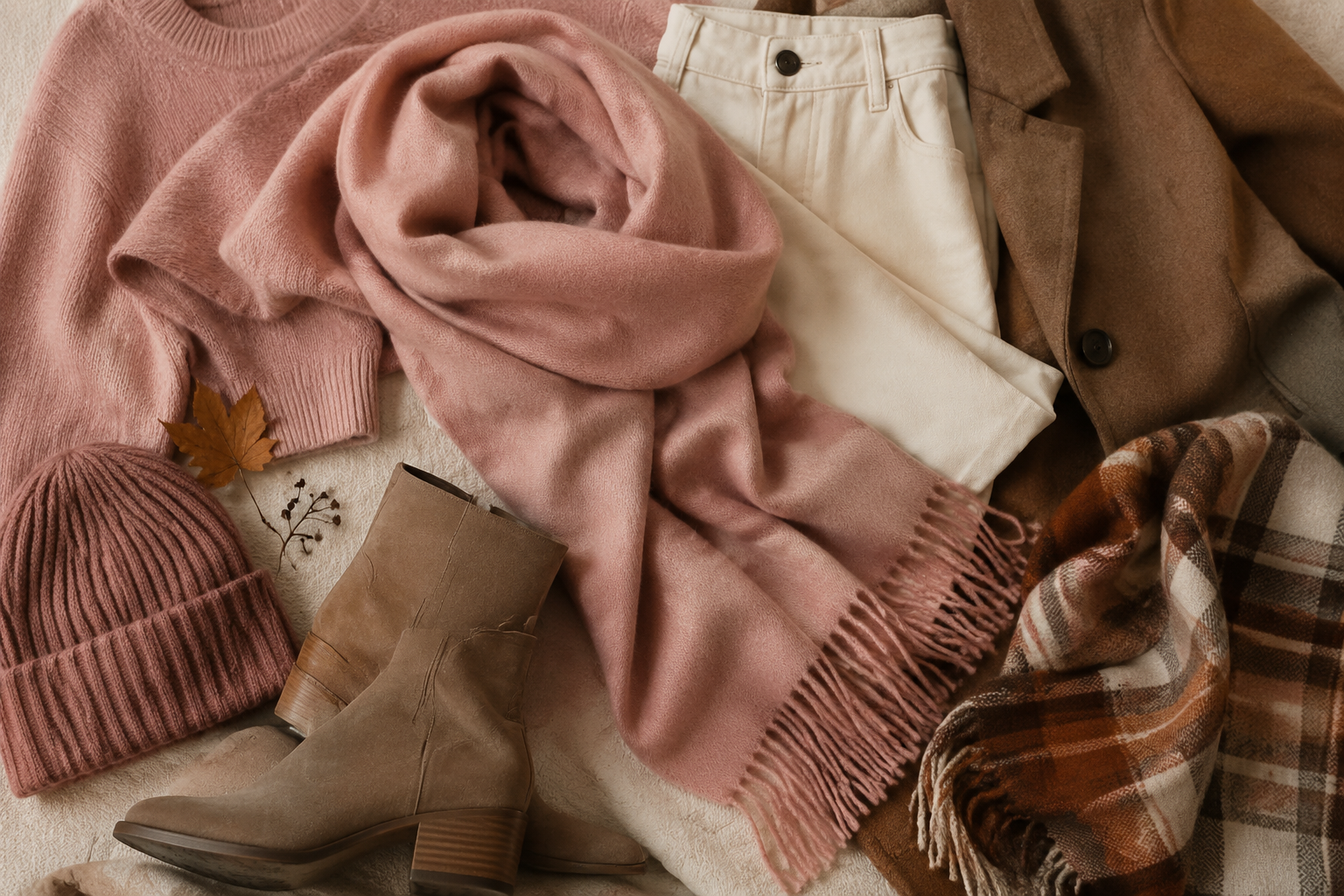
Temperature control on a plane is a lottery, and the blanket provided by the airline is a thin, gray compromise that feels like sandpaper. The solution is a large scarf, worn as a wrap, that doubles as a blanket and a pillow cover. A cotton or a merino scarf, big enough to cover the shoulders and the lap, folds down to nothing in a carry-on and adds a layer of civilization to any outfit.
The scarf solves the problem of the woman in a tank top who is freezing under the air vent and the man in a heavy coat who is sweating through his shirt. It is the adjustable layer, the one item that can be deployed or stashed without standing up, without unbuckling, without disturbing a sleeping seatmate. It also gives the wearer a small piece of home, a familiar texture in an environment that is aggressively sterile.
For men who resist the scarf, the equivalent is a lightweight cashmere or merino wrap, the kind that reads as a traveling blanket rather than a fashion statement. It can be pulled over the head like a hood in a drafty terminal and draped across the lap on a cold descent. It is the cheapest upgrade to the flying experience that exists.
What the Bag Adds
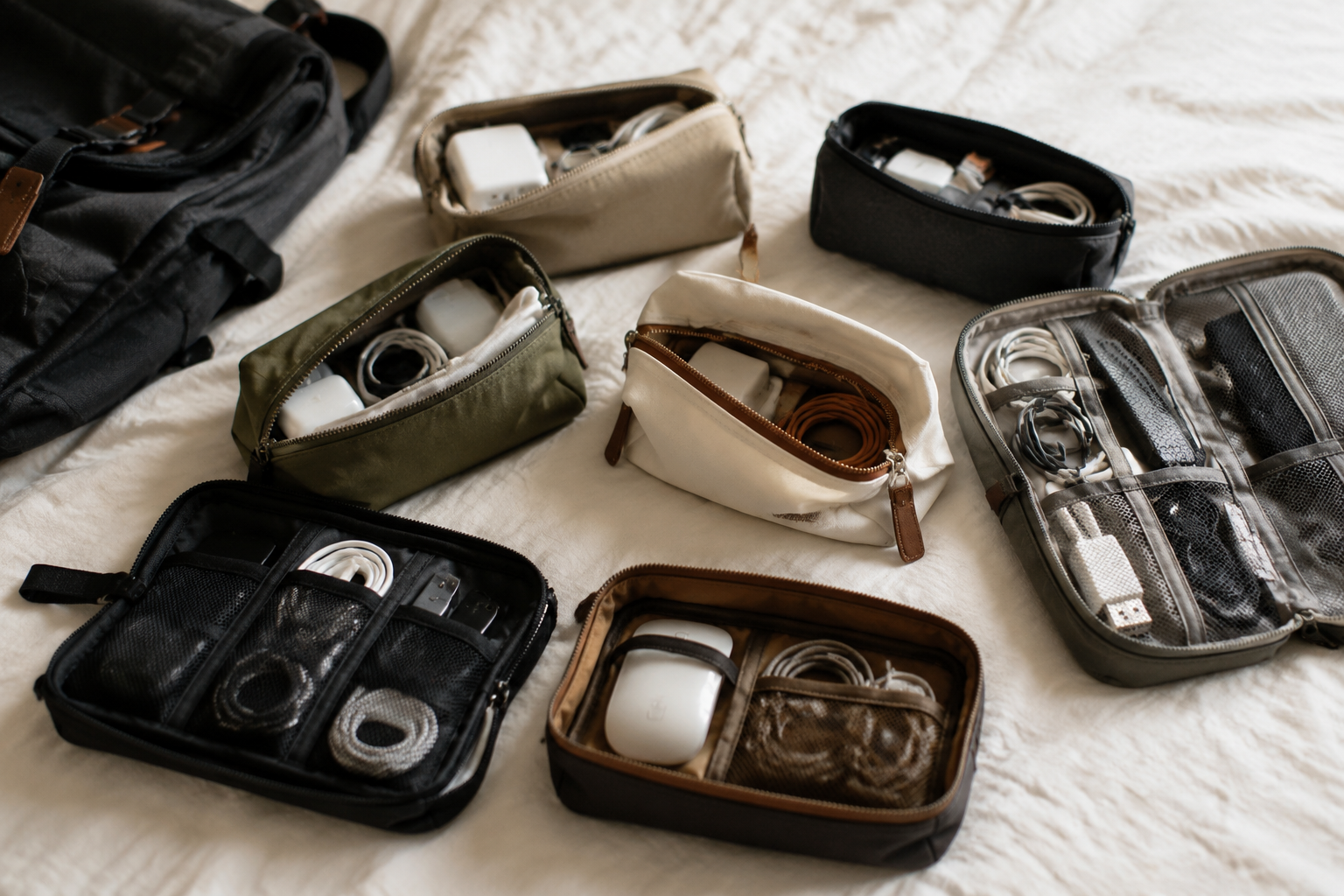
The outfit does not end at the shoulders. The bag is part of the silhouette, and a bag that fights the outfit ruins the whole look. A giant rolling suitcase with a backpack strapped to the handle is a recipe for frustration. A single carry-on spinner, paired with a small crossbody or a large tote, keeps the person mobile and prevents the horror of trying to navigate a food court with three bags swinging from one arm.
The personal item should be soft-sided and forgiving, because it will be shoved under a seat and it will be stepped on. A structured leather tote is beautiful and it is a mistake; it will get scuffed and it will not fit in the space under the seat in front of the passenger. A nylon or a canvas tote, or a backpack in a dark fabric, handles the abuse with grace.
The weight distribution matters for the walk through the terminal. A person carrying a heavy bag on one shoulder will start listing to one side by gate C12. A crossbody bag distributes the weight across the torso, and a backpack, for those who prefer it, balances both shoulders. The goal is to be able to move quickly, to change direction, to sprint if necessary, without the bag becoming a hazard.
The Destination Test
The best test for an airport outfit is whether it works after the plane lands. A person who arrives in a wrinkled shirt, with a sweater tied around the waist, looking like they slept in a bin, has failed the test even if they were comfortable. The airport outfit should be the outfit for the first few hours of the destination, because the luggage will be late and the hotel room will not be ready.
This means the outfit needs to transition from a plane to a street, from a terminal to a taxi, from a boarding gate to a bistro table. A chino and a washed oxford, a merino tee underneath, a pair of clean leather sneakers, a scarf that can be tucked into a bag: this is a uniform that works in Chicago in March and in Lisbon in June. It is not exciting. It is not a statement. It is simply the most efficient set of clothes for the specific problem of getting from one place to another without looking like a victim of the journey.
The person who masters this formula boards the plane with their essentials in their pockets, their outer layer in the bin, and their shoes free of knots. They settle into their seat, they pull the scarf over their shoulders, and they become the calmest person in the cabin. Everyone else is wrestling with a hoodie, a belt, and a carry-on that will not fit. That is the real point of the whole exercise. The outfit is not for the runway. It is for the arrival.