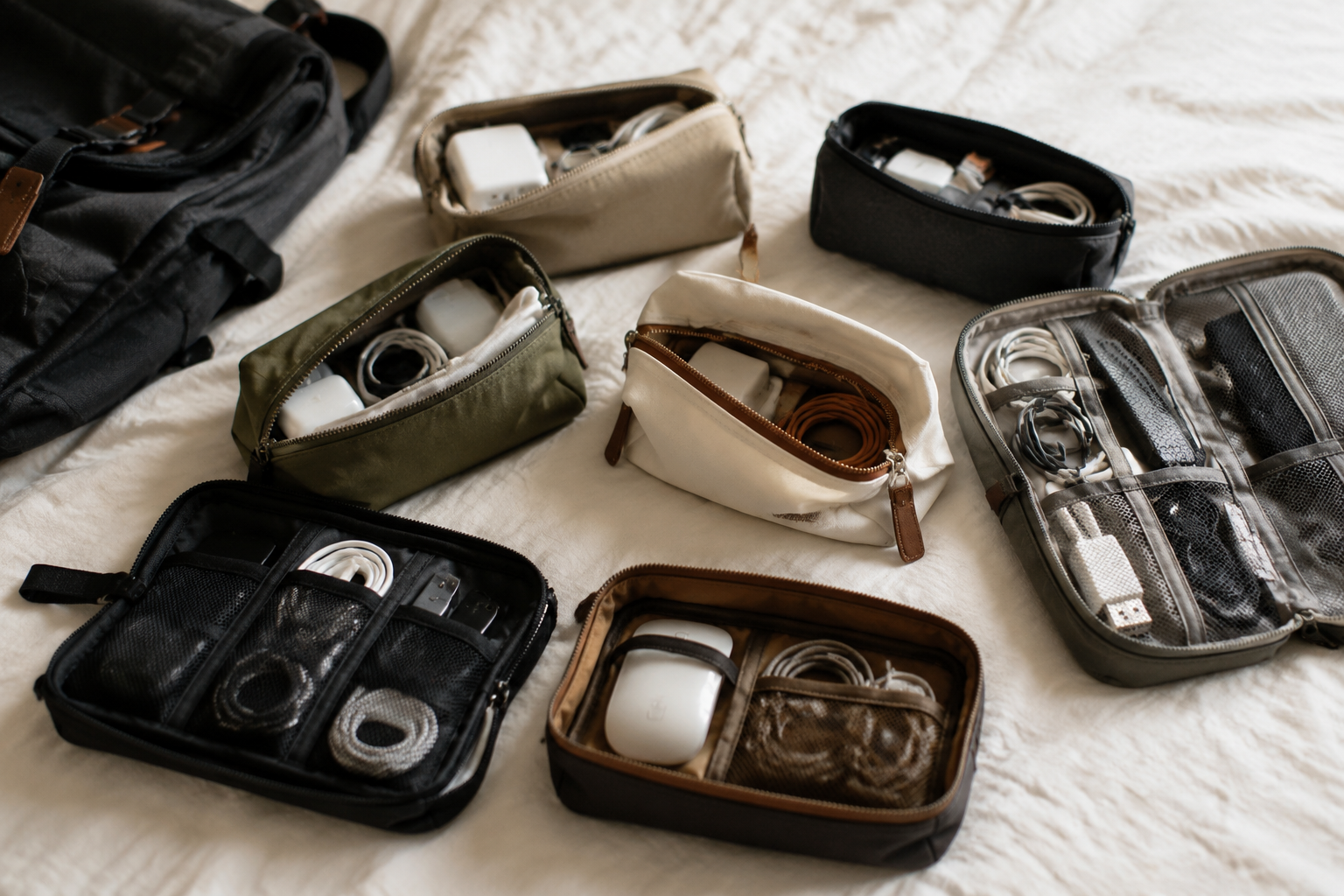
What You Need for a Smooth Work-to-Dinner Bag Switch
The bag switch is a small daily lie people tell themselves: that the transition from work bag to dinner bag can be handled gracefully in a restaurant bathroom, a taxi back seat, or the passenger side of a car parked on a city street. The truth is that most attempts fail not because of the bags themselves, but because the person doing the switching never planned for the physical reality of the moment. The work bag has a laptop, a charger, a water bottle, and a backup pair of shoes. The dinner bag has a wallet, a phone, and maybe a lipstick. The gap between those two inventories is where the chaos lives.
The people who manage this switch well do not treat it as a magic trick. They treat it as a logistics problem with a fixed set of inputs. The inputs are time, surface area, lighting, and the contents of both bags. When any one of those inputs is missing, the switch degrades into a fumble. A person who has mastered the switch knows exactly what goes where, in what order, and how long the whole operation should take. It should take under ninety seconds. If it takes longer, the system is wrong.
The Two-Bag Marriage
The first mistake most people make is treating the work bag and the dinner bag as independent objects with independent packing lists. That approach guarantees failure because it forces a full audit at the moment of transfer. Standing in a restaurant hallway, a person has to remember what is in the work bag, what is in the dinner bag, and what needs to move between them. That mental load is too heavy for a Thursday night after eight hours of meetings.
The better system is to design the two bags as a married pair. The dinner bag is not a separate kit. It is a subset of the work bag, pre-packed so that the switch becomes a simple extraction. The dinner bag lives inside the work bag all day. At the moment of transition, the person pulls out the dinner bag, zips it shut, and walks away. The work bag stays in the car or under the desk. Nothing is remembered. Nothing is hunted for. The whole operation is a pull, not a sort.
This requires a dinner bag small enough to fit inside a work bag without turning into a lump. A flat pouch or a slim crossbody that compresses to nothing works best. The point is not the brand of the bag. The point is that the dinner bag is always there, already loaded, so the switch never becomes a decision-making exercise.
The Pre-Loaded Essentials
The dinner bag needs a fixed inventory that never changes. A cardholder or slim wallet, keys, a phone charger, earbuds, and one small cosmetic item. That is the whole list. The trick is that this inventory is loaded once, on Sunday night, and then left alone. The cardholder stays in the dinner bag. The keys stay in the dinner bag. When a person gets to Friday and wants to bring a different lip color, that is a swap, not an addition. The base load stays constant.
What does not belong in the dinner bag is anything that could be needed during the workday. No laptop charger. No umbrella. No notebook. If an item is essential to the workday, it lives in the work bag and never crosses over. This rule sounds obvious, but it is the most violated principle in the whole system. People slide a phone charger into the dinner bag at 5 p.m. because they think they might need it later, and suddenly the dinner bag has become a second work bag, heavy and cluttered, and the switch has failed.
The Fifteen-Minute Rule
Timing matters more than people think. The switch should happen at least fifteen minutes before arrival at the dinner destination, not in the restaurant parking lot or the valet line. The reason is simple: the switch requires a flat surface and decent light. A parked car at dusk offers neither. A restaurant bathroom offers a wet counter and harsh fluorescent light. The office, on the other hand, has a desk, a chair, and a door that closes. That is the ideal environment.
The fifteen-minute rule also creates a buffer for the inevitable interruption. A colleague stops by to ask a question. A phone call comes in. The switch takes ninety seconds, but the interruption takes five minutes. If the switch happens at the office before leaving, there is room for that friction. If the switch happens in the car at the restaurant, there is no room, and the person walks in flustered, holding a laptop bag and a dinner bag and a jacket and a takeout container that was supposed to go in the fridge.
The Surface and the Light
Even with the pre-loaded dinner bag, the switch still involves handling two bags, and that handling needs a clean, dry, well-lit surface. A desk is ideal. A counter is acceptable. A car seat is a gamble. The reason is that the switch is a moment of vulnerability. Personal items are exposed. A credit card slips out. A lipstick rolls under the seat. The surface needs to be large enough that nothing falls, and the light needs to be bright enough that nothing is missed.
A person who does this switch daily will eventually learn to scan the surface before setting anything down. Is the desk clear? Is the counter dry? Is there a stray paperclip that could scratch the phone screen? These micro-checks take three seconds and prevent the small disasters that turn a ninety-second operation into a ten-minute hunt.
The Work Bag Stays Put
One of the least discussed elements of the switch is what happens to the work bag afterward. The work bag contains a laptop, which is heavy, and a charger, which is tangled, and a water bottle, which may be leaking. Dragging that bag into dinner is a failure of the switch even if the contents were transferred cleanly. The whole point of the dinner bag is to leave the work bag behind.
This means the system only works if the work bag has a safe place to stay. The trunk of a car, the back of a locked office, a gym locker. Each option has trade-offs. The trunk keeps the bag out of sight but leaves a laptop in a hot car. The office keeps everything safe but requires going back to the building. The person who masters the switch has already decided where the work bag sleeps before the switch begins. That decision is part of the operation, not an afterthought.
The Coat Complication
Seasonal changes break the system in a predictable way. In winter, the switch involves a coat, a scarf, and possibly gloves. These bulky items do not fit in either bag, and they multiply the number of objects a person is carrying. A person walks out of the office holding a work bag, a dinner bag, a coat, and a scarf, and suddenly the clean two-bag system has become a four-object juggling act.
The fix is to treat the coat as a third bag with its own rule: the coat goes on, not over the arm. A coat worn on the body frees both hands. A scarf stays in the coat pocket, not in a bag. Gloves go in the coat pocket too. This sounds trivial, but the number of people who arrive at dinner holding a coat in one hand and a bag in each of the others is staggering. The coat is garment first, carrier second. Wearing it solves the problem completely.
The Reverse Switch
The system also needs to work in reverse, because the morning after dinner, the dinner bag has to return to the work bag, and the work bag has to return to the office. The reverse switch is usually sloppier than the evening version. It happens in a dim bedroom at 7 a.m. with a coffee in one hand. The cardholder is on the nightstand. The keys are in the coat pocket. The dinner bag is on the floor, half-unzipped, and the work bag is still in the car.
The reverse switch deserves the same pre-loading logic as the forward version. The dinner bag gets repacked at home, on a table or a bed, not in the car. The cardholder goes back in. The keys go back in. The bag gets zipped and placed inside the work bag before the work bag leaves the house. This takes two minutes in the morning and prevents the 9 a.m. panic of realizing the keys are still in a coat from last night.
The Test of a Real System
The measure of success for any work-to-dinner bag system is whether the switch can be done in under ninety seconds with no decision-making and no searching. If a person has to think about what goes where, the system is not built yet. If a person has to dig for the cardholder, the system is not built yet. If a person has to choose between leaving the laptop in the car and carrying it into dinner, the system is not built yet.
The pre-loaded dinner bag living inside the work bag, the fixed inventory that never varies, the fifteen-minute buffer, the coat worn on the body, the work bag left in a pre-decided location. These five pieces form a complete system that handles every version of the switch, winter and summer, forward and reverse, office to restaurant and back again. The system is not glamorous. It does not require a new bag or a clever organizer. It only requires a person to decide, once, what the dinner bag contains, and then to stop deciding forever.
The switch becomes invisible, which is exactly what a good system should be. A person pulls the dinner bag from the work bag, zips it, and walks into the restaurant with a shoulder bag that holds a cardholder and a phone and nothing else. The work bag stays in the trunk. The coat stays on the body. Ninety seconds have passed, and no one watching would ever guess that a transfer just happened. That is the whole point, and it is achievable with a flat pouch, a fixed list, and a rule about the coat.