5 Accessory Mistakes That Clash With Simple Outfits
The strangest thing about a simple outfit is how easily it stops being simple. A white shirt, dark jeans, and a pair of clean sneakers carry a quiet confidence on their own. Add the wrong belt, the wrong watch, the wrong bag, and the whole thing collapses into something trying too hard. The clothes were never the problem. The accessories were.
Minimal dressing works because it gives the eye nowhere else to go. The proportions are clear, the fabric speaks, the silhouette reads in one glance. An accessory that respects that silence gets absorbed into the look. One that doesn't turns into a shout. Most people don't need more accessories. They need fewer, and they need the ones they keep to follow a few basic rules of restraint.
The Oversized Watch Problem
The watch is the first place minimal outfits go wrong, because the watch is the one accessory a person wears every day without thinking. A 46mm stainless steel diving watch bolted onto a slim wrist will overpower a plain crewneck and chinos faster than any other single mistake. The case hangs over the wrist bone, the crown digs into the hand, and the whole forearm starts to look like a display case at a pawn shop.
Simple outfits need watches that sit quietly under the cuff. A 36mm to 40mm case, a plain dial, a steel or leather band. That size range reads as confident without announcing itself. The watch should feel like part of the arm, not like a piece of machinery strapped to it.
There is a reason the most enduring watch designs of the last fifty years all hover around 36 to 39 millimeters. They were drawn to fit a human wrist, not a billboard. A person with a larger frame can wear a 42mm without looking like they borrowed a clock, but that is the ceiling. Beyond that, the watch becomes the entire outfit, and the outfit stops being simple.
Thickness matters just as much as diameter. A chunky automatic movement that stands a half inch off the wrist catches on every sleeve and forces the wearer to adjust constantly. A slim case, even a quartz one, disappears under a shirt cuff and lets the rest of the clothes do their job.
Belts That Break the Line
A belt does two things. It holds the trousers up, and it defines where the top half of the body ends and the bottom half begins. The second job is the one most people forget.
A wide belt with a heavy western buckle, or a belt in a color that matches neither the shoes nor the trousers, slices the body in half. The eye hits the flashy buckle and stops there, instead of traveling smoothly from shoulders to hem. For a simple outfit, the belt should be a seam, not a statement. A 30mm to 35mm strap in brown or black leather, with a small brushed buckle, disappears into the waistband and does its job without applause.
Matching the belt to the shoes is an old rule that holds up for a simple reason: it preserves the vertical line. Brown shoes with a black belt chop the silhouette into mismatched segments. The same brown with the same brown, even if they are not identical shades, keeps the eye moving downward in one clean flow.
Braided belts, canvas belts, and anything with a logo buckle have their places, but none of those places is a minimal outfit. They add texture and noise where the whole point is stillness.
The Statement Bag That Eats the Look
Bags are the most expensive accessory and the most common reason a simple outfit reads as confused. A person puts on a plain black turtleneck, tailored wool trousers, clean leather shoes, and feels underdressed. So they grab the monogrammed canvas tote with the loud pattern, or the neon crossbody, or the briefcase with enough hardware to anchor a boat. The result is a quiet, elegant outfit carrying a screaming advertisement.
The bag should match the outfit's level of formality, not the wearer's mood. A minimalist outfit in muted tones calls for a bag in a muted tone, with minimal hardware and no visible branding. A black leather backpack, a structured tote in undyed canvas, a simple satchel. The shape can be interesting. The surface should stay calm.
Here is the test that works: cover the bag and look at the outfit. The outfit looks finished. Uncover the bag and look again. If the bag demands attention away from the face, it is wrong. The bag is furniture, not a guest of honor.
Layered Necklaces Built Like a Construction Site
Layered necklaces became the default accessory move for simple outfits, and the default has become a pile of thin chains that tangle, clink, and catch in collars. Three or four delicate gold chains look effortless in a photograph. In real life, they twist into a knot behind the neck, slide around unevenly, and draw the eye to a metallic tangle at the collarbone.
The issue is not the layering itself. The issue is that most people buy pieces without considering length, weight, or how they interact. Two necklaces at nearly the same length will sit on top of each other like stacked coins. Three necklaces with different clasps will fight for space. The result is a look that requires constant fiddling, which defeats the entire purpose of a simple outfit.
If layering is the goal, the pieces need clear separation. A 16-inch choker, an 18-inch pendant, and a 22-inch chain create distinct tiers. Keep the metal the same throughout, or introduce a single contrasting texture, a leather cord with gold pendants, for example. And the weight matters. Two dainty chains with a heavier pendant between them will lie flat. Three dainty chains of equal weight will float and twist.
The better move for most people is one necklace with real presence. A single substantial pendant on a simple chain does what three thin ones try to do: it anchors the neckline and gives the eye a resting place. The spareness of the outfit gives that one piece room to be noticed.
Scarves and Hats That Dress Up Instead of Down
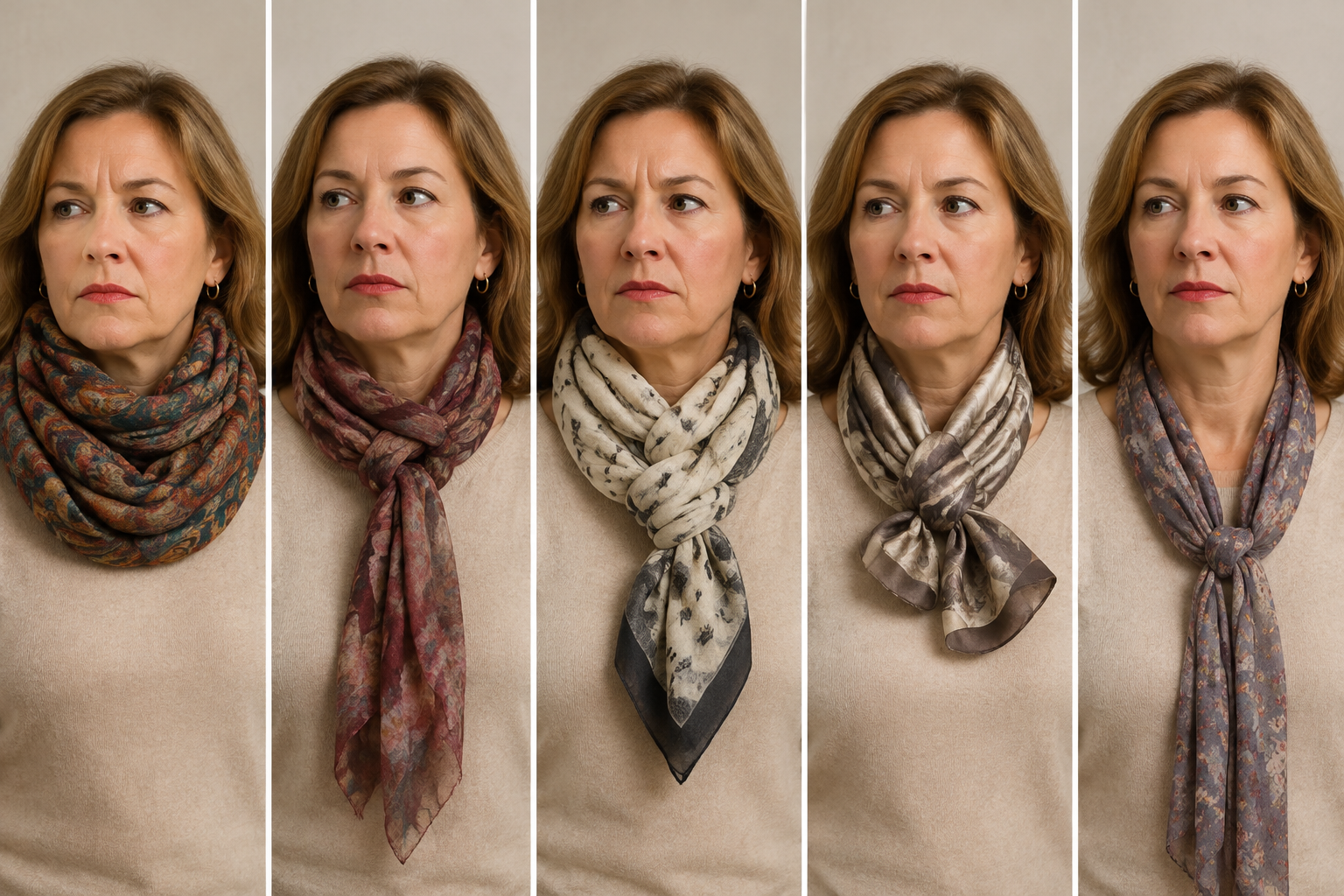
A simple outfit is casual by definition. It is not a suit. It is not a gown. It is the everyday uniform of a person who values ease. Adding a silk scarf tied in a complicated knot, or a felt fedora, or any accessory with formal connotations, yanks that casual outfit into a costume.
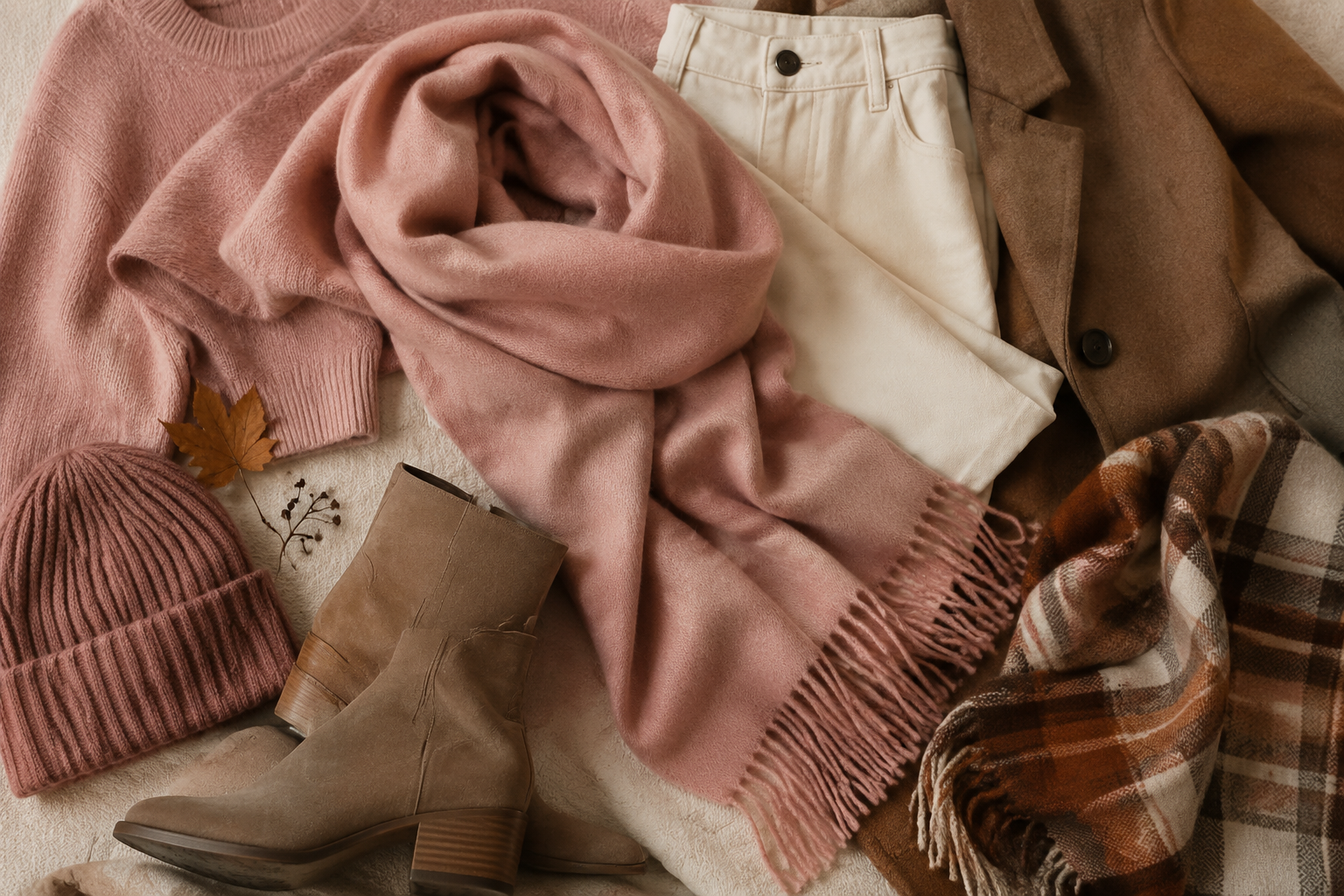
The scarf is the worst offender. A plain t-shirt, jeans, and a silk square knotted at the neck reads as a person trying to add sophistication to a look that did not ask for it. The same outfit with a chunky knit scarf in a muted color, worn loosely, stays casual and warm. The fabric has to match the energy of the clothes.
Hats work on the same principle. A baseball cap or a beanie reads casual and pairs naturally with simple clothes. A fedora, a newsboy cap, or a wide-brimmed felt hat carries historical weight that overwhelms a t-shirt. The hat becomes the defining feature, and the simplicity underneath gets lost in the shadow.
There is a useful question to ask before adding anything with fabric: would this item look natural at a picnic, or does it look like it belongs at a gala? Simple outfits belong to the picnic. Accessories that belong to the gala will always clash.
The Wrong Metal Mix at the Wrong Time
Mixing metals became trendy a few years ago, and the trend produced a generation of people wearing gold earrings, a silver watch, and a rose gold ring all at once. The result is not eclectic. It is accidental.
Wearing two metals can work when there is a clear hierarchy. A gold watch with a silver ring, or vice versa, creates a deliberate contrast that reads as styled. Three metals in equal proportion reads as a drawer dump. The eye cannot decide where to land, and the outfit loses its calm.
The fix is simple: pick a dominant metal and let the other become the accent. If the watch is silver, the earrings should be silver, and the ring can be gold. If the necklace is gold, the bracelet should be gold, and the watch can be silver. The dominant metal takes up about three quarters of the visible metal, and the accent takes the rest. That ratio keeps the look intentional.
Skin tone matters less than people think. The old rules about warm skin needing gold and cool skin needing silver were invented by jewelry marketers. What actually matters is consistency. A person who commits to silver looks put together. A person who commits to gold looks put together. A person who wears both in equal measure looks like they got dressed in the dark.
Eyewear as a Fashion Accessory
Glasses are the one accessory a person cannot take off, which makes them the most important and the most overlooked. People who carefully choose a watch and a belt will wear the same thick black plastic frames they bought because a celebrity wore them, and those frames will dominate every single outfit they own.
Simple outfits need glasses that recede. Thin metal frames in gold, silver, or matte black disappear into the face. Clear acetate frames let the skin and hair do the talking. Oversized frames, bright colors, and heavy geometric shapes become the center of every photograph, every conversation, every first impression. The outfit underneath never gets a chance.
Sunglasses follow the same rule with an extra layer of caution. The reflected lens is already a statement. Adding a loud frame on top of it is doubling down. A simple outfit with a classic aviator or a rounded wayfarer in a dark frame works because the silhouette of the glasses is familiar. The novelty shapes, the colored lenses, the mirrored finishes, they all pull the eye up and away from the clothes.
The practical test for eyewear is to take a photo of the whole outfit, not just the face. The glasses should be part of the composition, not the focal point. If the eye goes to the frames first, the frames are wrong.
The Accumulation Problem
None of these mistakes is fatal on its own. A slightly oversized watch with a simple outfit is a minor flaw. A statement bag with a plain t-shirt is a character choice. The real damage happens when two or three of these accumulate. The oversized watch, the mismatched belt, the layered necklaces, and suddenly the simple outfit is buried under a pile of competing details.
Minimal dressing is a discipline of subtraction. The goal is not to find the perfect accessory. The goal is to find the one or two pieces that the outfit genuinely needs, and to leave the rest in the drawer. A watch and a belt. A bag and a ring. Two things, maybe three, worn with conviction.
The people whose simple outfits look expensive and effortless are not wearing expensive accessories. They are wearing fewer accessories, and the ones they wear are in proportion to their bodies and in harmony with their clothes. The watch fits the wrist. The belt matches the shoes. The bag stays quiet. The necklace lies flat. These are not mysterious skills. They are choices, repeated daily until they become instinct.
A simple outfit is a statement of confidence. It says the person wearing it does not need to be loud to be seen. The right accessories honor that statement. The wrong ones contradict it. The difference is not taste, not budget, not fashion knowledge. It is the willingness to leave things off.