Early autumn is the season when color starts doing more work than fabric weight. The air may still be warm at lunchtime, the commute may still punish a wool coat, and yet the pale linen shirt that looked crisp in July suddenly feels a little stranded. Color is the easier lever. A person can keep the cotton poplin, the denim, the soft trousers, the loafers, the plain tee, and simply shift the palette from bright summer clarity into something quieter, drier, and more grounded.
The best early-autumn palettes are practical before they are poetic. They do not require a new wardrobe or a dramatic seasonal costume change. They make a white T-shirt look intentional under a brown jacket. They make black sandals survive a few more weeks. They let a navy sweater, tan chinos, washed jeans, and a cream shirt sit together without that slightly confused look of clothes pulled from different weather forecasts.
There is a temptation, once September arrives, to rush straight into pumpkin, burgundy, forest green, and heavy camel. Those colors have their place, but too much of them too early can look theatrical, especially on an ordinary weekday at the grocery store or in an office with aggressive air conditioning. Early autumn asks for restraint: softened shades, browned edges, colors that suggest the season without announcing it from across the room.
Olive, Cream, and Washed Denim
Olive is the easiest early-autumn color because it behaves like a neutral while giving an outfit a little weather. A faded olive overshirt over a cream tee and straight-leg jeans looks seasonal without feeling styled to death. The same palette works with a cotton chore jacket, a ribbed tank, loose denim, and flat sandals on a day that starts cool and ends sticky.
The important detail is the temperature of the olive. A dusty, gray-green olive is usually more forgiving than a sharp military green. It sits well beside ecru, ivory, oatmeal, and old blue denim. It also makes silver jewelry, tortoiseshell sunglasses, brown leather belts, and black canvas sneakers look natural in the same outfit, which is a useful trick for people who do not want to coordinate every accessory.
This palette is especially good for easy everyday outfits because it tolerates repetition. Olive pants with a cream button-down on Monday, an olive jacket with jeans on Thursday, and an olive knit tied around the shoulders on Saturday do not read as the same outfit repeating. The color recedes enough to be useful. It has character, but it does not demand attention.
Chocolate Brown, White, and Black
Chocolate brown has become the more interesting answer to black in early autumn, though the best use of it is often with black rather than instead of it. A dark brown suede loafer, a white shirt, black trousers, and a brown belt can look cleaner than an all-black outfit during the in-between weeks. The white keeps it sharp. The brown gives it depth. The black keeps it from turning soft.
This palette works because the contrast is simple and adult. A white ribbed tank with black jeans and a brown cardigan. A black slip skirt with a white tee and chocolate leather slides. A white Oxford shirt under a brown knit vest with black straight trousers. None of these combinations require pattern, novelty, or a complicated silhouette. They rely on three colors that almost everyone already owns in some form.
Texture matters here. Chocolate brown looks best in materials that catch a little light: suede, leather, corduroy, ribbed cotton, brushed knitwear. Flat brown jersey can sometimes look tired, especially after several washes. A brown leather belt or bag is the smallest possible entry point, and often enough to pull summer basics toward autumn.
Navy, Camel, and Soft White
Navy and camel can become stiff if the pieces are too formal, but in casual clothes the combination is one of the most useful early-autumn formulas. Navy cotton sweaters, camel trench coats, soft white T-shirts, khaki trousers, cream socks, dark denim, and tan loafers all live comfortably in the same neighborhood. The palette has polish without making a Tuesday morning outfit feel like a costume for a private school brochure.
The trick is to keep the white slightly softened. Stark optic white can work, especially with crisp shirting, but ecru and milk-white shades usually make camel look richer. A navy cardigan over an ivory tee with camel trousers is simple enough for errands and still composed enough for lunch or a casual office. Swap the trousers for jeans and the whole thing relaxes immediately.
This is also a strong palette for outer layers. A camel trench over navy sweats can rescue a very plain outfit. A navy jacket over a cream knit and tan chinos gives structure without much thought. For anyone who dresses in uniforms, this combination is one of the rare ones that can be repeated for years without feeling dated.
Rust, Charcoal, and Ivory
Rust is the color people reach for when they want autumn immediately, and it needs a firm hand. In small doses, it is excellent. A rust cardigan with charcoal jeans and an ivory tee looks warm, current, and easy. A rust scarf with a gray sweatshirt and cream trousers can do the same. Head-to-toe rust, on an ordinary weekday, often crosses into seasonal display.
Charcoal is what makes rust wearable. Black can sharpen it too much, and brown can make the whole outfit feel muddy. Charcoal gives rust a dry, urban quality. It is the color of worn pavement after rain, of a washed sweatshirt, of wool trousers that have been in the closet for years. Against that, rust reads less like a decoration and more like a considered accent.
Ivory keeps the palette from becoming heavy. A cream crewneck, an off-white canvas sneaker, or a pale tote breaks up the density. This matters in early autumn, when the calendar may say September but the body still remembers August. The best version of this palette leaves some air in the outfit: exposed ankle, a cotton layer, a lighter shoe, a neckline that does not feel bundled.
Dusty Blue, Taupe, and Bone
Not every early-autumn palette needs to lean warm. Dusty blue, taupe, and bone are useful for people who look better in cooler, quieter colors or who simply dislike the usual harvest range. A washed blue shirt with taupe trousers and bone sneakers has the same seasonal ease as olive and denim, but the mood is cleaner and less rugged.
Dusty blue works particularly well in chambray, oxford cloth, fine knits, and faded sweatshirts. Taupe is harder, because bad taupe can drift into lifeless gray beige. The better versions have a little stone, mushroom, or clay in them. Bone, rather than bright white, gives the palette a soft base. Together, the colors make a nice home for brushed silver, pearl buttons, gray suede, and pale leather.
This palette is underrated for transitional work outfits. A blue button-down, taupe wide-leg trousers, and ivory flats can handle a warm afternoon. Add a gray cardigan or a stone trench, and the same outfit carries into a cooler evening. It does not scream autumn, which is exactly the appeal. Some days only need a slight shift in atmosphere.
Burgundy, Tan, and Medium Wash Blue
Burgundy becomes easier when it is treated like navy or brown: a dependable dark color, rather than a statement shade. A burgundy knit with medium wash jeans and tan loafers is one of the great low-effort early-autumn outfits. The blue keeps it familiar, the tan keeps it casual, and the burgundy adds enough richness to make the outfit look deliberate.
The strongest burgundies have a little brown or wine in them. Very purple burgundy can be beautiful, but it asks more of the surrounding colors. With tan and denim, a deeper wine shade is simpler. It works in cardigans, polo sweaters, socks, belts, bags, ballet flats, and light jackets. A burgundy shoe with jeans and a white tee is often more interesting than a black shoe and just as easy to wear.
This palette benefits from medium denim rather than very dark indigo. Dark denim plus burgundy can become dense, especially before coat season. A medium wash jean, a chambray shirt, or a faded denim jacket brings daylight into the combination. Tan does the same job through leather or cotton: loafers, suede clogs, a canvas jacket, a narrow belt, a tote that has already lost its newness.
Sage, Espresso, and Pale Gray
Sage has a gentler personality than olive. It is cooler, paler, and often easier near the face, especially for people who find deep greens harsh. Paired with espresso brown and pale gray, it becomes a quiet early-autumn palette that feels fresh without leaning springlike. A sage shirt, gray trousers, and espresso loafers make a good example: soft on top, grounded at the foot.
Espresso brown is doing the serious work in this combination. It keeps sage from floating away. A dark brown bag, leather jacket, belt, or pair of shoes gives the pale green something to answer to. Pale gray softens the contrast in the middle. Gray sweatshirts, heather tees, wool-blend trousers, and fine-gauge cardigans are useful here, because they create a bridge between the coolness of sage and the depth of espresso.
This palette is especially good with simple silhouettes: a crewneck sweater, straight trousers, plain sneakers, a boxy jacket. Too many details can make sage look precious. The cleanest outfits let the color do the quiet work. A sage cotton knit over a gray tee, dark brown belt, faded black jeans, and brown loafers has that early-autumn feeling of being ready for cooler weather without dressing as if it has fully arrived.
Tomato Red, Khaki, and Ink Blue
Tomato red is the useful loud color of early autumn. It is warmer than cherry, less formal than burgundy, and surprisingly good with khaki. A tomato-red cardigan over an ink-blue tee with khaki trousers can look cheerful without feeling summery. The red gives energy, the khaki dulls the shine, and the ink blue keeps the whole outfit from becoming too cute.
This is a good palette for people whose everyday clothes are built from basics and who need one color to wake them up. A red sock with loafers. A red canvas tote with a navy sweatshirt and khakis. A red striped shirt under a dark denim jacket. Small red pieces can do a lot, particularly when the rest of the outfit is practical and matte.
Khaki should be a little dry, almost dusty, rather than golden. Ink blue can come from dark denim, a navy chore coat, a cotton sweater, or a structured tee. The combination has a faint school-supply feeling, in the best sense: new notebooks, canvas bags, polished shoes, a jacket over the back of a chair. It suits the part of autumn that still belongs to daylight.
Black, Ecru, and Weathered Brass
Black remains useful in early autumn, especially for people who wear it all year and have no interest in replacing it with a seasonal brown. The shift can be as small as changing the companion colors. Black with stark white can feel crisp and graphic. Black with ecru and weathered brass looks softer, older, and more suited to September light.
Weathered brass does not need to mean actual metal hardware on everything. It can be the dull gold of a watch, a belt buckle, a small hoop earring, a chain strap, or the buttons on a cardigan. Against black and ecru, that muted yellow-brown note adds warmth without requiring a colored garment. This is useful for anyone who prefers monochrome but still wants the outfit to feel seasonally adjusted.
An ecru knit with black trousers and old brass jewelry is enough. So is a black dress with a cream cardigan and brown-black sandals. The palette works best when the black pieces are simple and the ecru pieces have some texture: ribbing, brushed cotton, open weave, denim, canvas, or a slightly slubby tee. The result is spare, but not cold.
How to Use One New Color Without Rebuilding the Closet
The most sensible way to use early-autumn color is to choose one seasonal shade and let the existing wardrobe absorb it. Olive joins white, denim, black, and gray easily. Burgundy joins denim, tan, navy, and cream. Chocolate brown joins almost everything except certain clear pastels, and even those can work with the right shoe. A new palette does not have to mean a new stack of clothes.
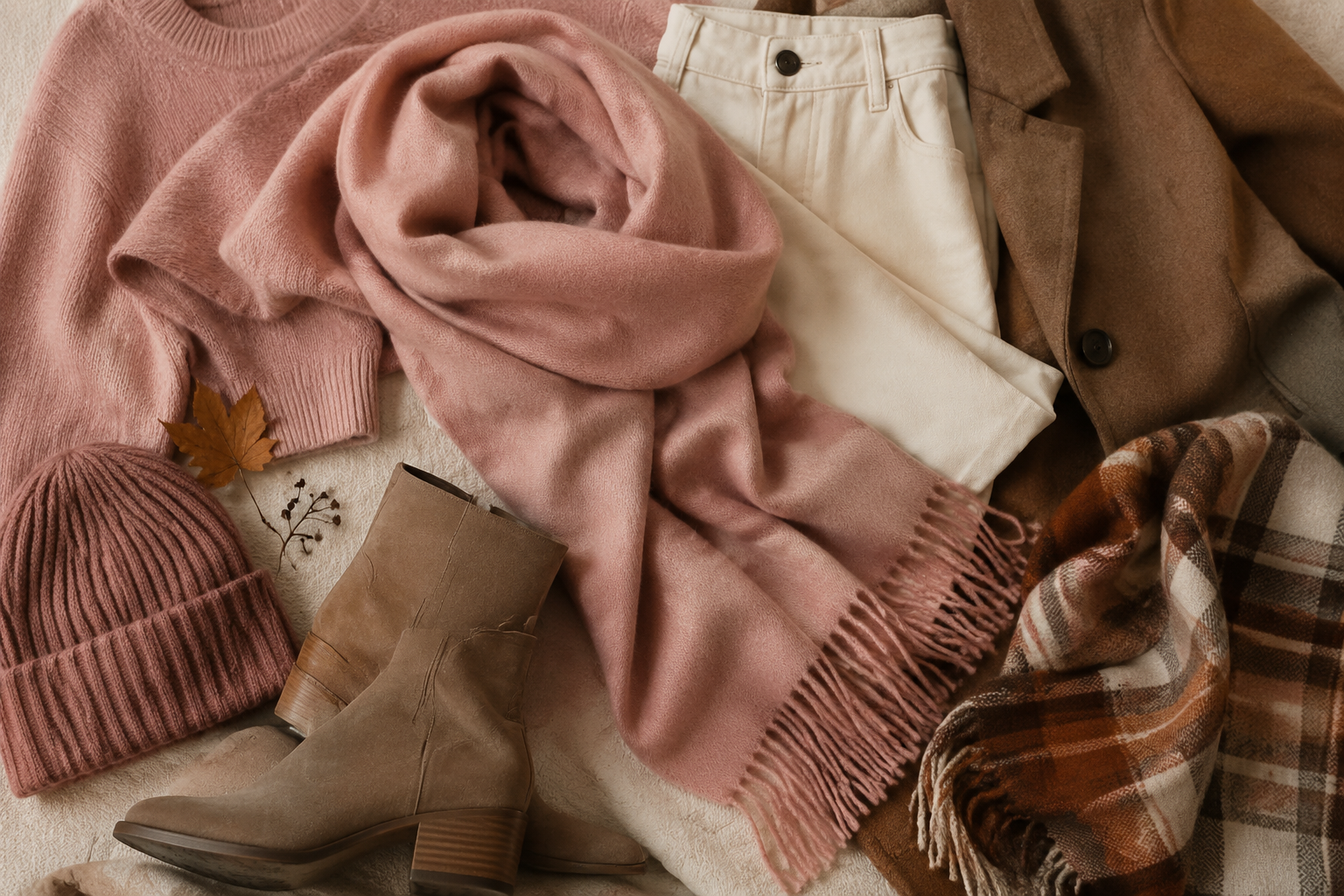
Accessories are the lowest-risk test. A brown belt, burgundy flats, olive cap, rust sock, sage tote, or tomato-red scarf can prove whether a color earns its place. The next step is usually a top layer: cardigan, overshirt, cotton sweater, light jacket. These pieces sit visibly in an outfit and can be removed when the afternoon warms up. Pants in a new color are a larger commitment, because they dictate shoes and proportions more forcefully.
A practical closet can be built around a few anchors: one light neutral, one dark neutral, one blue, one brown, and one seasonal accent. Early autumn is where those anchors become obvious. Cream tee, dark jeans, olive jacket, brown belt. Navy sweater, ecru trousers, tan loafers. Black skirt, ivory shirt, burgundy flats. The outfits come from moving the same colors into slightly different positions.
The Shoe Color That Decides the Palette
Shoes often decide whether an early-autumn palette looks coherent. Black shoes make rust, burgundy, olive, and camel sharper. Brown shoes make the same colors softer. White sneakers keep transitional outfits casual and light, while cream sneakers usually blend better with autumn shades. A single pair of dark brown loafers can make jeans, dresses, trousers, and skirts feel ready for the season before the weather justifies boots.
This is where many otherwise good color combinations fail. A pale summer sandal under a heavy rust cardigan can look accidental. A black ballet flat under an ivory trouser and sage shirt may be exactly the contrast needed. A tan suede clog can make burgundy socks and medium denim feel charming rather than forced. The shoe does not need to match the bag or belt, but it needs to belong to the same climate as the rest of the outfit.
For the first cool morning, the simplest move is often a familiar outfit with a darker shoe. The white tee stays. The jeans stay. The cotton jacket stays. The sandals go back on the shelf, and brown loafers take their place by the door, already creased across the toe.