Most people treat their jewelry box like a junk drawer with nicer lighting. Rings get dropped onto a felt tray, tossed into a ceramic dish on the bathroom counter, or left in a coat pocket on a Tuesday and rediscovered in March. For a plain metal band, this carelessness amounts to a few scratches. For a ring with a stone, the stakes are higher. Stones come loose for a reason, and that reason is usually not the setting itself. It is the way the ring is handled and stored in the hours when nobody is wearing it.
Ask any jeweler who does repairs, and the stories align with unsettling precision. A customer brings in a diamond solitaire that has started to click when shaken. Another arrives with an emerald that has gone from snug to spinning on its own axis. The common thread is rarely a defective prong. It is the habit of storing rings loose, where they collide with other objects, get caught on fabric, or sit in a position that puts constant pressure on the vulnerable parts of the setting.
The physical reality of a stone in a setting is that it is held by tension and small metal components. Prongs are bent over the crown of the stone. A bezel is a wall of metal pressed around the edges. Invisible settings rely on tiny grooves cut into the girdle of the diamond. All of these systems work because the metal is slightly elastic and the stone is slightly rigid. The moment something bends that metal in the wrong direction, the grip loosens. It does not have to bend far. A fraction of a millimeter is enough to turn a secure stone into a rattling one.
The storage solution starts with a simple refusal: never let two rings touch each other when they are not on a finger. Metal against metal is the fastest way to wear down prongs, especially on rings worn daily. A gold prong is soft. It deforms under pressure. When a ring is tossed into a shared dish with a few others, the daily jostling of morning routines does more damage than a year of careful wear. The solution is not a fancier dish. It is separation.
The Case for Individual Slots Instead of Shared Trays
The classic ring tray with a velvet surface and a single open well looks elegant, but it is a communal space. Every ring placed into that well touches every other ring. The velvet is soft, which protects against scratches on the metal, but it does nothing to prevent two shanks from grinding against each other when the tray is moved or when another ring is dropped in on top. A better system is a tray with individual slots, each one sized to hold a single ring without touching its neighbors.
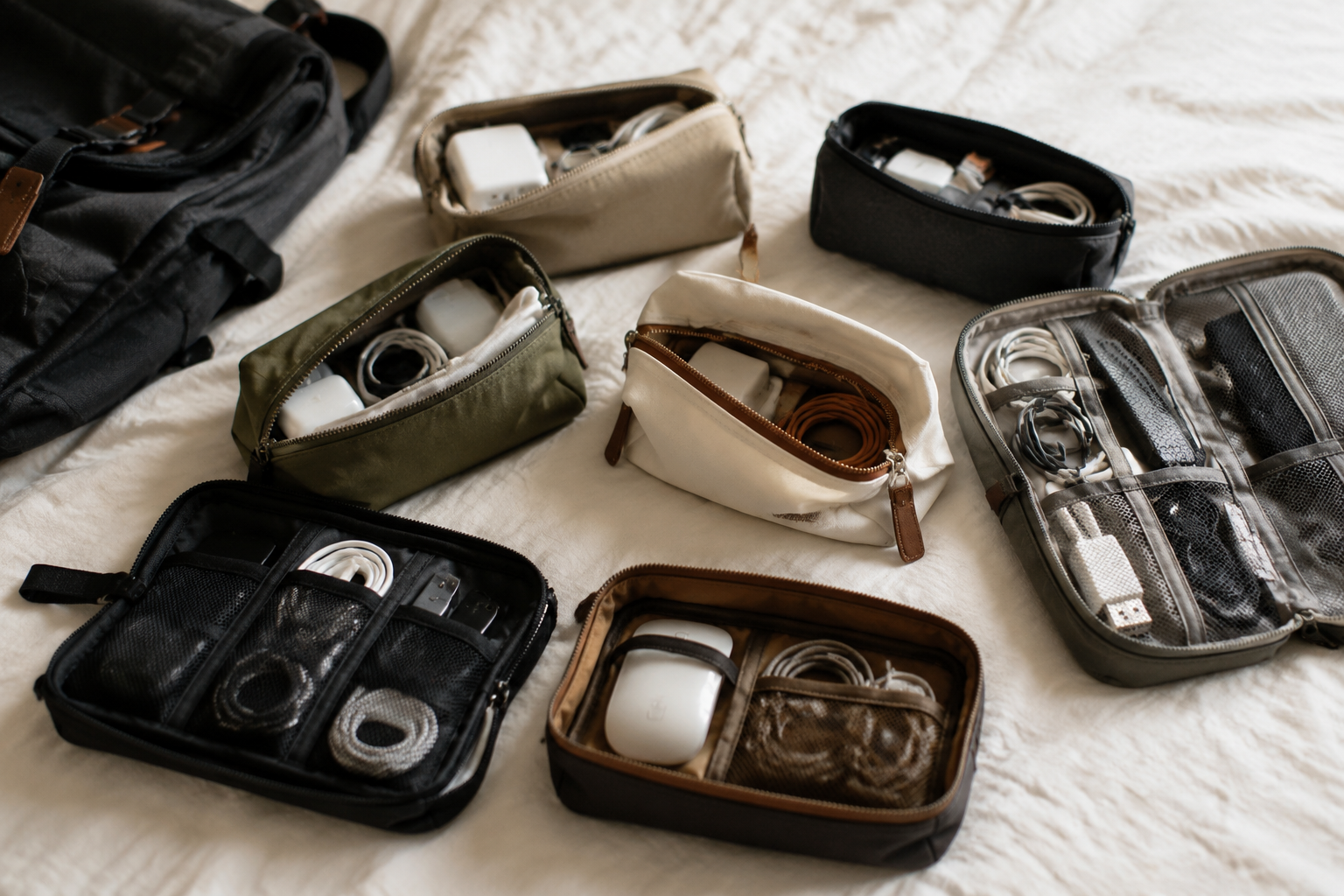
This is where the market has quietly improved in recent years. Ring holders with individual cylindrical slots, often sold as travel cases or stackable organizers, keep each piece isolated. The slot does not have to be padded. It just has to be a physical divider. A row of slots in a drawer, or a case with foam inserts cut to fit, achieves the separation that protects both the metal and the stone. The key is that the ring sits in its own space, with nothing pressing against the sides of the setting.
For people with more than a few rings, the individual slot approach scales well. A drawer organizer with a grid of small compartments works. A multi-page ring folder, the kind with clear plastic pages and individual pockets, works even better for travel. The pockets are soft, transparent, and hold each ring flat. The rings do not slide around, and the pages can be stacked without putting pressure on the stones. This is the storage method that most professional jewelers use for their own pieces, which should tell a person something.
The Problem with Standing Rings Upright on Prongs
There is a particular habit that drives repair jewelers to quiet frustration: standing a ring on its head, with the stone facing down and the shank pointing up. People do this because it looks neat, or because the ring fits into a narrow slot that way. The problem is that the entire weight of the ring rests on the prongs or the bezel edge. Over days and weeks, that constant pressure can bend a prong outward, especially on a ring with a larger stone. The weight is not enormous, but it is unrelenting. Metal under continuous load creeps.
The correct orientation for storage is the same as the orientation for wearing. The ring should rest on its shank, the solid band part, with the stone facing up or sideways. This distributes the weight across the thickest part of the ring, which is designed to handle pressure. A ring standing on its head is a ring slowly loosening its own grip on its stone.
People who wear their rings while doing dishes, gardening, or lifting weights are often the first to deny that storage matters. But the math is simple: a ring worn for 16 hours a day is under moderate, constantly changing stress. A ring stored improperly for 8 hours a night is under a different kind of stress, steady and unidirectional. The steady pressure is worse for a setting because it does not allow the metal to relax. The prongs stay bent in one direction, and eventually they stay bent.
Humidity, Sunlight, and the Closet Nobody Thinks About
The environment where a ring lives matters almost as much as the container it lives in. High humidity is a known issue for some stones, particularly opals, pearls, and other porous gems that can absorb moisture and swell or lose their luster. Low humidity is worse for others. A dry, heated apartment in winter can cause certain stones to become brittle, and it can dry out the natural oils that give some gems their depth of color. The storage location should be neither a steamy bathroom nor a sun-baked windowsill.
Sunlight is a quieter problem. Prolonged direct exposure can fade the color of some stones, notably amethyst, citrine, and certain types of topaz. It also degrades the adhesives used in some settings, particularly for stones that are glued rather than pronged or bezel-set. A drawer is better than a shelf. A box inside a drawer is better still. The layers of darkness protect the stone from the slow bleaching effect of light.
The temperature swings in a car glovebox or a bathroom cabinet are also worth considering. Metal expands and contracts with temperature. A ring left in a hot car on a summer afternoon can have its prongs briefly stretched by the heat, and if the stone is already slightly loose, the expansion provides a moment of opportunity for the stone to shift. This is not a dramatic effect, but it is a real one, and it compounds over years.
Separating Rings by Metal Hardness and Stone Hardness
Not all rings are equally vulnerable. A platinum setting is considerably harder and more resistant to deformation than a gold one. A titanium band will scratch a gold band if they share a compartment. A diamond, being the hardest natural material, can scratch any other stone or metal it touches. This is a strong argument for keeping rings apart, not just by slot, but by category.
A person with a collection that includes both a delicate gold band with a sapphire and a chunky steel fashion ring should not store them in the same tray, even in separate slots. The vibration of closing a drawer, or the simple act of moving the tray, can cause lighter pieces to shift and brush against heavier ones. The steel ring is not trying to damage the gold ring, but it will, given enough contact. Keeping the softer metals and softer stones in a separate box entirely is the safest policy.
This is also why the common practice of storing rings in a ziplock bag, while effective for preventing scratches, is not fully sufficient. The bag keeps the ring isolated, but it also creates a micro-environment that can trap moisture against the metal and stone. A dry cloth pouch is better than plastic. A soft jewelry pouch with a drawstring, placed inside a slot or compartment, offers both physical isolation and breathability.
The Weekly Inspection That Catches Problems Early
Storage is not a passive act. It is the companion to a simple maintenance habit that many people skip: looking at the setting under bright light, on a regular schedule, with the specific intent of finding problems before they become catastrophes. A weekly check, taking no more than thirty seconds per ring, can catch a bent prong, a loose stone, or a worn spot on the shank long before the ring becomes a trip to the repair shop.
The check is straightforward. Hold the ring between the thumb and forefinger and gently tap the stone with a fingernail. A secure stone produces a clear, solid sound. A loose stone produces a duller thud or a faint rattle. Then look at the prongs from the side. Each prong should sit flush against the stone's crown, with no visible gap. A gap is a sign that the prong has bent outward and is no longer holding the stone under tension. Finally, run a fingernail over the prong tips. A snag indicates a burr, which is a sign of wear and a precursor to a prong breaking off entirely.
This inspection takes longer to describe than to perform. The value is not in the complexity. It is in the consistency. A person who checks their rings weekly, and who stores them properly, will likely never lose a stone. A person who does neither will eventually have a story about finding a setting with an empty hole where a diamond used to be.
The Travel Case That Saves a Vacation
Travel storage deserves its own mention because the constraints are different. A home drawer organizer will not survive a carry-on bag being tossed into an overhead bin. The travel ring case needs to be rigid, padded, and sized to prevent movement within the luggage. A hard-shell case with foam inserts and individual ring slots is the standard for a reason. The rings do not move, the stones do not get knocked, and the case absorbs the impact of being thrown around.
A full travel jewelry roll, the kind with a zippered exterior and a fabric interior, is a poor choice for rings with prominent stones. The roll allows the rings to slide along the fabric, and the pressure of the roll being folded can push the stones against the material. A rigid case keeps the rings fixed in place. For a single ring, a small hard case with a foam interior, often sold for one or two rings, is sufficient.
The other travel consideration is where the case goes. A checked bag is a bad idea for anything of value, and a ring is no exception. The case should be in a personal item, under the seat, not in the overhead bin where it can be crushed by a heavy bag sliding in later. This is a small adjustment in packing habits that has an outsized effect on whether a stone survives a flight.
When the Setting Itself Is the Weak Point
Some ring designs are inherently more fragile than others, and storage cannot fully compensate for a weak setting. A ring with six thin prongs holding a large stone is more vulnerable than a ring with a full bezel setting. A ring with a cathedral setting, where the stone is raised on an arch of metal, has more exposed parts than a low-profile ring. These differences matter for storage because the fragile parts need extra protection.
A high-set stone should never be stored in a way that allows anything to press against the crown. A low-profile bezel ring can be stored more casually, though separation still matters. People who choose delicate, decorative settings must accept the trade-off: the ring looks more elegant on the finger, but it requires more careful handling off the finger. The storage method should match the fragility of the setting, not the price of the ring.
A heavy ring with a large stone, such as a cocktail ring or a statement piece, needs the most robust storage. The weight of the stone itself, combined with the leverage of the tall setting, means that a fall from even a modest height can snap a prong. These rings should live in a padded slot, never in a loose pile, and they should be the first rings packed into a travel case and the last ones removed.
The Cleaning Mistake That Loosens Stones
One storage-adjacent habit deserves direct mention because it is a frequent cause of loose stones: ultrasonic cleaners used too often. An ultrasonic cleaner shakes a ring at high frequency to remove grime, but that shaking also vibrates the setting. Overuse, particularly at high heat or for extended cycles, can loosen prongs and even dislodge stones. A ring does not need an ultrasonic clean more than a few times a year, and it should be checked immediately afterward for any signs of looseness.
The gentler alternative is a soft brush and a mild soap solution, followed by a rinse and a pat dry. This method removes the daily buildup of oils and lotions without subjecting the setting to mechanical stress. The ring should be fully dry before being returned to its storage slot. Moisture left on a ring, especially in a closed compartment, can accelerate the tarnishing of the metal and, for some stones, cause the surface to dull.
The final habit that keeps a stone secure is also the least intuitive: take the ring off before sleeping. Many people wear their rings to bed out of habit or sentiment. But sleep involves movement, pressure against a pillow, and the possibility of the ring catching on a blanket and bending a prong. A ring placed in its slot on a nightstand before bed is a ring that will never be lost in the sheets, and a ring that will never be bent by the weight of a body on a mattress.
The cost of proper storage is negligible compared to the cost of a lost stone or a re-tipped prong. A few dollars for a case with individual slots, a few seconds a week for an inspection, and a few small changes in daily habits are all it takes. The rings will not be worth more, but they will stay whole, and that is the only metric that matters.