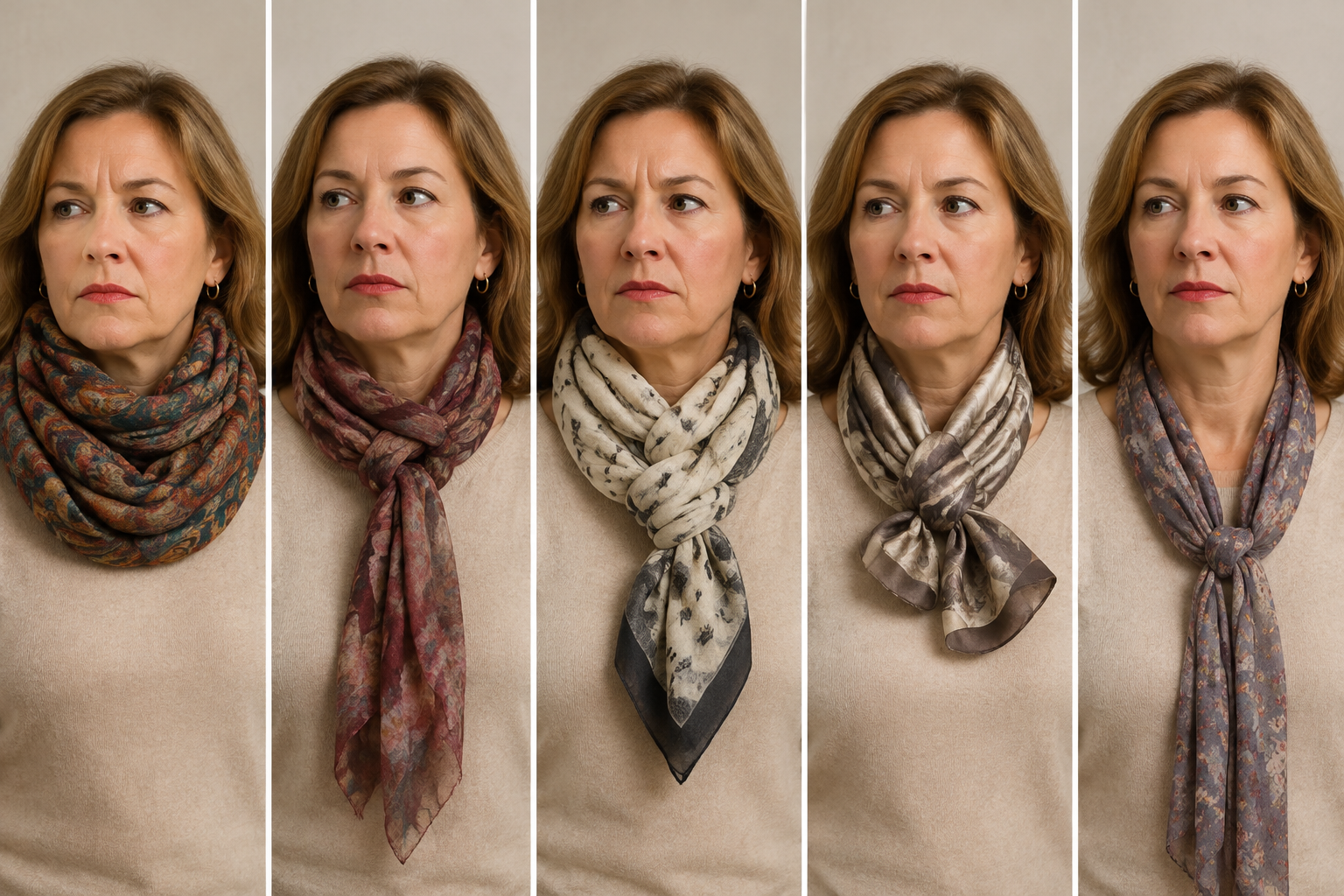
Silk scarves are the most versatile item in most wardrobes, and the least used. There are the ones inherited from a grandmother, bought on a trip, or gifted in a glossy box, and they sit in a drawer because tying one around the neck feels like a costume. The bag accent solves that. It turns a square of silk into a functional accessory that changes the entire mood of a handbag without requiring a single new purchase. The trick is knowing which scarf works on which bag, and how to tie it so it stays put through a commute, a flight, or a long dinner.
The best bag scarves are not the most expensive ones. A thin silk twill with a busy print hides creases and knots far better than a stiff, heavy silk that resists folding. Vintage scarves from the 1980s and 1990s are ideal because the silk is often lighter and more pliable than modern weaves. A person can find them at estate sales and online resale shops for under 20 dollars, which matters because a scarf tied to a bag takes real wear. It rubs against car doors, gets caught in zippers, and absorbs the occasional splash of coffee. That is fine. A bag scarf should look lived-in.
The Handle Wrap for Everyday Bags
The handle wrap is the most practical use for a silk scarf on a bag, and it works best on totes and bags with structured handles. A long rectangular scarf, folded lengthwise into a strip about two inches wide, wraps around the handle in a tight spiral. The key is tension. Each loop needs to overlap the previous one by half its width, and the scarf must be pulled snug after every pass. A loose wrap slides down within an hour and looks sloppy.
Start at the base of one handle, leave a two-inch tail, and wrap upward toward the top of the handle. When the scarf reaches the top, wrap back down over the same loops in the opposite direction to create a woven effect. Tuck the remaining tail under the last few wraps. The result is a padded, colorful handle that is noticeably more comfortable to carry than bare leather or chain. This matters on a long shopping day when a heavy bag starts to cut into the palm.
For chain handles, the wrap is different. Chain links catch the fabric and bunch it, so the scarf needs to be woven through the links rather than wrapped around them. A narrow scarf, folded to one inch wide, threads over and under each link in sequence. This takes patience and about fifteen minutes, but the result looks intentional, as if the bag came from the designer that way. A chain handle wrapped in silk also makes less noise. The metallic clink of an empty tote becomes a soft rustle.
The Knot That Looks Like It Belongs
The classic bag knot is simpler than the handle wrap and reads as more decorative. Fold a square scarf diagonally into a triangle, then roll it loosely from the folded edge to the point. Tie the rolled scarf around the base of one handle, where it attaches to the bag body, and let the two ends hang down the side of the bag. This works on nearly any bag with a handle, from a structured top-handle to a casual canvas tote.
The knot itself matters. A double knot holds better than a single, but the ends should not be trimmed or tied again. Let them hang at different lengths, one slightly longer than the other, which reads as effortless. A scarf ends up looking stiff when both tails are identical, as if the person measured them. The asymmetry is what makes it look like a deliberate styling choice rather than a practical tie.
For bags with two handles, the scarf can tie across both, creating a bridge over the opening. This is the move for a bag that gapes open or for anyone who wants an extra layer of security against pickpockets. The scarf ties at both handle bases, and the middle section lies flat across the bag opening. It does not fully close the bag, but it makes reaching in uninvited a two-hand operation, which most thieves will not bother with.
The Bow Placement That Changes the Silhouette
A bow on a bag can look childish or chic, and the difference is placement. A bow tied at the center of the bag front, right below the handles, reads as a gift box and tends to look costume-like. A bow tied at the side of the bag, near the top edge, reads as an intentional design detail. It shifts the visual weight of the bag to one side, which balances a large tote against a simple outfit.
The size of the bow should match the bag. A small, structured bow on a tiny evening bag works because it stays proportional. A large, flopping bow on the same small bag overwhelms it. For a big tote, the bow can be generous, with wide loops and long tails. The roll method from the previous section works here, but instead of a simple knot, the rolled scarf loops into a bow with the tails left long and untied. The ends should hang below the bow, not be tucked in. Tucked ends look fussy.
There is also the option of a single-loop bow, which is just one loop pulled through the knot rather than two. This creates an asymmetrical shape that sits flatter against the bag. It is the right choice for a bag that already has hardware or embellishments. A full bow on a bag with a large logo plate competes for attention. A single loop adds a color accent without shouting.
Matching the Scarf Print to the Bag Color
The most common mistake is matching the scarf to the bag exactly. A red scarf on a red bag disappears. The point of a bag scarf is contrast, so the scarf should bring a color that is not already dominant on the bag. A navy bag with a mustard and cream scarf works because the mustard pops against the deep blue. A black bag with a scarf that has a white background and a dense floral print works because the white creates a bright border against the dark leather.
For bags with hardware, look at the metal tone. A scarf with warm reds and oranges pairs with gold hardware. A scarf with cool blues and silvers pairs with palladium or silver hardware. This is not a strict rule, but it keeps the overall look from clashing at the small scale of a bag where the eye sees everything at once.
The print scale matters more than most people think. A small, dense print reads as texture from a distance, which makes it easy to pair. A large, sparse print with a single motif in the center reads as a graphic element, which is harder to place. For a first bag scarf, a small all-over print is the safest and most versatile. For a statement piece, a scarf with a bold border and a quiet center works well because the border shows when tied as a knot.
The Clutch and Evening Bag Option
Evening bags seem like the wrong place for a scarf, but a small silk square does something useful: it protects the bag and adds grip. A clutch carried under the arm stays in place when a scarf is tied around the center of the bag. The silk creates friction against clothing that bare satin or patent leather lacks. A person no longer has to clamp the bag against the body to keep it from sliding.
For a clutch, fold the scarf into a narrow strip and wrap it around the bag's center, tying a small knot at the side or letting the ends hang. The bag becomes a wristlet if the scarf is long enough to loop around the wrist. This frees the hands for a drink at a standing event, which is a practical win that no one expects from a scarf.
On a boxy evening bag with a top handle, the scarf can wrap the entire handle in the spiral method, leaving the bag body clean. This adds a pop of color to an otherwise black or metallic bag without altering its formal silhouette. The scarf becomes the only ornament, which makes it easier to change the bag's look for different events without buying a new bag.
Weather and Wear Considerations
Silk is not a tough material. Rain spots it, and the color can bleed if the scarf is soaked and pressed against a light-colored bag. On a rainy day, a silk scarf on a bag is a risk. A light drizzle is fine, but a downpour will ruin both the scarf and the leather underneath if the dye transfers. For wet weather, either skip the scarf or use a dark scarf on a dark bag so any transfer is invisible.
The sun is another issue. A scarf tied to a bag and left in a car window will fade within a season, especially if the print has reds or pinks. Keep the bag out of direct sun when it is parked or sitting by a window. A faded scarf looks tired, and the fading is rarely even, so the scarf becomes unusable on any other bag.
Leather bags pick up color from scarves that rub against them for extended periods. This is more of an issue with suede and light-colored smooth leather. A scarf tied to a handle is less likely to transfer color than a scarf draped across the bag body, because the handle is touched and moved, not held static against the leather for hours. For a scarf that drapes across the body of a light bag, check the bag after a few hours of wear for any discoloration.
The Ironing Question
A wrinkled scarf on a bag looks careless, and most scarves come out of storage creased. The solution is not a hot iron directly on silk, which leaves shiny scorch marks. Place a pressing cloth between the iron and the scarf, use a low heat setting, and press while the scarf is slightly damp. Or skip the iron entirely and hang the scarf in a steamy bathroom for ten minutes. The steam releases most wrinkles.
For scarves that will be tied in a knot, creases are less of a problem. The folding and tying creates new lines anyway, and a slightly soft look is part of the charm. The exception is a scarf that will be wrapped around a handle in the spiral method, where any crease shows as a sharp line across the wrap. Steam that one before tying.
There is also the question of the scarf's own storage. A scarf kept folded in a drawer will have creases. A scarf hung on a padded hanger stays smoother. But a bag scarf gets creased in the tying, so storing it perfectly flat is a losing battle. Keep it in a drawer and steam it before use. That is enough.
The Rotation Habit
A single scarf on a single bag is a starting point, but the real payoff comes from rotating scarves across bags. A wardrobe of five or six scarves in different color families gives any bag multiple personalities. The same black tote looks entirely different with a red paisley scarf knotted on the handle than with a pale blue geometric print wrapped around the handle base. The bag itself stays the same. The scarf does the work.
The rotation also extends the life of both items. A scarf that stays tied to one bag for months gets dirty and faded. A scarf that moves between bags gets a rest. The bag benefits too, because the leather or canvas is not constantly rubbing against the same fabric in the same spot. A little variation keeps both looking newer for longer.
For anyone who wants to start, the entry point is a single 90-centimeter square in a color that appears nowhere in their wardrobe. That is the whole trick. The scarf should be the one thing that does not match, the unexpected note that makes the outfit look considered. Tied once, worn for a week, then moved to a different bag, it earns its place in a way that a scarf sitting folded in a drawer never will.