September dressing fails most often in the space between the front door and the sidewalk. Inside, a cotton dress still looks reasonable. Outside, the morning has that dry chill around the ankles, the one that makes bare calves feel slightly unfinished. By 2 p.m., the same dress may be exactly right again, which is why early fall is less a season than a negotiation with temperature, light, and fabric.
Summer dresses can survive that negotiation beautifully, though the good transitions usually look quieter than fashion advice makes them sound. The trick is rarely a dramatic reinvention. A linen midi does not need to become a completely different garment the moment the coffee shops start selling pumpkin drinks. It needs weight nearby, a darker shoe, a sleeve within reach, perhaps a belt that makes the whole thing feel intentional instead of stranded in July.
Early fall favors clothes that acknowledge the season without surrendering to it too early. Wool coats and tall boots can wait. The useful question is smaller: what can be added to a summer dress so it looks at home with cooler mornings, flatter light, and the return of real shoes?
Start With the Dress That Still Has Structure
Some summer dresses carry into fall easily because they already have shape. A button-front shirtdress in cotton poplin, a ribbed tank dress, a slip dress cut on the bias, a square-neck midi with a firm waist, a T-shirt dress made from substantial jersey: these can all take another layer without collapsing. They have enough architecture to hold their place once a cardigan, jacket, or boot enters the picture.
The hardest dresses to transition are the ones built entirely around heat. Very thin voile, open backs, spaghetti straps with a beachy swing, white eyelet with scalloped hems, strapless smocked minis, and anything that looks best with wet hair and sandals tend to resist the season. They can still work for warm afternoons, but forcing them into fall often creates the visual equivalent of wearing a parka over a swimsuit. The pieces are technically layered. They are emotionally in different zip codes.
A good first pass through the closet is simple. Pull out the dresses with at least one fall-friendly quality: a sleeve, a deeper color, a print that includes black or brown, a heavier cotton, a hem that reaches the knee or lower, a neckline that can sit under knitwear. A tomato-red linen dress might still work with brown leather and a navy cardigan. A white gauze sundress with crochet trim probably deserves another week of actual summer or a suitcase.
Print matters more than people admit. A blue-and-white floral that felt crisp in June may look flimsy beside suede loafers, while a black-ground floral with rust, cream, or olive in it can carry right into October. Gingham becomes trickier as the light changes. Stripes are more forgiving. Small florals behave better than tropical leaves. The dress does not need to be dark, but it should have something in common with the clothes around it.
Trade Sandals for Shoes With a Little Weight
The quickest way to make a summer dress look less summery is to change the shoe. Bare sandals keep the whole outfit in warm-weather territory, especially thin leather thongs, raffia slides, and espadrilles with rope soles. Early fall wants a shoe that visually anchors the hem.
Loafers are the cleanest answer. A black penny loafer under a floral midi shifts the dress from vacation to weekday without trying too hard. Brown loafers soften white, cream, denim blue, and olive dresses. Burgundy has a particular usefulness in September because it feels seasonal without the heaviness of black. The sock question depends on the dress. A thin ribbed ankle sock can look sharp with a short shirtdress or a roomy cotton midi, while a bare ankle often works better with a slip dress or anything sleek.
Ballet flats do something different. They keep the delicacy of a summer dress but make it more city, more errand, more dinner at 7:30 after the air cools. Mesh flats still read late summer. Leather or suede flats read fall. A square toe can make a prairie-style dress feel less sentimental. A pointed flat sharpens a loose dress that might otherwise look like sleepwear once layered.
Boots need restraint in early fall. Tall leather boots with a floaty dress can be excellent, especially when the dress has a longer hem and enough fabric to meet the boot rather than hover awkwardly above it. Ankle boots are more dangerous. The gap between boot top and hem can chop the leg, particularly with calf-length dresses. A slim sock boot works under a midi. A chunky Chelsea boot wants a dress with enough casual weight, such as denim, ribbed cotton, or a darker floral. Western boots can be good with a simple dress, though they quickly take over an outfit if the dress also has ruffles, tiers, and a loud print.
Sneakers remain useful, but the crisp white summer sneaker often looks too bright once heavier layers enter. Off-white canvas, black leather, gum soles, and retro running shapes usually sit better with September clothes. The point is balance. A dress made of air needs a shoe with a sole.
Use Knitwear Like a Layer, Not a Blanket
The cardigan is where many summer dresses lose their shape. A long, limp cardigan over a light dress can make the whole outfit look apologetic, as if the dress made a mistake and the sweater arrived to cover it up. The better cardigan has a clear length and a clear purpose.
A cropped cardigan works well over fit-and-flare dresses, slip dresses, and tank dresses because it keeps the waist visible. It does not have to be tiny. It just needs to stop high enough that the dress still has proportion. Fine-gauge merino, cotton-cashmere blends, and compact rib knits are easier than fluffy knits in early fall. A fuzzy cardigan can be charming in November. In September, it can look sweaty before noon.
A crewneck sweater over a dress is one of the most practical transitions, especially when the dress has a skirt worth keeping. The dress becomes, visually, a skirt. This works best when the sweater hem lands near the natural waist or can be tucked slightly under itself. A belt hidden under the sweater can hold the fold in place, though the method should feel comfortable enough for a whole day, not like a styling trick that requires standing still.
Thin turtlenecks and fitted long-sleeve tops under sleeveless dresses deserve more respect. They can go wrong fast, particularly if the underlayer is too shiny or the dress armhole is too tight, but a black tissue turtleneck under a dark floral slip dress is still one of the more reliable early fall formulas. Cream under denim works. Charcoal under olive works. Striped knits under solid dresses can look deliberate, especially under a simple tank dress with a square or scoop neck.
The underlayer should sit close to the body. Extra fabric bunching under a summer dress makes the dress look smaller than it is, and nothing kills ease faster than sleeves being yanked down all day. If the dress pulls across the chest once a top goes underneath, that pairing has given its answer.
Let Jackets Set the Season
A jacket changes the weather of a dress. Even the simplest cotton midi can move into early fall with the right one, because jackets bring the materials people associate with the season: denim, twill, leather, suede, corduroy, waxed cotton. They also introduce angles. Summer dresses are often soft and rounded. A jacket adds a line across the shoulder, a cuff at the wrist, a pocket, a collar.
Denim jackets are obvious because they work. The best early fall versions are medium to dark wash, slightly boxy, and cut around the hip or above it. Very cropped denim can look young with a floral dress. Oversized denim can be excellent with a slim ribbed dress but may swamp a loose tiered one. A white denim jacket still belongs to warm weather unless the rest of the outfit has enough depth around it.
Utility jackets do well with dresses that risk sweetness. Olive cotton twill over a white or floral dress gives the outfit a little friction. Pockets and drawstrings make ruffles less precious. This is especially helpful for people who like dresses but dislike looking dressed up for ordinary tasks. A utility jacket says groceries, school pickup, train platform, dog-eared paperback in a tote. It makes a dress usable.
Blazers are more exacting. A blazer over a summer dress can look sharp, but only when the dress and jacket agree on level of polish. A black blazer over a satin slip dress is clean. A linen blazer over a cotton tank dress is relaxed and plausible. A stiff office blazer over a gauze sundress usually feels like two calendars fighting. The shoulder matters too. Strong shoulders need a simpler dress. Soft unstructured blazers can handle print and movement.
Leather jackets and suede jackets bring instant fall, which is both their strength and their risk. A black leather moto over a pale floral dress has been done for decades because the contrast works. Still, the pairing needs fresh shoes and restrained accessories to avoid costume. A brown suede jacket over a cream knit dress or a faded floral midi often feels more current because it is softer, less declarative, and better with the tawny light of September.
Make Color Do Some of the Work
Color is the quietest transition tool. A summer dress does not need a new silhouette if the surrounding colors deepen. White with black can become stark and chic. White with tan may still feel beachy. Pale blue with navy reads cooler and more deliberate than pale blue with straw. Pink with chocolate brown gains maturity. Yellow with olive can work if the yellow is muted rather than lemon-bright.
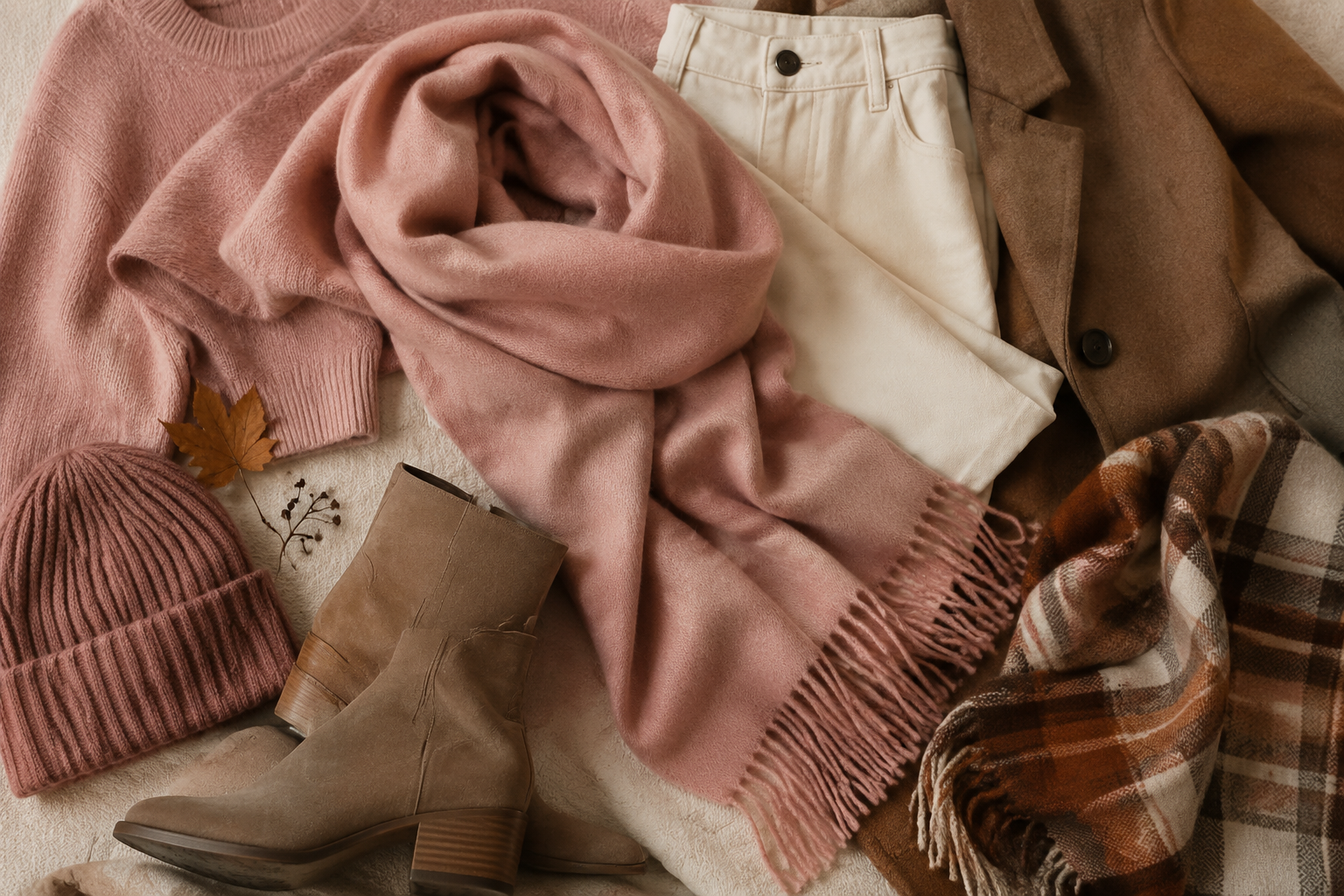
Early fall is friendly to mixed neutrals. Cream, black, brown, gray, denim, olive, and burgundy can sit around a dress and pull it forward. A blue cotton dress with brown loafers, a black belt, and a gray cardigan suddenly belongs to a different month. The dress itself has barely changed. The frame has.
This is where accessories matter, though they should stay useful. A black leather belt can sharpen a loose dress and connect it to black shoes. A brown belt warms up ivory, green, and faded red. A narrow belt feels better with delicate prints. A wider belt can handle shirtdresses and heavier cotton. Belting over a cardigan or jacket is possible, but it has to suit the person wearing it; otherwise it looks like a magazine page that never had to sit down in a car.
Bags make a surprising difference. Straw and raffia keep insisting on August. Canvas totes are seasonless but casual. Leather, suede, nylon, and darker canvas move the dress along. A small black shoulder bag with a cotton sundress and loafers can do more than a complicated stack of jewelry. The same dress with a straw tote and slides still wants a boardwalk.
Jewelry can shift too, though lightly. Shell necklaces and bright beaded pieces have their moment, and that moment usually ends before the dresses do. Gold hoops, a watch, a heavier chain, or a simple cuff tend to sit better with fall layers. The change is small enough that nobody names it, which is often why it works.
Handle Bare Legs Without Panic
Bare legs are allowed in early fall. This should be said plainly because fashion advice often rushes toward tights the moment the calendar changes. A dress with bare legs and loafers can look perfectly seasonal if the upper half has a sweater or jacket. The imbalance can even be the point: covered arms, bare legs, substantial shoes. That is September in clothing form.
Tights become useful when the morning chill lasts past breakfast. Sheer black tights work with dark florals, black slip dresses, and simple knits. Opaque tights need a stronger dress and usually a stronger shoe. Brown tights are underrated with cream, rust, olive, navy, and burgundy, though matching them to shoes can be awkward. Gray tights can look elegant with soft blues and charcoal, especially when black would feel too severe.
The hemline decides much of this. Mini dresses with tights can look intentional very quickly, especially with loafers or flat boots. Midi dresses with tights are more complicated because there is less leg visible, so the shoe becomes the main event. A midi dress, opaque tights, and ankle boots can become visually heavy from the knee down. A sleeker boot or loafer often solves it.
Patterned tights deserve caution. A tiny dot or subtle rib can be charming under a plain dress. Lace tights under a floral dress with ruffles tend to crowd the eye. Early fall dressing already has enough texture: cotton, knit, leather, denim, suede. Adding one more surface should be a decision, not a reflex.
Keep Linen, But Change Its Company
Linen is the fabric people retire too early. In many places, September still has warm afternoons, and linen remains comfortable. The issue is the styling around it. Linen with sandals, straw, and shell jewelry announces high summer. Linen with loafers, a leather belt, and a cardigan becomes transitional.
Darker linen has the easiest path: black, navy, olive, tobacco, rust, and deep red all carry into fall without much argument. Pale linen can work too, especially cream or natural flax, but it benefits from contrast. A cream linen dress with a black cardigan and black flats looks purposeful. The same dress with tan sandals and a woven bag still looks like it is waiting for a ferry.
Wrinkling also reads differently as the season changes. In July, a wrinkled linen dress looks relaxed. In October, the same wrinkles can look neglected beside polished leather and wool. A quick steam helps, but so does choosing linen blends or dresses with enough seam structure that the wrinkles fall as texture rather than collapse. A button placket, a defined waist, patch pockets, or a fuller skirt can make linen look lived-in instead of limp.
The most useful linen dress for early fall may be the plain midi shirtdress. It takes a belt, accepts a sweater over the shoulders, works with loafers, and can handle a trench when rain enters the forecast. It has enough references at once: summer fabric, workday shape, fall accessories. That mixture is exactly where the season lives.
Use the Shirt Underneath for Dresses That Feel Too Bare
A shirt under a dress is easy to dismiss because it can look schoolish, but the right pairing is practical and polished. The best candidates are sleeveless dresses with clean necklines: square necks, pinafores, tank dresses, simple shifts, and slip dresses with enough room through the body. The shirt should look like it belongs under the dress, not like emergency coverage.
A crisp white button-down under a black sleeveless dress has a uniform quality that can be very good. A blue oxford under a navy or gray dress feels more relaxed. A tissue-thin long-sleeve tee is easier under narrow armholes. A fine ribbed top gives texture without adding bulk. The collar decision matters. A full collar under a dress makes a statement. A crewneck or mock neck disappears more quietly.
Slip dresses are especially useful here because they change character depending on what sits under or over them. In summer, a slip dress might need only sandals. In early fall, it can take a fitted tee underneath, a cropped cardigan over it, or a blazer on top. Satin and silk-like fabrics also catch fall light nicely, especially in black, bronze, forest green, navy, or muted rose.
The fit test is unforgiving. If the underlayer creates ridges at the waist, pulls the neckline, or makes the armhole bite, the combination will look uncomfortable because it is uncomfortable. Better to wear the dress with a jacket than spend the day adjusting a shirt that never had room to be there.
Let One Summer Detail Remain
The most convincing early fall outfits usually keep one trace of summer. A bare ankle. A faded floral. A basket-weave texture on a leather bag. A cotton dress in washed blue. Removing every warm-weather detail can make the dress look trapped under fall styling instead of naturally carried forward.
This matters because early fall has its own mood. It is not winter practice. The light is softer, the days are shorter, but the trees may still be green and the afternoon pavement may still hold heat. A sleeveless dress under a cardigan can make more sense than a full autumn outfit worn too early. There is an honesty in dressing for the day that exists, rather than the season a person wishes had arrived.
A pale floral dress with brown loafers and a navy sweater over the shoulders can look better in September than it ever did in July, precisely because it has contrast. A black slip dress with a gray tee underneath and burgundy flats can go from desk to dinner without invoking any seasonal theme. A white cotton shirtdress with a trench, black belt, and loafers can survive a cool morning, then lose the trench at lunch and still look complete.
The final test happens at the mirror by the door, with the bag in hand and the actual shoes on. If the dress still looks like the main piece, and the layers look chosen rather than corrective, it can stay in rotation. The best September outfit might be a navy cotton midi, a cropped gray cardigan, bare legs, black loafers, and a leather bag set down by the door while the weather app changes its mind again.