Spring Outfit Mistakes That Instantly Make Your Look Feel Dated
By late March, the winter coat has become a burden and the closet starts offering false hope. A pale blazer appears useful again. A floral dress looks suddenly plausible. The mistake begins when spring is treated as a costume change instead of a weather problem, a fabric problem, and a proportion problem all at once.
Dated spring style rarely announces itself through one spectacularly bad choice. It usually shows up in smaller signals: a shrunken jacket over a long tunic, jeans rolled to the exact same cuff worn in 2014, a scarf knotted for decoration rather than warmth, a pastel outfit so coordinated it looks assembled from a mall window. The clothes may be clean, expensive, and technically flattering. They still tell on themselves.
Spring is unforgiving because everything is visible again. Sleeves get pushed up. Shoes come back into the conversation. Layers stop being purely practical. The season exposes the habits that were hiding under wool.
The Tiny Jacket Over Everything
The cropped, tight little jacket had a long reign: narrow shoulders, high armholes, sleeves that ended just above the wrist bone, and a hem that hovered at the widest part of the hip. It worked with the old uniform of skinny jeans, ballet flats, and a long top underneath. That formula still appears every spring, often with a denim jacket that has been in rotation for a decade.
The dated part is the proportion. A fitted jacket over a thin, long, loose top creates a stacked silhouette that feels fussy now, especially when the underlayer hangs several inches below the jacket. It divides the body into too many little horizontal bands: collar, jacket hem, top hem, waistband, shoe opening. Spring dressing looks fresher when the outer layer has some ease or the underlayer is cleanly contained.
A denim jacket can still look good. So can a blazer, a chore coat, a cropped trench, or a leather jacket. The update is in the shape: a slightly dropped shoulder, a straighter body, a hem that relates clearly to the pants or skirt. A boxier jacket over a column of one color looks current without trying hard. A fitted jacket over a tucked shirt can also work because the eye sees intention rather than leftover layering from another era.
Skinny Jeans With Ballet Flats And A Long Top
No single item is dead forever, and skinny jeans still make sense inside tall boots or under a substantial coat. Spring is where they become risky because the styling around them often freezes in time. Dark skinny jeans, a lightweight printed tunic, a cropped cardigan, and round-toe ballet flats create a very specific memory. It is brunch in 2011, with a statement necklace waiting on the dresser.
The issue is the imbalance between a tight lower half and a fluttery, elongated upper half. The jeans cling, the top floats, the shoe disappears. The whole outfit narrows to a little point at the foot. Modern spring outfits tend to ask for more shape at the bottom: a straight jean, a relaxed slim jean, a barrel leg, a cropped flare, or even a wide trouser in cotton or linen blend. The shoe can then have some presence, whether it is a loafer, Mary Jane, slingback, fisherman sandal, or simple sneaker.
Keeping skinny jeans is easier when the rest of the outfit stops apologizing for them. A crisp shirt tucked in, a longer blazer with structure, and a shoe with a defined sole can pull them forward. The old tunic formula does the opposite. It preserves the jeans in amber.
Pastels That Match Too Perfectly
Spring pastels have a way of sliding from fresh to nursery-colored in about three garments. Mint cardigan, blush blouse, lilac flats, pale blue bag: the sweetness piles up quickly. Matching pastels also recall a particular kind of occasion dressing, the Easter outfit, the shower outfit, the careful lunch outfit that looks more seasonal than personal.
The newer way to wear soft color is with something that interrupts it. Butter yellow looks sharper with washed black denim than with white eyelet. Powder blue becomes less precious next to tobacco suede, olive cotton, or dark indigo. Pale pink can be excellent with gray tailoring or a brown belt. The point is contrast in temperature and texture. A pastel needs a little friction.
Head-to-toe pale color can still be beautiful, especially in a suit or a clean dress, but the fabric has to carry it. Matte cotton, washed silk, compact knit, and crisp poplin read differently from shiny polyester, scalloped trim, and limp jersey. The old pastel mistake is treating color as the whole outfit. Color is only one ingredient.
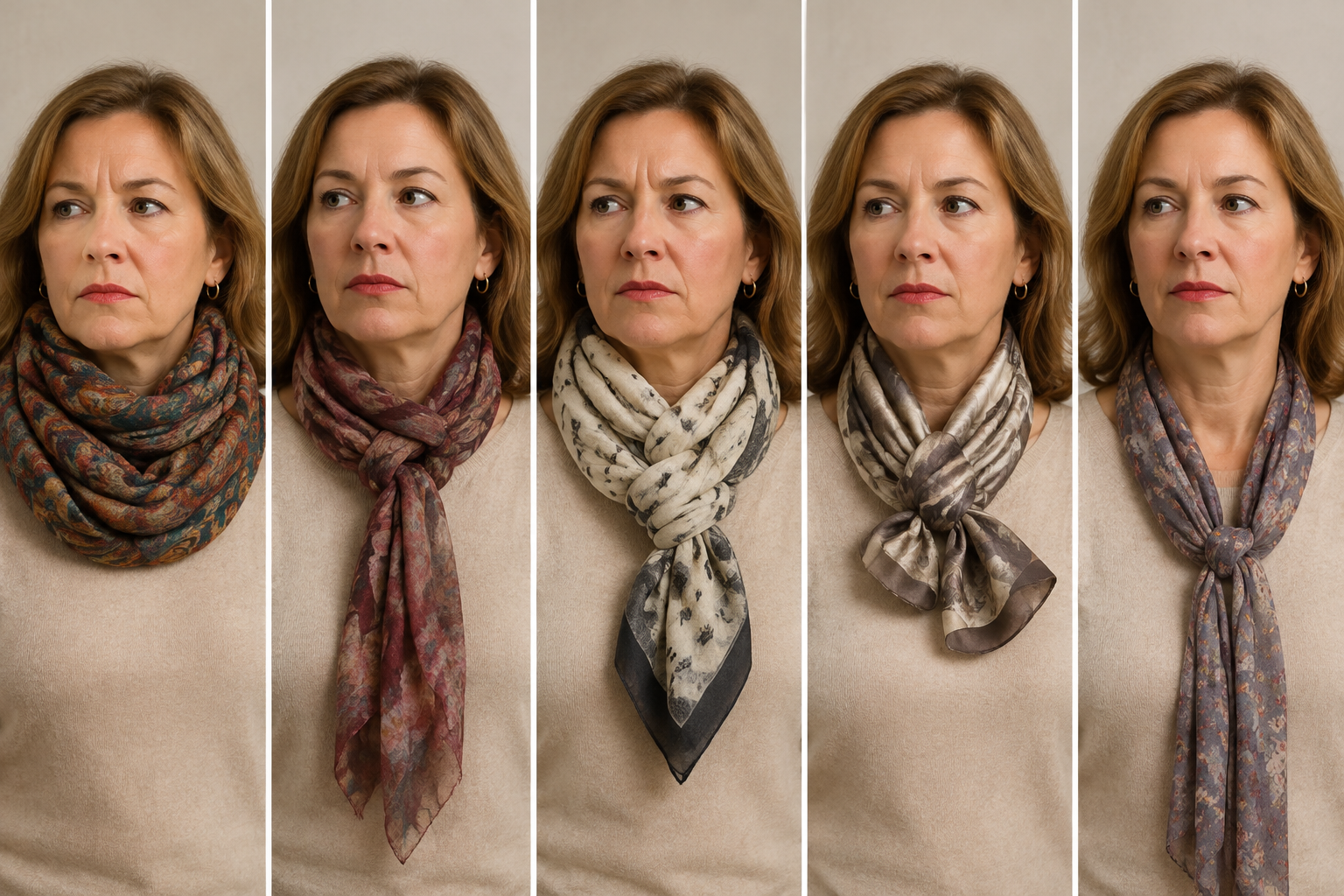
The Decorative Spring Scarf
A light scarf tied at the neck once solved everything. It added print to a plain tee, softened a blazer, and made jeans look intentional. Then it became a reflex. Gauzy infinity scarves, skinny floral scarves, and little pastel wraps still appear with outfits that would look cleaner without them.
The most dated version is the scarf that has no job. It is too thin to warm the neck, too busy to behave like jewelry, and too casually looped to look deliberate. It turns a simple spring outfit into something over-explained. A white shirt and jeans need a belt, a good shoe, or an interesting bag more than they need a limp rectangle of fabric floating near the collarbone.
Scarves have not vanished. A silk square tied close to the neck with a trench can look precise. A cotton bandana with a work jacket has a different, more utilitarian energy. A large lightweight scarf worn because the morning is still 48 degrees makes sense. The dated signal comes from using a scarf as automatic decoration, especially with a scoop-neck tee and open cardigan. That outfit has been copied too many times to feel alive.
Florals With No Edge Or Scale
Small, evenly scattered florals are the wallpaper of spring dressing. They are pleasant, dependable, and often dull. A ditsy floral dress with a ruffle hem, a cropped cardigan, and nude flats can look dated even when the dress was bought this year, because the print language belongs to a cycle that has already peaked several times.
Print scale matters. Tiny flowers repeated evenly across a synthetic background tend to read young in the wrong way, then strangely old-fashioned a minute later. Larger botanical prints, abstract florals, darker grounds, or prints with irregular spacing usually feel more deliberate. So does restraint. A floral skirt with a plain ribbed tank and a leather sandal has more air around it than a floral dress with a bow, ruffle, puff sleeve, and dainty shoe all fighting for the same mood.
The strongest spring florals usually have one unsentimental element nearby: a black belt, a flat sandal, a cotton jacket, a square-toe shoe, a clean cardigan without pearl buttons. Without that counterweight, the outfit can become costume pastoral. Nobody needs to look like a decorative tea tin unless that is the stated project.
White Jeans Styled Like A Resort Brochure
White jeans return every spring with the force of a calendar reminder. The dated styling is familiar: white skinny jeans, a navy striped top, tan wedges, a straw tote, maybe a coral necklace. Each piece is harmless. Together, they create a prepacked idea of spring rather than an outfit with a point of view.
The problem grows when the jeans are too thin or too tight. White denim shows every pocket bag, seam, and strain line. A slightly heavier straight-leg pair often looks more expensive than a stretchy skinny pair, even at the same price. Cream, ecru, bone, and warm white can also be easier than bright optic white, particularly before full summer light arrives.
White jeans look more current when they are treated like regular denim instead of vacation denim. Wear them with a charcoal sweater, a faded work shirt, a black loafer, a brown leather belt, a khaki trench, a red cotton crewneck. Remove the nautical script and they become useful again. The old striped-top-and-wedge pairing is so complete that it leaves no room for personality.
Shoes That Pull The Outfit Backward
Spring shoes age an outfit faster than almost anything else because they sit in plain view after months of boots. Certain shapes carry a time stamp: cork wedges with a platform under the toe, round-toe ballet flats with a tiny bow, ultra-thin nude flats, peep-toe booties, and bright white slip-on sneakers with a narrow almond shape. They may still be comfortable. They also drag familiar outfits into an older frame.
A shoe update does not require chasing a strange silhouette. Often it means choosing a cleaner toe, a sturdier sole, or a more grounded material. Loafers, minimal sneakers, mesh flats, Mary Janes, low block-heel slingbacks, flat leather sandals, and simple clogs can all change the age of an outfit. The exact trend matters less than the weight. A spring shoe should look connected to the clothes above it.
This is why the old nude flat fails so often. It was meant to elongate the leg, but with cropped pants or a dress it can vanish so completely that the outfit looks unfinished. A shoe in brown, black, red, silver, cream, or woven leather gives the eye somewhere to land. Spring dressing needs that punctuation.
Too Many Thin Layers
Spring weather encourages layering, but thin layers can look accidental fast. A tissue tee under a sheer blouse under a waterfall cardigan under a lightweight scarf creates bulk without structure. It also recalls the years when layering was treated as a styling achievement by itself. More hems, more edges, more colors, more necklaces. The result was often busy rather than interesting.
Current layering tends to look better when one piece has authority. A trench over a tee. A poplin shirt under a crewneck sweater. A cardigan buttoned as a top under a jacket. A vest over a shirt. These combinations have a readable architecture. The eye understands what is outerwear, what is base layer, and what is the main garment.
Thin cardigans are the common trap. The long, open, drapey cardigan still has practical uses at home or on a cold office chair, but as the finishing piece for a spring outfit it often looks tired. A shorter cardigan with a real placket, a knit polo, a cotton jacket, or a relaxed blazer usually gives the same warmth with a cleaner line.
The Wrong Kind Of Effort In Accessories
Accessories from a previous style era have a particular shine. Bubble necklaces, tassel pendants, floppy felt hats worn with sundresses, stacked beaded bracelets, monogrammed totes in every casual setting, and long pendant necklaces over printed tops all carry the memory of being styling solutions. They were meant to finish an outfit visibly. That visibility is exactly what dates them now.
The fresher accessory choices in spring are often more functional and less explanatory: a narrow belt that actually holds the waist, a watch with a plain face, small hoops, a sculptural cuff, a leather shoulder bag, a canvas tote that looks used, sunglasses with a strong shape. Even a hair clip can shift the mood when it looks chosen for the hair rather than matched to the dress.
Matching is the giveaway. Shoes, bag, necklace, and cardigan all picking up the same accent color can make an outfit look older than the person wearing it. A little mismatch feels more modern because real clothes live in use. A black sandal with a brown bag, silver earrings with a navy sweater, a red belt with a white shirt: these small breaks keep spring outfits from looking pre-approved.
Dresses Frozen In The Fit-And-Flare Years
The sleeveless fit-and-flare dress became the easy answer for every warm-weather event: wedding shower, office party, graduation, dinner outside. The bodice was neat, the waist was obvious, the skirt made a tidy bell. Add a cropped cardigan and nude heels, and the outfit was complete before anyone had to think about it.
That exact shape now feels trapped in occasionwear from another retail cycle, especially in scuba knit, shiny lace, or a loud floral print. The silhouette can still flatter, but flattering alone is a low bar. A dress also has to feel connected to the present. Shirt dresses, column dresses, bias-cut midis, knitted tanks with skirts, simple A-line cotton dresses, and relaxed wrap shapes often look less stiff because they leave some movement in the body.
The cardigan choice matters almost as much as the dress. A tiny shrug or cropped bolero over a full skirt is one of the fastest ways to date the whole look. A linen blazer, a cropped boxy jacket, a fine-gauge cardigan buttoned at the waist, or no topper at all can change the same dress dramatically. Spring event dressing gets better when the cover-up is treated as part of the outfit, not a modesty patch grabbed from the back seat.
Ignoring The Actual Weather
The strangest spring outfits are the ones dressed for an imaginary 72-degree afternoon at 9 in the morning. Bare ankles, a thin dress, a decorative jacket, and goosebumped hands around a coffee cup make the whole look feel forced. Seasonal eagerness can date an outfit because it reveals the idea behind it: spring as theme dressing.
The better spring wardrobe acknowledges mud, wind, rain, overheated trains, cold offices, and the sharp drop after sunset. A trench with enough room for a sweater, socks that look intentional with loafers, a cotton sweater instead of a flimsy blouse, a closed shoe on wet days, a real jacket over a dress: these choices look more sophisticated because they belong to the day actually happening.
Nothing dates spring style faster than looking uncomfortable for the sake of a seasonal cue. The most current outfit on a chilly April morning might be straight jeans, dark loafers, a blue shirt, a gray crewneck, and a trench with a damp hem. It has no pastel announcement, no decorative scarf, no tiny cardigan pretending to be outerwear. It simply looks ready to walk down a wet sidewalk without the clothes asking for special treatment.