The five o'clock problem is not about time. It is about transformation. A person leaves a desk or a gym at the same hour the city shifts into its evening register, and the body in question has to bridge two social realities in under an hour. The gym bag smells like crushed eucalyptus and determination. The restaurant expects a person who looks like they own a mirror. The gap between those two states is where most evening plans quietly die.
The beauty industry has noticed this gap and responded with a strange assortment of products: charcoal masks, dry shampoo powders, blotting papers, facial mists, and at least three kinds of deodorant that promise to work for forty-eight hours. Some of these products are useful. Most are not. What actually matters for a gym-to-dinner reset is a short list of specific objects and a sequence of steps that respects the reality of a locker room, which is to say, a space with bad lighting, hard surfaces, and no time for elaborate rituals.
The first honest move is to accept that the hair is the anchor of the whole operation. Skin can be wiped, dabbed, and misted into submission. Hair has a memory. It remembers the sweat, the ponytail elastic, the way a head pressed against a bench. A person can fight that memory with a full wash and blowout, but that takes forty minutes and a wall outlet. The smarter play is to plan for the gym with the dinner in mind.
The Pre-Gym Decision That Decides Everything
Hair texture changes everything about the post-gym strategy. A person with fine, straight hair will look flattened and greasy after thirty minutes of movement. A person with thick curls will emerge with volume that might actually improve the evening look. A person with bangs has a unique problem that deserves its own paragraph.
The pre-gym decision is about how the hair goes up. The classic high ponytail is the worst option for anyone who plans to wear hair down later. The elastic creates a crimp at the crown, and sweat travels up the hairline and soaks the front pieces. The clip at the nape of the neck is better. The loose braid is better still. The ideal is a style that does not compress the hair at the roots and does not let the hair touch the back or forehead for long stretches.
For bangs, the only honest answer is to accept they will need attention later. A wide cloth headband can pin them back during the workout, but the front hairline will still sweat. The post-gym fix for bangs is not a wash. It is a damp cloth pressed against the forehead for thirty seconds, followed by a blow dryer on low heat with a small round brush. That takes two minutes if the rest of the hair is already dry.
The Locker Room Ritual, In Order
The shower is the obvious first step, but the order of operations around it matters more than most people think. The face should be washed before the body. The steam from the shower opens the pores, and the sweat and sunscreen from the workout are sitting on the surface. A quick cleanse in the shower, while the water is still running, is more effective than a careful sink ritual afterward.
The post-shower sequence has a logic. The hair goes up in a microfiber towel first, so the water drips away from the face and neck. Then the body is dried, but not aggressively. Patting is better than rubbing, because rubbing irritates the skin and makes the post-workout flush last longer. Then the face gets a toner or a simple splash of cold water to close things down.
The order of application for the face is not complicated: moisture first, then any treatment, then SPF if the evening involves walking outside, then makeup or nothing at all. The biggest mistake in the locker room is layering heavy products on top of skin that is still warm and slightly damp. The products slide around and settle into the wrong places.
One specific product earns its place in every gym bag: a facial mist with a fine spray. Not the kind that claims to set makeup, and not the kind that smells like a garden. A simple thermal water or a glycerin-based mist. The purpose is to rehydrate the skin after the towel has stripped it, and to give the face a fresh, dewy base that does not require touching. Three sprays, a moment to let it absorb, and the skin looks like it had a good night's sleep instead of a workout.
The Five-Minute Face
There is a version of this reset that involves a full makeup application in a gym locker room, and it is a fantasy. The lighting is fluorescent, the mirror is small, and the counter is wet. The realistic goal is not a full face. It is a strategy that covers the specific damage the gym does: redness, shine, and the slightly tired look around the eyes.
A color-correcting product in a green or peach tone, applied only where the redness lives, is faster than a full foundation. It goes on the nose, the cheeks, and the chin, blended with a fingertip. Then a tinted moisturizer or a light coverage product goes on over the whole face, not to even everything out but to unify the texture. The goal is to look like a person with good skin, not a person wearing makeup.
Eyes are the shortcut. A swipe of mascara, a bit of concealer under the lash line, and the face reads as awake. The eyebrows matter more than the eyeshadow. A quick brush through the brows with a tinted gel gives structure to the whole face, and it takes fifteen seconds. Lip color is the final move. A tinted balm or a satin lipstick in a shade close to the natural lip color, applied without a mirror, is the difference between looking like a gym-goer and looking like a person who is out for the evening.
The Outfit Is Part of the Reset
The beauty routine ends at the neck. The outfit carries the rest of the job, and this is where the gym-to-dinner plan either works or falls apart. The problem is not the clothes themselves. It is the transition. A person cannot wear the same synthetic leggings and sports bra to dinner and expect the look to read as intentional. The fabric that wicks sweat also reads as sporty, and no amount of good skin changes that.
The solution is not a full second outfit. It is a layer that transforms the first one. A wide-leg linen pant that slips on over the leggings. A silk or satin overshirt that goes over the sports bra and reads as a top. A structured blazer that covers the gym tank and instantly changes the silhouette. The shoe swap is non-negotiable. Sneakers to loafers or low heels changes the entire energy of the look, and it takes thirty seconds.
The fabric choices matter. Anything that creases badly will show the hour spent in a gym bag. Heavy cotton is the enemy. Linen wrinkles, but it wrinkles in a way that reads as intentional. Silk and satin pack flat and bounce back. Knitwear is a risk in a bag, but a fine-gauge knit in a neutral color survives the trip surprisingly well.
The Bag Itself and the Packing Logic
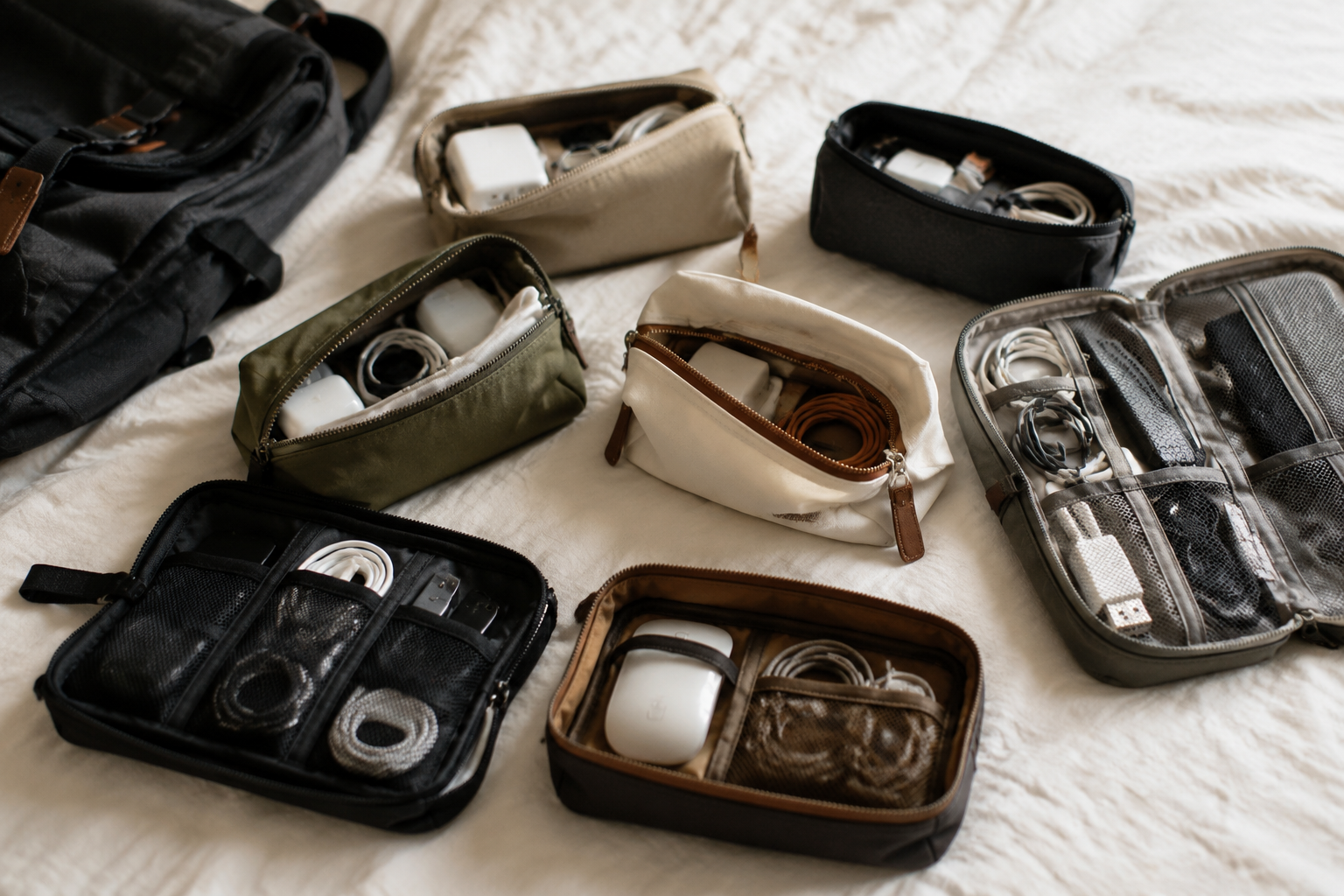
The gym bag is a constraint that shapes everything. A person carrying a tiny crossbody has different options than a person carrying a tote. The honest advice is to stop trying to make a small bag work. The gym-to-dinner reset requires a bag that fits a pair of shoes, a folded layer, a small pouch of beauty products, and the workout clothes that need to come home.
The packing order inside the bag has a logic. The shoes go in first, at the bottom, wrapped in a plastic bag so the rest of the contents do not smell like the gym floor. The folded layer goes on top of the shoes. The beauty pouch goes on top of that, in the center where it will not get crushed. The dirty workout clothes go in a separate small bag that seals, and that bag goes on the very top so it can be pulled out and set aside at the restaurant.
A person who packs the bag in this order can open it in the locker room and reach each item without pulling everything out. The efficiency is not a luxury. It is the difference between a ten-minute reset and a thirty-minute scramble that still ends with someone forgetting the concealer at the bottom of the bag.
The Fragrance Question
Deodorant and fragrance are two different problems. The deodorant is non-negotiable, and the gym shower handles most of it. The fragrance is a more delicate matter. The instinct is to spray something strong to cover the gym smell. This is a mistake. The combination of warm skin, sweat residue, and a heavy perfume creates a scent that is worse than either one alone.
The better move is a fragrance that is light and fresh, applied to the pulse points but not the neck, and not over-sprayed. One spray to the inside of the wrist, then the wrists pressed together, then a single touch to the collarbone. The effect is subtle. A person nearby catches a hint of it, not a cloud. The gym smell disappears because the shower did the work, not because the perfume tried to cover it.
Scented body oil is an underrated option for this exact situation. It absorbs into the skin, leaves a faint trace, and does not announce itself from across the table. A few drops rubbed into the forearms and the back of the neck, after the skin has cooled down, is the quietest way to signal that the evening has started.
The Hair Down Problem
Hair that has been in a towel and then left to air dry will look flat and strange if the person just shakes it out and heads to dinner. The air-dried look works for a certain kind of beachy wave, but it is a gamble in a locker room with no natural light and no salt spray on hand.
The realistic options are three. The first is to half-dry the hair with a dryer, focusing on the roots, so the rest dries naturally in a way that has some volume. The second is to leave the hair in a low, loose bun and accept it as the evening style. The third is to carry a small amount of a texturizing product, not a heavy wax, and work it through the mid-lengths and ends to create the kind of piecey, undone look that reads as effortless.
The ponytail is the default choice, and it is the wrong one. A fresh ponytail, right after a workout, has a tightness at the temples that reads as gym. A low, loose bun at the nape of the neck reads as intentional. A side braid reads as chic. The difference is in the tension. Anything that pulls the hair tight against the scalp says sport. Anything that sits loose and slightly imperfect says dinner.
The Unspoken Rule About Timing
Every step in this reset has a time cost, and the sum is not small. The shower, the skin care, the five-minute face, the outfit change, the hair. A person who tries to do all of it in fifteen minutes will make mistakes and end up frustrated. The honest budget is thirty minutes from the moment the workout ends to the moment the person walks out of the locker room. That is the real number.
The trick is not to speed up the routine. It is to remove the steps that do not matter. No eyeliner if the hands are shaky. No blowout if the bun looks good. No foundation if the tinted moisturizer is enough. The reset works when it is treated like a priority sequence, not a full beauty routine performed in a tiny mirror. The goal is to look like a person who is going to dinner, not like a person who is performing a makeover.
The last detail is the one no one talks about. The transition is not just about the face and the clothes. It is about the internal shift. The body that spent an hour pushing against resistance needs a moment to remember how to sit still. A person who walks into a restaurant still vibrating from the gym will fidget, speak too fast, and knock over the water glass. The reset includes a moment of stillness, thirty seconds before walking in, where the breathing slows and the shoulders drop. That is the final step. It takes no product, and it is the difference between looking rushed and looking present.