Rain is the most common weather emergency that most people will ever face, yet it rarely gets treated as one. A blizzard gets a name and a warning track. A heat wave gets a headline. Rain just gets a forecast that people ignore until they are standing on a flooded subway platform with soaking socks and a phone that is slowly dying in a coat pocket. The standard advice for rain preparedness is to carry an umbrella, which is fine advice for a person walking from a car to an office. It is useless advice for anyone who actually has to function in the weather.
A rain-ready bag is not a disaster kit in the usual sense. It doesn't need a tent or a water filter. It needs to solve one specific problem: how to keep a person dry, warm, and electronically alive through a day that turned hostile. The kit that does this well is small enough to live permanently in a backpack or briefcase, and it is built around a few items that most people already own but never think to organize into a single place.
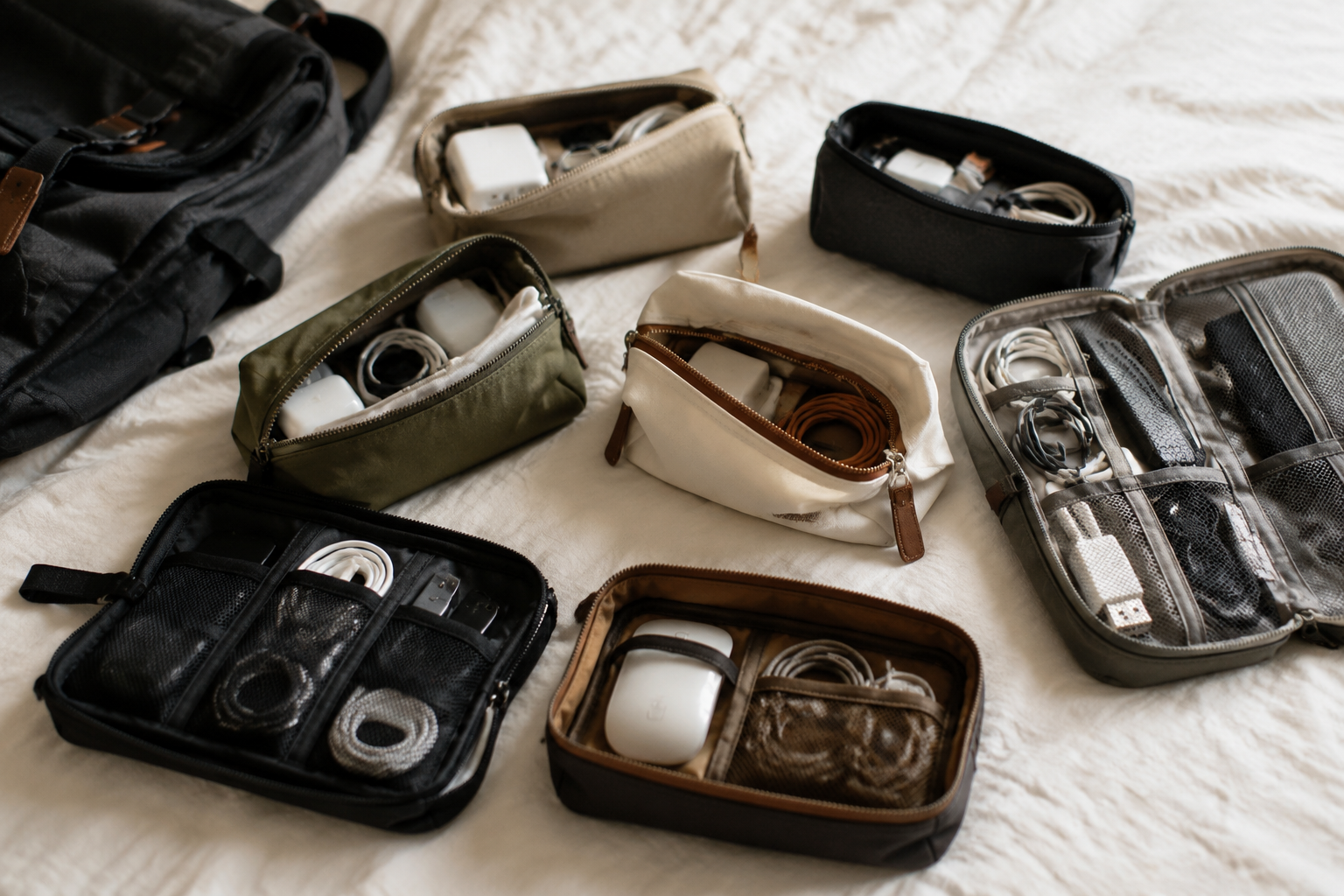
The first rule of a rain kit is that it has to be separate from the bag itself. Rain gear that gets shoved loose into a backpack gets forgotten, gets damp from other items, and gets left behind exactly when it's needed. A dedicated pouch, even a cheap toiletry bag, forces the habit of packing the same items every time. The pouch itself should be a bright color or have a visible tag, because the one time a person desperately needs a dry pair of socks is not the time to be digging through the bottom of a bag hoping to find them by feel.
The Shelter Layer That Actually Works
The umbrella question needs to be settled before anything else. Compact umbrellas are the worst of both worlds: they collapse small enough to be convenient and then fail immediately in wind. A full-size umbrella with a fiberglass shaft is more durable, but it takes up real estate and turns its owner into a hazard on a crowded sidewalk. The honest answer for a bag kit is to skip the umbrella entirely and carry a poncho instead.
A good poncho is not the thin, crinkly plastic sheet that comes in a package the size of a wallet. Those are disposable and they tear at the neckline within an hour of wear. The poncho worth carrying is made of coated nylon or a similar waterproof fabric, has sealed seams, and weighs about a pound. It covers a backpack fully, which matters more than most people realize. An umbrella keeps a head dry while a backpack soaks through and turns textbooks and laptops into wet sponges.
The poncho also works as a ground sheet, an emergency shelter, and a way to cover a stroller or a pile of groceries. It is the most versatile single item in the kit. A person who already owns a proper rain jacket with a hood can leave the poncho at home, but the poncho earns its place for everyone else. It goes on over whatever a person is already wearing, which means it protects a suit jacket or a wool coat that an actual rain jacket would either crush or fail to fit over.
The Sock Problem and Its Solution
Wet socks are the single fastest way to ruin a day. The feeling starts as a minor annoyance and escalates into blisters, cold feet, and the kind of misery that makes a person take reckless shortcuts. Rain boots are the obvious answer, but they are heavy, hot, and impractical to carry around as backup. The realistic solution is to accept that feet will get wet and to carry the means to recover.
One pair of wool socks belongs in every rain kit. Not cotton, which holds moisture and chafes, and not a thin synthetic dress sock that dries fast but offers no warmth. Wool, ideally merino, keeps insulating even when wet and dries quickly enough to salvage a commute. The socks should be a slightly thicker weight than the person normally wears, because they might end up being the only dry thing left, and they will need to carry the whole day.
For the shoes themselves, the pragmatic move is to stop wearing leather dress shoes on days when rain is predicted and switch to a rubber-soled shoe with a sealed upper. Full waterproof boots are overkill for most urban settings. A quality pair of leather boots treated with a waterproofing wax handles a downpour for a few hours, and the treatment costs less than a single trip to a shoe repair shop. The person who refuses to give up loafers or sneakers should carry a spare pair of thin, packable rain socks that fit inside a plastic bag. The combination is not glamorous, but it keeps the day functional.
Electronics Need Their Own Little House
Phones die in the rain in two ways. The first is simple water ingress through a charging port or a cracked screen. The second is more insidious: a phone gets damp, works fine, and then dies weeks later from corrosion that started during that one wet walk. The fix is cheap and permanent. A dry bag, the kind designed for kayaking, costs a few dollars in the right size and turns an entire phone plus a charging cable into a waterproof brick that floats.
The dry bag should be sized to hold a phone, a portable battery, and a charging cable all at once. That way the whole electronic ecosystem lives in one place and gets pulled out together. The battery matters more than people expect, because rain usually coincides with longer commutes and cancelled trains. A person stuck on a delayed bus for ninety minutes with a dead phone has no way to check alternate routes or call for a pickup. A 10,000 mAh battery is the smallest size worth buying. Anything less barely charges a modern phone once.
A Ziploc bag can do this job in a pinch, but the heavy-duty dry bag with a roll-top closure is worth the upgrade. The roll-top seal is easier to operate with cold, wet fingers than a zip seal, and it genuinely floats. The clear plastic versions allow the phone to be used through the bag in a light drizzle, which is a small miracle when a person needs to check a map without exposing the device to the elements.
The Towel That Dries Everything
Every rain kit needs a towel, and the microfibre travel towel is the only kind that makes sense. The big cotton beach towel is absurd in a bag, and even a regular hand towel takes up too much space and stays wet for days. A microfibre towel the size of a bandana unfolds to about the size of a bath towel and dries in an hour. It works for drying a face, wiping down a seat, wrapping a soaked head, and mopping up the puddle that always collects at the bottom of an umbrella stand.
The towel earns its place most dramatically on public transit. A person who boards a bus or train with a soaked head and dripping coat leaves a trail of water on the seats and floor. That water is not just rude to the next passenger. It creates a slip hazard and makes the whole journey miserable for everyone. One quick wipe with a microfibre towel before boarding solves the problem and makes the wet person vastly more comfortable. The difference between sitting in a wet coat and sitting in a damp coat is the difference between a bad commute and an unbearable one.
What Belongs in the Bag for the Long Haul
Some rain events are short. Others turn into a twelve-hour slog of cancelled transit, flooded streets, and wind that reverses umbrellas. For those days, the kit needs a couple of extras that push the total weight past a pound but still fit in a large pouch.
A single high-energy snack bar with a long shelf life covers the hunger that arrives when a person is stuck somewhere unexpected. The bar should be one that does not melt, crumble, or require refrigeration. A small packet of tissues handles the drippy nose that comes with rain and cold. A folded emergency blanket, the kind that fits in a pocket, provides a reflective layer that can be wrapped around the torso under a coat if the weather turns genuinely cold. This is the item that separates a rain kit from an actual emergency kit, but it weighs almost nothing and costs almost nothing, so there is no reason to leave it out.
A small notepad and a pen are worth including for a reason that has nothing to do with note-taking. Wet screens fail, and a pen writes in the rain. A person who needs to write down a phone number, an address, or a train delay time can do it on a scrap of paper while standing under a bus shelter. The pen should be a gel pen or a ballpoint that writes on damp paper, not a fountain pen or a marker that smears. This is the kind of detail that seems obsessive until the moment it saves a person from standing in the rain trying to memorize a dispatcher's instructions.
Packing It So It Gets Used
The best rain kit in the world is worthless if it lives in a drawer at home. The kit needs a permanent home in whatever bag a person carries daily. This means making a choice about the bag itself. A backpack is the easiest option because it has dedicated compartments and a rain cover that slides over the whole thing. A messenger bag or a briefcase can work, but the kit needs to fit in a consistent, reachable pocket. The worst place for a rain kit is at the very bottom of a tote bag, underneath a laptop, a lunch container, and a pile of papers.
The kit should be packed for the current season. Summer rain is warm and brief, so the wool socks and emergency blanket can go into a smaller pouch. Winter rain is cold, miserable, and often mixed with sleet, so the kit should include a pair of thin liner gloves and a knit hat that fit in a pocket. The basic principle is that the kit shrinks and grows with the calendar, but it never disappears entirely. The person who packs a full winter kit in July is carrying extra weight for no reason. The person who packs a summer kit in January is going to have a very bad day.
The habit that keeps the kit functional is a monthly check. Once a month, the whole pouch gets emptied onto a table, the snack bar gets replaced if it's expired, the batteries are checked, and the socks are swapped for a fresh pair. This takes five minutes and prevents the tragedy of reaching into the kit during a downpour and pulling out a moldy sock and a crushed granola bar. The monthly check is also the moment to replace any item that got used and not restocked. A person who uses the poncho in a surprise storm and then forgets to replace it has a rain kit that is secretly an empty pouch.
The rain kit does not need to be expensive. The poncho is the only item that costs more than twenty dollars, and a perfectly good one exists in that range. The dry bag is ten dollars. The microfibre towel is eight. The socks, snack bar, tissues, and pen are already in most homes. The total cost of a complete kit is under fifty dollars, which is less than the cost of replacing one pair of ruined shoes or one water-damaged phone. That math is the entire argument. Rain is going to happen, and the only question is whether a person stands in it defenseless or reaches into a pouch and gets on with the day.
The final item in the kit is something that cannot be bought. It is the decision, made in advance, that rain is not an emergency. A person with a dry pair of socks, a working phone, and a poncho over their shoulders is not a victim of the weather. They are a person who planned for the most common disruption in modern life and moved through it without missing a step. The kit is small, cheap, and utterly forgettable, which is exactly the point. The best rain gear is the gear that a person never has to think about until the sky opens up, and then it is the only thing in the world that matters.