Fashion retail has spent the last decade convincing people that new is always better, that the perfect pair of jeans or the ideal leather jacket is just one more order away. This is a lie, and a fairly expensive one at that. The pieces that actually change a wardrobe, the ones that get worn until they fall apart and then repaired, are rarely bought new. They are found. Certain secondhand pieces have a quality and a character that factory-fresh versions cannot replicate, and hunting for them before buying new basics saves money while producing a better result.
There is nothing romantic about the search itself. It involves dusty shelves, questionable stains, and a lot of items that belong in a rag bin. But the payout is real. The following seven categories are worth the effort, not because they are vintage for vintage's sake, but because the older versions are objectively better made and more useful than what currently sits in stores.
Vintage Band and Sports Tees
The t-shirt is the most common garment on the planet, which makes it strange that most new ones are so bad. Modern tees from fast-fashion brands are cut thin, the fabric pills after three washes, and the graphics crack and peel within a year. A vintage tee from the 1980s or 1990s has none of these problems. The cotton is dense and heavy, the print is cracked and faded in a way that cannot be faked, and the fit is boxier, which drapes better on most bodies.
The difference comes down to manufacturing. Older tees were made from heavier cotton, often around 6 ounces or more, which gives them that substantial feel. Modern blanks are lighter and cheaper to produce. For a band tee or a sports tee, the graphics matter just as much. A 1995 tour shirt has a screen print that has softened and aged naturally, creating a texture that new printing techniques try to mimic and fail at. The hunt is specific: look for tees from concerts, local events, and regional sports teams. These are the ones with genuine character, not the mass-produced tourist shirts that flood every thrift store.
The price point matters too. A new band tee at a merch table runs 35 to 50 dollars. A vintage one at a flea market might cost 10 or 15, and the quality is superior. The worn-in feel is a feature, not a defect. The shirt has already shrunk as much as it will shrink, the color has settled, and the fabric has softened from years of washing. A new tee takes a year of steady wear to reach that state. Why wait, and why pay more for the privilege?
Selvedge Denim With a Real History
New selvedge denim is expensive. A pair from a heritage brand like Levi's Vintage Clothing or a Japanese label can run 200 to 400 dollars. The same pair, found at a consignment store or on a resale platform, often goes for a fraction of that. But the real reason to hunt for used selvedge is not the savings. It is the fades.
Selvedge denim is designed to fade with wear, creating personalized creases and whiskering along the thighs and behind the knees. A new pair is a blank canvas. A used pair has already been broken in by someone who wore them a certain way, sat in certain chairs, walked certain streets. The fades tell a story, and in the hands of a new owner, the denim continues to evolve. The fabric is already soft and molded to a body that may be similar in size, or the buyer embraces a slightly different fit for the sake of the fabric's character.
The practical advantage is that the hard part is done. New raw denim is stiff, can stain furniture, and requires a painful break-in period. A used pair has already been through that. The denim is pliable, the color has settled into a beautiful indigo blue or a faded gray, and the knees are already shaped. For a person who wants the look of well-worn denim without the months of discomfort, this is the only sensible route. Check the seams, check the crotch for blowouts, and be realistic about the sizing, since vintage denim fits differently than modern stretch jeans.
Leather Jackets Past the Stiff Stage
A new leather jacket is a terrible investment for most people. It is stiff, uncomfortable, and shiny in a way that screams new. The leather does not soften properly for months, and some jackets never break in correctly because the hide was not conditioned before being cut. Used leather jackets solve this problem entirely. A jacket from the 1970s or 1980s has been worn, rained on, conditioned, and worn again. The leather has a patina that no chemical treatment can replicate.
The search for a used leather jacket takes patience. Thrift stores rarely have good ones, because people sell them at consignment shops or keep them forever. Flea markets and estate sales are better bets, and online marketplaces with good photography are worth checking daily. The holy grail is a jacket with a visible history: a well-worn collar, a zipper from Talon or YKK that still works smoothly, and a lining that has been replaced once or twice. These are signs that the jacket was loved and maintained, not abandoned.
Value-wise, the math is simple. A new jacket from a quality maker costs 500 to 800 dollars. A vintage jacket from the same era of production, with the same quality of leather, costs 100 to 250 dollars at a flea market or 200 to 350 online. The leather is fully broken in, the fit has settled, and the jacket has character that draws a second look. For a person who wants a leather jacket that looks like it belongs to them from day one, secondhand is the only logical choice.
Wool Sweaters From a Closed Knitting Mill
Anyone who has bought a new wool sweater recently knows the disappointment. The knit is thin, the wool is scratchy, and the garment loses its shape by March. The reason is that most new sweaters are made from low-grade wool that has been chemically treated to feel soft, and the treatment washes out. Secondhand sweaters, particularly those made in the 1950s through the 1970s, were often knit from higher-grade wool with a denser gauge.
The brands to look for are not the ones still in business. Names like Pendleton, classic Scottish mills, and Irish knitwear companies from an earlier era produced sweaters that have lasted decades. A Shetland wool crewneck from a Scottish mill that closed in the 1970s is a different garment than anything sold today. The wool is coarse but warm, the knit is tight, and the sweater holds its shape even after decades of use.
Thrift stores are excellent sources for these sweaters, especially in colder regions where people donate winter clothing seasonally. The sweaters are often lumpy and felted, which actually makes them warmer. Look for moth holes, and be prepared to do a small repair. Even with a visible mend, a 60-year-old sweater in good shape outperforms a new one at the same price. The wool is naturally water-resistant, the warmth-to-weight ratio is excellent, and the pattern is one that no fast-fashion brand would attempt to reproduce.
Full-Grain Leather Footwear Before Resoling
The secondhand market for leather boots and shoes is one of the best-kept secrets in fashion. New boots from a brand like Red Wing or Alden cost 300 to 500 dollars. The same pair, used, can be found for 80 to 150 dollars if a person is willing to look. The key is to buy boots with a Goodyear welt construction, which allows the sole to be replaced when it wears out. The leather upper, assuming it has been cared for, can last decades.
A used pair of boots is already broken in, which matters enormously for footwear. New leather boots require a break-in period that can cause blisters and sore feet for weeks. Used boots have already conformed to a foot shape, and while each pair forms to one foot, the leather has loosened and softened enough that a new owner can often wear them comfortably from the first day. The footbed has a slight imprint, but an insole can handle that.
The environmental angle is worth mentioning as well. Leather production has a significant footprint, and buying used keeps a pair of boots in circulation for another decade. The resoling process costs 60 to 100 dollars, which is far less than the price difference between used and new. After a resole, the boots are essentially new shoes with the broken-in comfort of a well-worn pair.
Pure Linen Shirts From the Linen Era
Linen shirts are everywhere now, but the modern versions are mostly a disappointment. They are cut too slim, the fabric is too thin, and they wrinkle in a way that looks sloppy rather than relaxed. The reason is that most new linen shirts are made from short-staple flax, which lacks the strength and drape of the longer-staple fibers used in older garments.
Secondhand linen shirts from the 1980s and earlier have a different quality. The fabric is thicker, the weave is tighter, and the shirt has been washed enough times to achieve that soft, lived-in feel that linen only gets after years of use. The wrinkles become a feature, not a flaw, because the shirt has a relaxed structure that hangs well on the body.
The hunt is best conducted at estate sales and high-end consignment stores, where people sell the expensive shirts they bought decades ago and never wore enough to damage. Look for labels from Italian and French makers, which tend to use the highest-quality flax. The shirts are often a size or two larger than modern sizing, which works well for a relaxed fit. A new linen shirt costs 60 to 120 dollars, and a vintage one with better fabric can be found for 20 to 40. The breathability is the same, but the feel is entirely different.
Silk Scarves With the Weight of Another Era
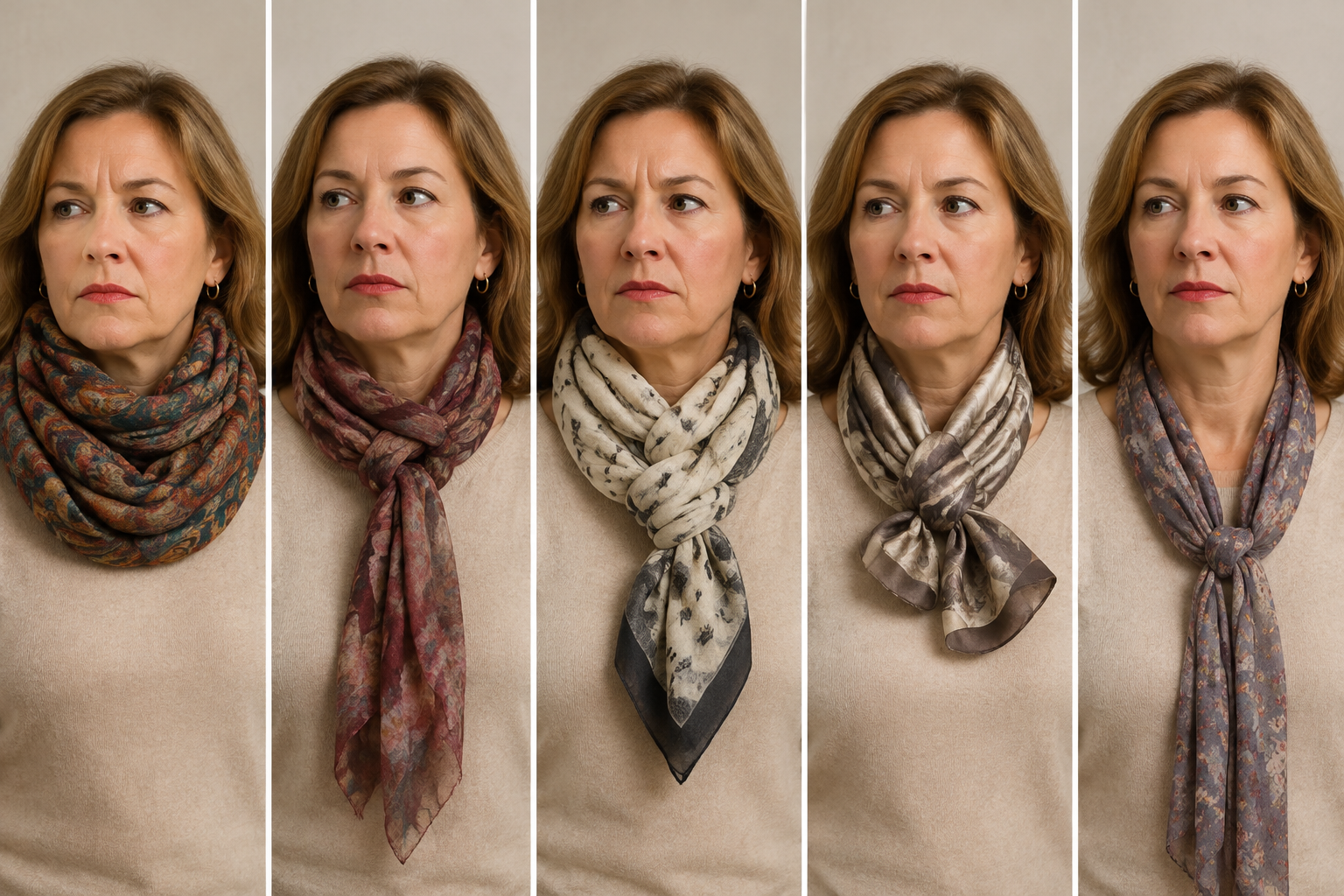
Silk scarves are an afterthought in most modern wardrobes, and the new ones sold at department stores reflect that status. They are thin, printed with generic patterns, and slither off the neck. A vintage silk scarf from the 1950s or 1960s is a different object entirely. The silk is heavier, the print is sharper, and the edges are hand-rolled, a detail that has largely disappeared from production.
These scarves are among the easiest secondhand items to find because they are small, durable, and often donated in bulk. Thrift stores routinely have bins of them, and the prices range from 2 to 15 dollars. The brands to look for are the ones that defined the mid-century: Hermes, Liberty, Gucci, and a range of smaller houses that produced high-quality silk goods. A vintage Hermes scarf can sell for hundreds of dollars, but a lesser-known brand with equally good silk can be had for a few dollars.
What makes them worth hunting is their utility. A good silk scarf works as a necktie alternative, a hair wrap, a bag handle cover, or a pocket square. The weight of the silk makes it drape properly and hold a knot. New scarves are too flimsy for any of these functions. A person who finds a good vintage scarf owns a piece of textile history that serves a practical purpose every single day. The patterns are also more distinctive, with bold florals and geometric prints that stand out against the safe, repetitive designs of modern accessories.
The habit of buying secondhand first changes how a person shops. It forces a slower pace, because the find is not guaranteed on the first visit. But it also develops an eye for quality, a sense of what good construction looks like and what materials have substance. The pieces described here are not trendy items. They are foundational garments that hold up to years of use and keep looking better as they age. The next time a basic item wears out, the answer is not to order a new one online. It is to go look for the version that already exists and has already proven itself.