How to Style Hair With High Turtlenecks Without Static Mess
Static electricity in hair is the price of winter dressing, and a high turtleneck is the single most demanding garment a person can wear when the air turns dry. The collar rises up around the jaw, brushing the back of the head and the sides of the neck with every small movement, and each brush is an opportunity for flyaways to stand at attention. The fabric, usually wool, cashmere, or a synthetic blend, holds a negative charge that hair picks up like gossip. By the time a person reaches the office, the back of the head can look less like styled hair and more like a dandelion that has gone to seed.
The problem is not the turtleneck itself. The problem is that most styling advice treats static as a single enemy to be defeated with one product, when static is actually a systems failure involving the hair's moisture level, the fabric's charge, the brush's material, and the order in which things are put on. A person can spray half a can of anti-static mist and still walk out the door with hair that crackles against the collar. The fix requires rethinking the whole dressing sequence, not just adding a product at the end.
Why the Collar Wins the Charge Battle
Static builds when two materials rub together and one gives up electrons to the other. Hair and knitwear are on opposite ends of the triboelectric series, which is a scientific way of saying they are perfectly designed to make each other miserable. The friction of pulling a turtleneck over the head, or even the gentler rubbing of the collar against the nape of the neck over the course of a day, transfers charge from the fabric to the hair. Dry hair conducts poorly, so the charge has nowhere to go. It sits on the surface of each strand, and because every strand now carries the same charge, they repel each other like magnets flipped the wrong way.
Humidity would solve most of this, which is why summer hair never has the problem. Warm, moist air allows charge to dissipate into the atmosphere. Winter air, especially in heated buildings, holds very little moisture, and hair that is already dry from cold weather and indoor heat loses whatever water it had. The result is a perfect storm: a dry material, a dry surface, and a garment that generates friction with every breath.
The common response is to reach for a leave-in conditioner or a spritz of water. That works for about twenty minutes, until the water evaporates and the hair returns to its baseline dryness. The better approach is to change the surface of the hair itself so it no longer wants to hold a charge, and to change the order of the dressing routine so the friction happens before the final styling, not after it.
The Case for Styling Hair Before the Sweater
Most people dress first and style second. They pull on the turtleneck, then reach for a brush and a hairdryer, then wonder why every strand stands up the moment the collar touches it. The sequence is backwards. The collar is going to rub against the hair no matter what, so the smarter move is to let it rub before the hair is set, then do the final styling after the collar is in place.
This sounds obvious, but it runs against a lifetime of routine. The practical version works like this: put on the turtleneck first, then style. The hair will pick up a little charge from the fabric during styling, but the styler can address that charge directly with the right tools and products. The alternative, styling first and then pulling a sweater over the head, guarantees that the finished style gets crushed and charged in the same motion.
There is one exception. For very long hair, pulling a turtleneck over the head while the hair is loose creates a second problem: the hair gets trapped inside the collar and has to be pulled out, which creates friction and tangles regardless of order. The fix is to gather the hair into a loose ponytail or a clip at the crown before putting on the sweater, then release it and style once the collar is settled. This keeps the fabric from ever dragging across the full length of the hair.
Brushes That Make Static Worse
The brush is the silent accomplice in the static problem. Plastic bristles are the worst offenders. They are insulators, so they transfer charge directly to the hair while also pulling the strands apart, which increases surface area and gives the charge more room to build. A person can do everything else right and then undo it all with a single pass of a plastic paddle brush.
Boar bristle brushes are better because the natural bristles distribute the hair's natural oils from root to tip, coating the strands with a thin layer of moisture that acts as a mild conductor. The oils are the key. They weigh the hair down slightly and give it a surface that resists charge buildup. Metal brushes also work, since metal conducts charge away from the hair, but they can be harsh on fine strands and are not easy to find in most drugstores.
The real answer is a mixed brush: boar bristles for the body of the hair and nylon bristles for detangling. The nylon pins get through knots, the boar bristles smooth and distribute oil, and the combination keeps the hair from gaining the kind of charge that plastic alone generates. For a person who refuses to change brushes, running a dryer sheet over the bristles before brushing is a workable hack. The antistatic coating transfers to the hair with each pass, though this is a last resort and the effect fades within a few hours.
The Collar Fabric Makes the First Decision
Not all turtlenecks are equal, and the fabric choice is where the battle is won or lost before a single strand is styled. Synthetic knits, polyester, nylon, and acrylic blends are the worst. They generate the highest charge and hold it longest, and they seem to get worse with every wash as they lose whatever finish the factory applied. A person can style perfectly and still lose to a polyester turtleneck by noon.
Cotton and silk are the safest choices, but they are rare in high turtlenecks, which are usually knit from wool or cashmere for warmth. Natural animal fibers are better than synthetics, but they are not neutral. Cashmere is the most forgiving, since the fine fibers hold less static charge than coarser wools, and the smoothness of the knit means less friction against the hair. Merino wool is a close second. Standard wool, the kind that feels slightly scratchy against the neck, generates more charge and also irritates the skin, which creates a second problem: a person keeps touching the collar, and every touch adds more friction.
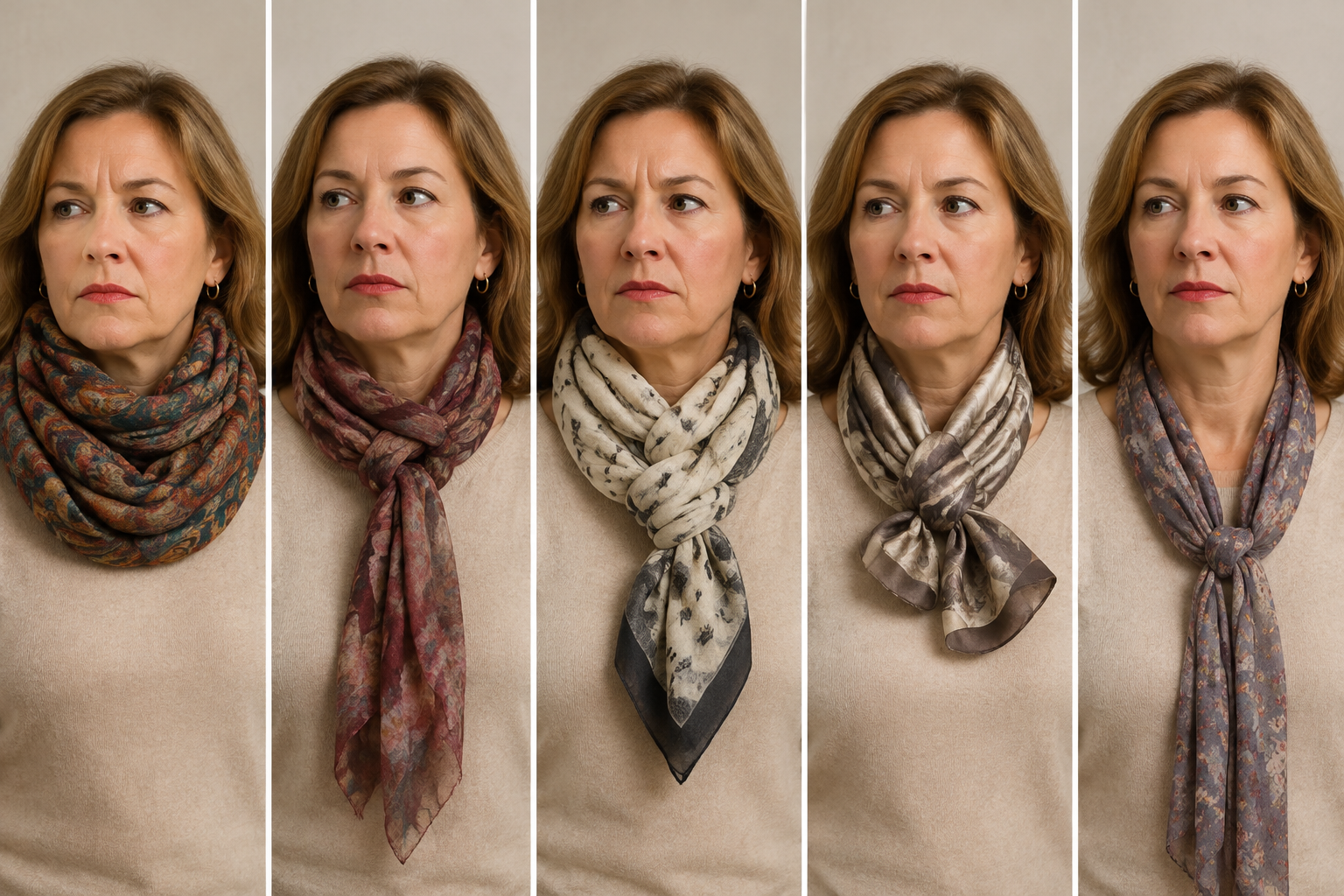
For a person who loves the look of a high neck but cannot control the fabric, a thin silk scarf or a cotton bandana worn between the collar and the hair creates a barrier that stops the friction at the source. The collar still brushes the scarf, but the scarf moves against the neck instead of the hair. It is a hidden layer that solves the problem without changing the look.
Products That Actually Hold Up for a Full Day
Most anti-static sprays are water with a little fragrance and a weak conditioning agent. They work for the first hour and then leave the hair feeling stiff or greasy as they dry. The products that work for a full workday are the ones that coat the hair with a fine layer of oil or silicone, and the choice depends on hair texture.
A lightweight hair oil, applied sparingly to the mid-lengths and ends, is the most reliable option for normal to thick hair. Argan oil or a similar non-comedogenic oil, warmed between the palms and pressed over the surface of the hair rather than rubbed in, adds enough weight to keep flyaways down and enough moisture to prevent charge from building. The key is the word sparingly. Too much oil turns the hair into a stringy mess, especially under a high collar where the hair touches the face.
For fine hair, oil is too heavy. A silicone-based serum or a shine mist works better, since silicones form a thin, flexible film that does not weigh hair down. The trick is to apply the product before the sweater goes on, then again as a finishing touch after the collar is in place. Two light applications beat one heavy one, because the first layer gets rubbed off by the fabric and the second layer sits on top of the hair's surface where it does the most good.
People with very curly or textured hair have a different problem. Their hair is naturally drier and more porous, so it loses moisture faster and picks up charge more readily. A leave-in conditioner with glycerin or aloe, applied to damp hair and allowed to dry fully before dressing, creates a moisture barrier that lasts through the day. The tightness of the curl also means less surface area touches the collar, so the static is less severe but the dryness is more acute. Moisture is the priority; anti-static is a side effect.
Hairstyles That Work With the Collar, Not Against It
Wearing hair down with a high turtleneck is a commitment to constant maintenance. The hair swings and brushes against the collar with every step, and the friction is relentless. For a person who wants to wear hair down, the best strategy is a low, loose style that keeps the hair off the nape of the neck. A middle part with the hair tucked behind the ears minimizes contact points, and a light spritz of hairspray on the surface of the hair adds a thin, flexible hold that keeps strands in place.
A low ponytail or a low bun is the most practical choice, but the placement matters. A ponytail at the very base of the skull sits above the collar, so the hair never touches the fabric. A bun at the crown keeps hair completely clear, but it changes the silhouette of the outfit and can look too severe with a high neck. The sweet spot is a ponytail positioned at the occipital bone, the slight bump at the back of the head. The collar rises to about that height, so the hair falls below the fabric line and stays out of the way.
Braids are another strong option. A single braid or two braids keep the hair contained and reduce the surface area that can pick up charge. The braid itself creates friction between strands, which can generate static within the braid, but the structure keeps the flyaways close to the head. A small amount of pomade or wax smoothed over the surface of the braid after it is tied off seals the strands and prevents the halo of fuzz that braided hair gets in winter.
The Order of Operations That Ends the Static
Putting it all together, the full routine for a static-free day under a high turtleneck runs in a specific sequence, and skipping any step creates a weak link. First, wash and condition the hair as usual, then apply a leave-in conditioner or a lightweight oil while the hair is still damp. Second, let the hair air dry or blow dry it completely. Never style damp hair and then put on a sweater, because the moisture will evaporate against the warm fabric and increase the charge. Third, brush with a boar-nylon mix, section by section, working from the bottom up to avoid breaking the strands. Fourth, put on the turtleneck, using the loose ponytail trick if the hair is long.
Fifth, and this is the step most people miss, let the hair settle for a minute before styling. The hair will pick up some charge from the collar during dressing. Rushing straight into styling will lock that charge into the finished look. Wait sixty seconds, let the charge dissipate as much as it can, then give the hair a light shake and a final pass with the brush. Sixth, apply a second, lighter layer of oil or serum, pressing it over the surface rather than combing it through. Seventh, finish with a flexible hairspray held at arm's length, misting lightly over the whole head.
That second application of product is the difference between a look that survives an hour and a look that survives a full day. The first layer absorbed into the hair and got partially rubbed off by the collar. The second layer sits on the surface, creating a barrier that the fabric slides against without transferring charge. It also adds a slight polish that catches the light, which is a welcome side effect under the bright lights of an office or a restaurant.
When It Is Too Late and the Hair Has Already Crackled
Every routine fails sometimes. A person rushes out the door, forgets the second layer of product, and by mid-morning the back of the head is standing up like a startled cat. The fix is not to spray water, which will dry and make things worse. The fix is to remove the charge first, then reapply a small amount of product.
Pressing the palms against a metal surface, a desk edge, a radiator, or the metal frame of a chair, discharges them, and then pressing the palms over the hair draws some of the static away. It is not a perfect fix, but it reduces the charge enough to work with. After the palms have pressed over the hair, a tiny amount of oil or a single pass of a boar bristle brush redistributes whatever moisture is left and smooths the flyaways back into the body of the hair. A person who works in a metal-free environment can try touching a key or a coin, anything metal and uncoated, to pull the charge out of the hair before attempting to restyle.
The last resort is a dryer sheet, kept in a pocket or a bag. Rubbing a dryer sheet over the surface of the hair transfers the antistatic coating and kills the charge in seconds. The hair will smell faintly of laundry, which is not ideal but is better than walking around with a static halo. This is a rescue measure, not a routine. It should never replace the oil or serum, because the coating from a dryer sheet does not last and leaves a residue that can build up over time. But for a person standing in a restroom mirror with hair that will not lie down, a dryer sheet is a small miracle.
The high turtleneck is not going anywhere. It is a staple of cold-weather dressing because it looks sharp, keeps the neck warm, and provides a clean frame for the face. The static does not have to be part of the deal. The right fabric, the right brush, the right product, and a dressing order that puts the sweater on before the final styling pass turn the worst offender into a garment that behaves like any other. The hair stays where it was put, the collar stays smooth, and the only crackling is the sound of a person who no longer has to think about it.