The phrase "outfit-proof foundation" gets thrown around like it means one specific thing. It does not. For some people it means a foundation that survives a humid commute. For others it means one that does not transfer onto a white collar, or one that still looks like skin after eight hours, or one that does not settle into lines a person did not know they had. The budget conversation around this category is usually framed as a simple trade: spend more, get more. That framing misses most of what actually determines whether a foundation survives an outfit and the day attached to it.
The honest starting point is that the single biggest factor in foundation longevity is not the price of the product. It is the skin preparation underneath and the application method in the middle. A $12 foundation applied over the right primer with a damp sponge will outlast a $60 foundation slapped on bare, dry skin. This is not a pleasant fact for the beauty industry to advertise, because it undermines the premium narrative. But it is the truth that anyone who has experimented with both ends of the price spectrum eventually lands on.
That said, budget still matters. The real question is where the money should go, and where a person can safely save without sabotaging the finish. A full-coverage, transfer-resistant foundation that holds up through a long day and a structured outfit does not have to cost $50. But it also will not cost $9, unless the wearer is willing to accept trade-offs in shade range, finish, or the way it behaves on dry patches. The middle ground, roughly $15 to $30, is where the smart money sits for this specific category.
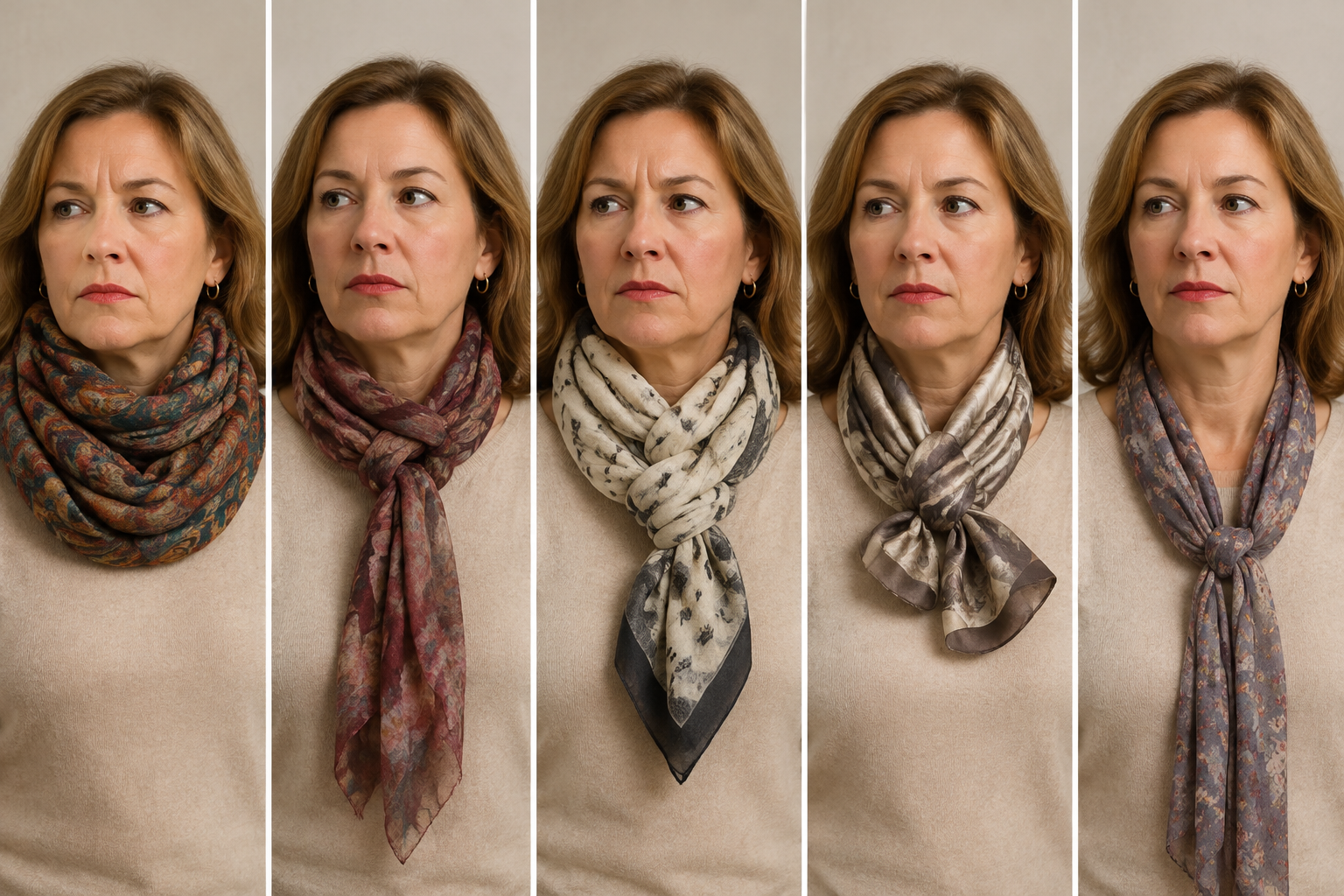
The first thing to understand is what "outfit-proof" actually demands from a formula. An outfit changes the conditions a foundation faces. A crewneck sweater means friction on the jawline and chin. A collared shirt means transfer onto fabric that will show every trace. A scarf or a turtleneck means heat trapped around the neck and lower face, which means moisture, which means the foundation has to resist both sweat and physical rubbing. A person who wears mostly open-neck tops and light fabrics has a different set of problems than someone who lives in high-collared knits.
Most budget foundations fail on the friction test long before they fail on the oil test. A formula can look flawless in a mirror for six hours and still leave a beige shadow on a white shirt collar the first time the wearer pulls a sweater over their head. The polymers that give a foundation its film-forming properties are what determine transfer resistance, and those cost money to formulate well. Cheap formulas tend to rely on powder and silicone to create the illusion of longevity, which works for a few hours but breaks down with movement and heat.
The Transfer Test That Actually Matters
The classic test for outfit-proof foundation is the "tissue on the face" check, where a person presses a tissue to their cheek and sees how much comes off. This test is nearly useless. Tissues have a texture and absorbency that has nothing to do with the fabric of a shirt, a collar, or a scarf. A foundation can pass the tissue test and still ruin a satin blouse, because satin has a slickness and a static charge that pulls pigment differently than paper does.
The better test, and the one a person should do at home before committing to any foundation for outfit-proof purposes, involves the actual garment. The wearer applies the foundation, lets it set for five minutes, and then presses the inside of the collar or the neckline of the shirt they plan to wear against their jaw and neck. Not a quick pat. A firm press with a slight rub, mimicking the motion of pulling a sweater over the head or turning the neck to check a blind spot while driving.
This test separates the formulas that merely look long-wearing from the ones that actually are. Many mid-range foundations, including several in the $15 to $25 bracket, pass this test cleanly. Many luxury foundations fail it, because luxury formulas often prioritize a skin-like, luminous finish over a film-forming, transfer-resistant one. The assumption that expensive equals durable falls apart the moment a cashmere scarf presses against a $70 foundation that was designed to look dewy and natural.
The flip side is that the cheapest transfer-resistant foundations, the ones in the drugstore under-$10 range, often achieve their durability through heavy silicone loads and high powder content. They stay put, but they sit on the skin like a mask. They catch on dry patches, emphasize texture, and feel like a layer of something foreign by hour six. A person can get away with that on a night out where the lights are low and the goal is simply to look intact at 2 a.m. For everyday wear under work clothes, it becomes exhausting.
Where the $20 to $30 Sweet Spot Delivers
The $20 to $30 price bracket is the practical ceiling for most people who need a workhorse foundation rather than a special-occasion one. In this range, brands can afford the polymers needed for transfer resistance while still keeping the finish human. They can also afford decent shade ranges, which matters more than any performance metric. A foundation that matches perfectly but fades by noon is a disappointment. A foundation that stays put but is the wrong undertone is unwearable on day one, which makes it a worse value at any price.
This bracket includes the well-known options: the Estée Lauder Double Wear clones, the L'Oréal Infallible Pro-Matte, the Maybelline Superstay, the Revlon ColorStay. Each has its own personality. The Maybelline leans drier and more matte, which suits oilier skin but can look flat on anyone with normal-to-dry patches. The Revlon has a slightly more natural finish but needs a setting powder in the T-zone. The L'Oréal Infallible Pro-Matte is a solid middle ground, though it has a tendency to oxidize a shade darker within the first hour.
None of these are perfect. Perfection does not exist in this category at any price point, and anyone who claims otherwise is selling something. What these formulas share is a genuine film-forming quality that survives the collar press test and the eight-hour day. They are the workhorses, the ones a person can rely on without thinking too hard. The catch is that they need the right base to look their best, and that base costs a little more money and a little more time.
The Primer Line Item That Changes Everything
Budgeting for outfit-proof foundation without budgeting for a primer is like buying a raincoat and skipping the umbrella. It is not redundant; it is the difference between staying dry and getting soaked at the collar. A good primer does two things that directly affect outfit-proofing. First, it smooths the surface so the foundation has an even canvas to grip, which reduces the patchiness that leads to rubbing off in uneven spots. Second, it creates an adhesive layer that helps the foundation bind to the skin rather than merely sit on it.
The mistake is thinking the primer needs to be expensive. The $12 to $16 drugstore primers from brands like NYX, e.l.f., and Maybelline perform the same basic function as their $40 department store counterparts. The difference in grip and smoothness is marginal, often imperceptible by the end of the day. What matters more than the primer's price is matching its base to the foundation's base. A silicone-based primer with a silicone-based foundation, or a water-based primer with a water-based foundation. Mismatched bases cause pilling and separation, which destroys longevity faster than any quality difference between a cheap and an expensive primer.
For a person on a strict budget, the primer is the one place where spending an extra $5 is justified. A $12 primer on top of a $15 foundation will outperform a $5 primer on top of a $25 foundation, because the grip is what keeps the foundation attached to the face instead of the collar. The foundation's own quality matters, but it cannot do its job if the layer underneath is causing it to slide. This is where the budget should flex, even if it means choosing the slightly cheaper foundation to free up money for the primer.
Setting Powder and Setting Spray: The Last Two Coats
The setting step is where most budget plans collapse. A person spends $25 on a foundation, $12 on a primer, and then skips the setting powder and spray because they feel like optional extras. They are not optional. For outfit-proof wear, they are structural. A light dusting of translucent powder over the T-zone and jawline creates a dry surface that resists friction, and a setting spray locks the whole thing into place. Without these, even the best mid-range foundation will transfer onto a collar by hour three.
Setting powder does not need to cost more than $10. The e.l.f. Halo Glow and the Maybelline Fit Me powders perform admirably for a fraction of the price of luxury options. The key is to use a light hand and a fluffy brush, because over-powdering creates a cakey look that reads as makeup rather than skin. The goal is a dry touch, not a visible layer. For the jawline and neck, the areas that constantly rub against collars, a slightly heavier dusting is acceptable and even necessary.
Setting spray is the more forgiving step. A person can use a cheap one, a mid-range one, or even a facial mist with a fine nozzle, and the difference in longevity is small. The important part is technique. Holding the bottle eight to ten inches away and misting in an X and T pattern, then allowing it to dry completely before getting dressed, makes more of a difference than the brand name on the bottle. The spray is the final seal, and it only works if the layers underneath have had time to set.
The Full Budget Breakdown for a Realistic Wardrobe
A realistic budget for a complete outfit-proof foundation setup, assuming a person is starting from scratch, lands between $55 and $75. That includes a $20 to $25 foundation, a $12 to $15 primer, a $9 to $12 setting powder, and a $10 to $15 setting spray. This is the full system, the one that survives a commute, a workday, a dinner, and the walk home. It is not the cheapest possible setup, but it is the cheapest setup that does not require constant touch-ups or the self-conscious awareness of checking a collar every hour.
A person can trim this budget to around $40 by choosing a $12 foundation, a $9 primer, a $6 powder, and a $10 spray. The trade-off is that the cheaper foundation will likely have a flatter finish, a shorter shade range, or a tendency to cling to dry patches. It will still be outfit-proof in the sense that it will not transfer, but it may not look as good doing it. For someone who wears foundation daily and cares about the finish, the extra $20 is worth it.
The money saved by not buying a $45 foundation can go toward the primer and the setting spray, which is where the actual performance gains live. This is the counterintuitive part of the budget conversation. A person who spends $25 on foundation, $15 on primer, and $15 on setting products gets a better outcome than someone who spends $50 on foundation and nothing on the rest. The foundation is the centerpiece, but it is not the whole picture, and treating it as such is a mistake that costs money and produces mediocre results.
Shade Matching Costs More Than It Should
The hidden cost in this category is shade matching. A foundation that is even slightly off in undertone will be obvious against the neck, which leads to the dreaded "mask" effect. This is not a performance problem; it is a selection problem. The budget options with poor shade ranges, especially for deeper skin tones, force a choice between a foundation that stays put but does not match, or a foundation that matches but does not stay put. Neither is a good outcome.
Many mid-range brands have expanded their shade ranges in recent years, but the expansion is not uniform. Some brands, particularly the ones strong in transfer-resistant formulas, still cap out at a few deeper shades that lean too warm or too red. A person with a neutral or cool undertone in a deeper skin tone will struggle to find a good match in the $15 to $25 bracket. This is a real limitation of the category, and it is worth acknowledging rather than pretending that a simple budget formula solves it for everyone.
The practical workaround is to test in person when possible, and to buy from retailers with generous return policies when it is not. A foundation that matches perfectly in store lighting can look different in daylight, and the only way to know is to wear it. This testing process costs time and sometimes money, because a person may need to buy two shades and return one. Budgeting $5 to $10 extra for the possibility of a failed shade match is realistic, and it prevents the temptation to make do with a shade that is close but not right.
The Case for Two Foundations in Rotation
A single foundation rarely covers every outfit scenario. A high-coverage, transfer-resistant formula that works under a wool coat and a turtleneck will feel heavy on a summer day in a thin cotton shirt. The reverse is true for a light, skin-like formula that needs no setting but transfers at the first sign of friction. Instead of trying to find one product that does everything, a person on a budget can buy two foundations in the $15 range, one matte and transfer-resistant, one more natural and breathable, and rotate based on the outfit and the season.
This approach costs the same as one $30 foundation, and it covers more ground. The matte one handles the structured outfits, the high collars, and the days when transfer resistance is non-negotiable. The natural one handles the open-neck shirts, the weekends, and the days when the priority is looking like skin rather than surviving a friction test. Two foundations in rotation also extend the life of each, since neither is being used daily, which is a small but real savings over time.
The downside is that two foundations mean two shades to match, which doubles the risk of a failed match. This is where a cautious buyer starts with the matte, transfer-resistant one first, because that is the one that matters for the outfit-proof use case. Once that is dialed in, the natural one is a lower-stakes purchase, because a slight shade mismatch is less noticeable in a lighter-coverage formula. This ordering also spreads the cost over two paychecks rather than one, which is easier on a tight budget.
The One Thing a Budget Cannot Fix
No budget, regardless of size, fixes the problem of skin that changes with the seasons. A foundation that performs flawlessly in dry winter air will behave differently in humid summer weather. The same skin that is normal-to-dry in January becomes oily by July, and the transfer-resistant formula that was perfect under a sweater becomes too thick and heavy under a linen shirt. The budget-conscious approach is to accept that the foundation rotation needs to shift twice a year, and to buy accordingly. This is not a failure of the product or the budget; it is the reality of wearing makeup in a climate.
The people who get the most out of a $60 foundation are often the ones who have already solved the application, priming, and setting steps, and who know their skin's seasonal behavior. The people who are disappointed by a $15 foundation are often the ones who skipped those steps and expected the product alone to do the work. The price difference between those two outcomes has less to do with the product and more to do with the system around it, and a person can build that system for under $70 without buying anything premium.
Outfit-proof foundation is a system, not a single product. The budget belongs to the whole system: the base, the grip, the seal, and the shade match. A person who allocates their money across all four will get a result that survives the collar test, the commute, and the dinner, and they will not need to spend luxury money to do it. The $25 foundation with a $12 primer and a $10 spray beats the $55 foundation used alone, every time. The numbers are not complicated, and neither is the logic.