Autumn retail catalogs love to pretend that a fall wardrobe refresh is an act of poetry, a seasonal ritual involving burnt orange cashmere and the soft rustle of new corduroy. The reality is more arithmetic. The average person is not replacing a wardrobe; they are patching the holes in the one they already own, and the price of that patch has gone up noticeably. A practical fall refresh is not about buying a new coat. It is about deciding, with a spreadsheet in one hand and a coffee in the other, which three items from a list of ten actually deserve your money this year.
The first thing to understand is that the cost of a refresh is not the cost of the clothes. It is the cost of the clothes plus the cost of the mistakes you make while buying them. A $40 sweater that pills after three wears is not a $40 sweater; it is a $10-a-wear sweater that ends up in a donation bin by December. A $120 sweater that holds its shape for five years is a bargain, provided you actually wear it. The problem is that most people cannot tell which is which until it is too late, and the marketplace is structured to exploit that confusion.
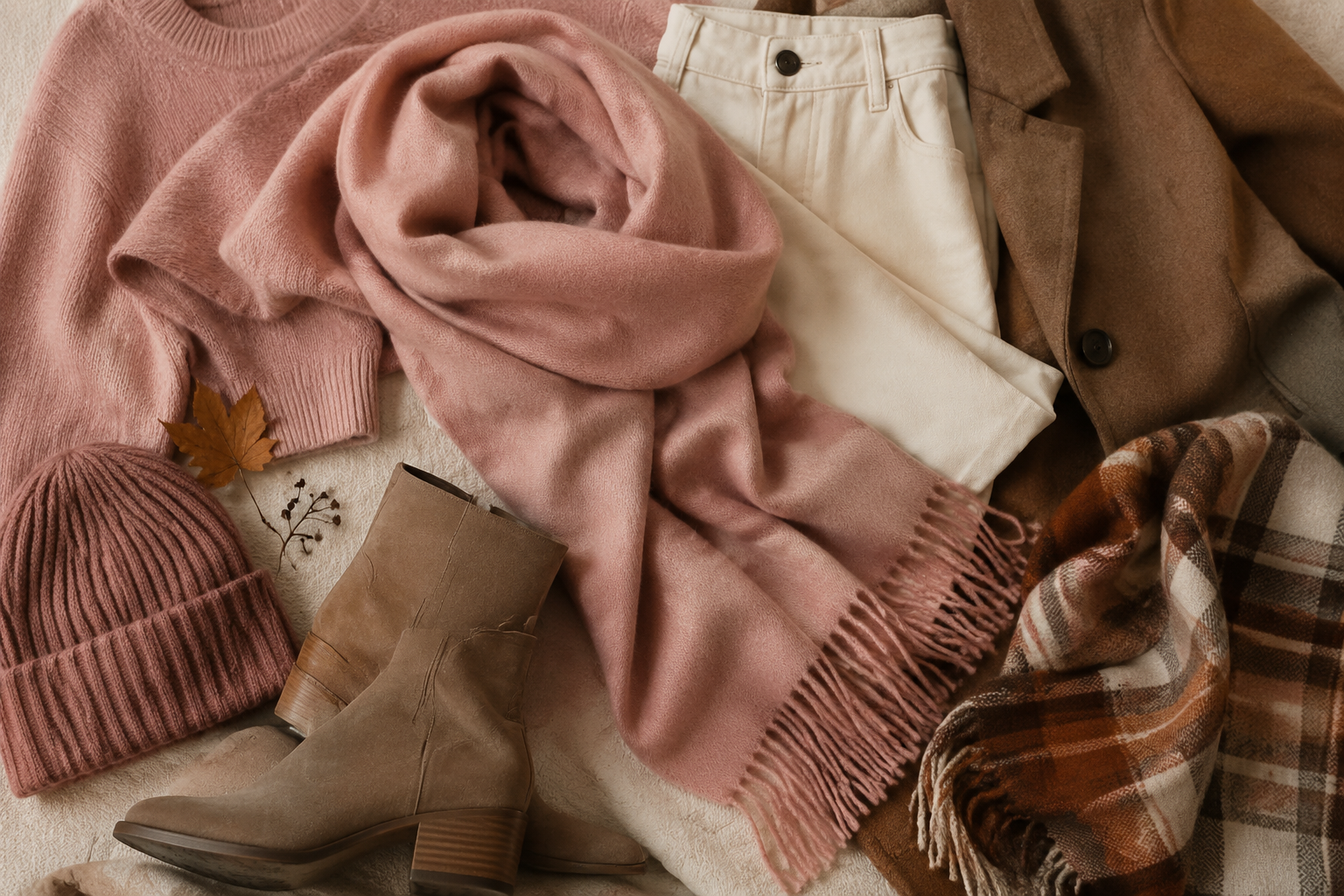
Let me give you the numbers as they stand for a typical urban or suburban shopper in the U.S. this fall. These are not luxury prices. These are the prices you will see at mid-tier retailers, the ones that send you 20 percent off emails every other day. A decent pair of straight-leg jeans, the kind that does not disintegrate at the knee, runs between $70 and $110. A heavyweight flannel shirt, the kind you can actually layer under a jacket without looking like a lumberjack costume, is $50 to $80. A mid-weight knit sweater in a neutral color, wool blend or good cotton, is $60 to $90. A pair of leather boots that will survive a second season, not the fast-fashion bonded leather that peels like sunburnt skin, starts around $130 and goes up to $200. A quilted or packable jacket, the workhorse of transitional weather, is $90 to $150. Add a beanie, a scarf, and a pair of gloves, the accessories everyone forgets to budget for, and you are looking at another $40 to $70 if you buy them new.
Add that up and the honest cost of a full refresh, replacing the worn-out bottom layer of your everyday rotation, is somewhere between $440 and $700. That is the real number. The industry does not want you to see that number because it is not designed for you to buy a full refresh. It is designed for you to buy a single item at a time, each one marketed as the missing piece, until you have spent $700 without ever feeling like you made a big purchase.
The Wardrobe Audit That Saves You $200
Before any spending happens, a practical refresh begins with a drawer audit, and this is where most people fail. They look at a crowded closet and conclude they have nothing to wear, when in fact they have sixty items and five of them are dead. The audit is simple: pull everything out, sort into three piles, keep, repair, and retire. The keep pile is obvious. The repair pile is where the savings live. A missing button costs $2 at a tailor and takes ten minutes to sew. A stuck zipper on a favorite jacket costs $15 to $30 to replace. A hem that has come undone costs $8 to have re-stitched. Most people throw these items into the donate bag out of laziness, then go spend $90 on a new shirt that fits worse.
The retire pile is more brutal. Anything with permanent stains, holes in high-friction areas, or fabric that has gone shiny from wear is gone. Do not keep it for "around the house" because that is a lie you tell yourself to justify hoarding. The retire pile is not a loss; it is the subtraction that makes the addition visible. A wardrobe refresh is only meaningful if the base layer is honest. Keeping a faded, misshapen tee in the rotation means every new item you buy has to work against that thing, and it will drag the whole outfit down.
Do the audit first. Then, and only then, make a list of what is actually missing. In most cases, the list will be two or three items, not six. The average person who does a proper audit discovers they do not need a new jacket. They need one pair of boots that fit properly and one sweater in a color that works with four existing bottoms. That is a $150 to $250 refresh, not a $600 one.
The Fabric Math: Why $15 Cotton Is a Bad Investment
When you do go to buy, the single most important decision is not style. It is fiber content. The price tag tells you less than the care label. A $15 cotton tee from a fast-fashion chain is not cotton in any meaningful sense. It is a loosely spun, single-ply yarn that has been pre-shrunk to within an inch of its life and sewn with thread that will snap the first time you stretch it. It will lose its shape in a day, pill within a month, and be translucent by October. The real cost of that tee, spread across its useful life, is higher than the cost of a $30 tee that lasts three years.
There is a specific weight threshold worth knowing. For cotton knits, look for a fabric weight of at least 180 grams per square meter. Below that, the fabric is summer-weight and will not hold up to daily wear in cooler weather. For flannel, you want a brushed cotton or wool blend that feels substantial between the fingers, not like a thin sheet that happens to have a plaid pattern printed on it. For sweaters, the key is the ply and the fiber. A single-ply merino sweater is a delicate thing, prone to holes at the elbows. A two-ply or three-ply sweater, or a sweater with a significant percentage of nylon or alpaca mixed into the wool, will take the kind of abuse a normal person dishes out.
The frustrating part is that price alone does not guarantee quality. A $150 sweater from a department store can be a thin, single-ply acrylic disaster dressed up in a nice label. A $70 sweater from a workwear brand can be a heavyweight, durable, long-lasting piece that outlives three of its pricier cousins. The trick is to learn to read the label and to trust your hands. If a fabric feels flimsy in the store, it will feel flimsy in six months. If it feels dense and has a nice drape, that is a sign of a tighter knit and a heavier yarn. Touch is the cheapest test you can perform, and it costs nothing.
Where the Prices Actually Go Up: Outerwear and Footwear
Outerwear and footwear are the two categories where the cost curve is steepest and where it is most tempting to cheat. A $40 canvas jacket from a fast-fashion store is not a fall jacket. It is a windbreaker with a collar, and it will fail at the first cold rain. A proper fall jacket, one that is wind-resistant, water-repellent, and has a lining that does not cling to your arms, starts at $80 and gets real at around $120. The difference between a $120 jacket and a $200 jacket is usually in the zippers, the seam taping, and the quality of the synthetic insulation. Those differences are invisible in the store but obvious in November.
Footwear is the category where people make the most expensive mistake, and it is the one category where paying more is almost always justified. A $50 pair of ankle boots from a mall brand is often made with a synthetic upper that does not breathe, a glued-on sole that separates from the upper after a few weeks of walking, and an insole that flattens out into a stiff board by Thanksgiving. A $150 pair of leather boots, even from a mid-tier brand, has a proper construction that can be resoled or at least re-glued, a leather upper that molds to your foot, and a sole that provides actual traction on wet leaves. The price difference is not luxury markup. It is the cost of materials and labor that make the object repairable.
There is also the hidden cost of bad footwear, and it is not financial. Walking on a flat, unsupportive insole for weeks on end is a way to develop foot pain that feels like a personal failure but is actually an engineering problem. A good pair of boots with a proper arch support and a slight heel is not a luxury. It is a basic ergonomic tool. Paying $150 to avoid three months of aching arches is not an indulgence. It is the same logic as paying for a good mattress.
The Secondhand Market Is Not What You Think
The conventional wisdom is that a cheap refresh means thrifting, but the reality of the secondhand market in 2024 is more complicated. Goodwill and local charity shops are still cheap, but they are increasingly picked over by resellers who know exactly what they are doing. The days of finding a pristine wool overcoat for $15 are not gone, but they are rare enough that you cannot plan a refresh around them. You can plan a refresh around a specific thrift trip, but you need to accept that you will visit three or four stores and come home empty-handed half the time.
The online resale platforms, Poshmark, eBay, and the like, have a different problem. Prices have crept up to the point where the gap between used and new is often thinner than you expect. A used flannel shirt from a popular brand might list for $35, plus shipping, when the new version is $50 on sale. The savings are real, but they are not the 80 percent discount that the narrative promises. What the online market does offer is access to higher quality for a lower price. A used pair of Red Wing boots, for example, might cost $120, whereas new they are $330. That is a genuine deal, but it requires patience, a willingness to sort through dozens of listings, and the knowledge of how to spot a worn-out pair versus a broken-in pair.
The single best secondhand strategy for a fall refresh is to buy the boring, durable items used, and to buy the items that touch your skin new. Socks, underwear, and base layers should always be new. But a heavy wool sweater, a leather jacket, a pair of good boots, these are items that often get donated because they are too warm or too heavy for a new owner's climate. The resale value is low precisely because they are built to last. That is the arbitrage. You are buying something that the original owner wore twice and then forgot about, and you are paying a fraction of the original price for an object that will outlive the trend.
The Real Cost of Maintaining the Refresh
Nobody budgets for the upkeep, and that is how a practical refresh turns into a recurring expense. A $150 pair of leather boots will not last five years if you never condition the leather. A $40 bottle of leather conditioner and a brush, about $25 up front, will double the life of the boots. A $90 wool sweater will last longer if you wash it by hand or on a gentle cycle with a wool-specific detergent, which costs about $12 a bottle and lasts a year. A $120 jacket with a DWR (durable water repellent) finish will keep repelling water for two seasons, after which a $15 spray-on treatment will bring it back. These maintenance costs add up to roughly $50 to $75 per year, and they are the difference between a wardrobe that lasts and a wardrobe that requires a new refresh every single autumn.
The alternative, and this is the choice that nobody wants to talk about, is to buy less and care more. A capsule of fifteen well-chosen pieces, maintained with basic discipline, will outperform a closet of forty cheap items in every metric that matters: cost per wear, aesthetic coherence, and the feeling of getting dressed in the morning. The reason this feels radical is not because it is difficult. It is because the entire retail industry is structured to make you feel that a one-item purchase is a failure of willpower, not a rational decision that keeps $300 in your bank account.
The final number on a practical fall refresh, the one that includes the audit, the repair pile, the two new items you actually need, and the maintenance supplies, lands between $200 and $350. That is the honest range for a person who already owns a functional wardrobe and wants to get through the season without freezing, without looking sloppy, and without pretending they are a different person with a different budget. Everything above that range is fashion. Everything below it is either a miracle or a trap. The refresh is not the purchase. The refresh is the decision to stop throwing money at the feeling of having nothing to wear, and to start building a small stack of things that actually work.